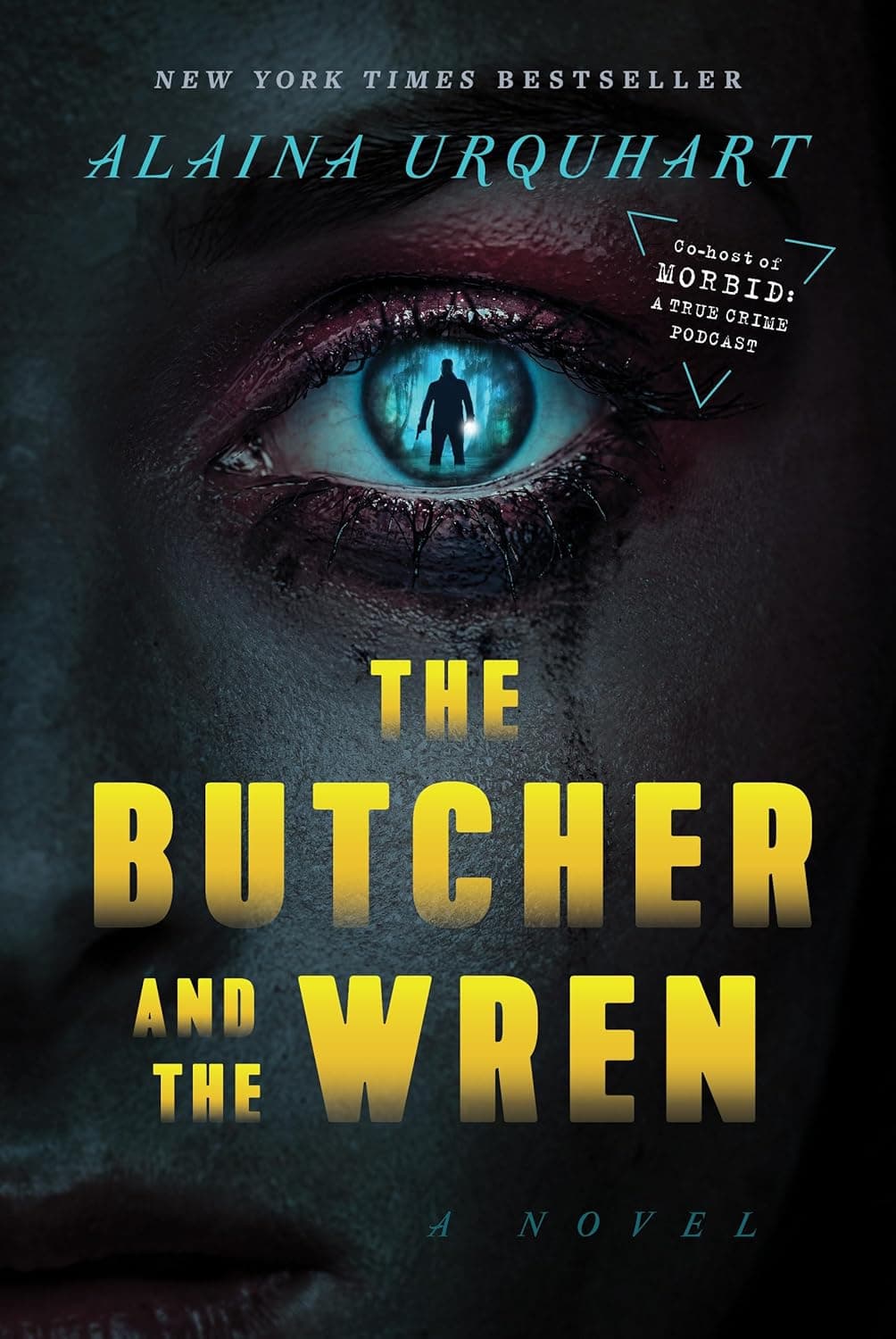
The Hunt: Predator vs. Prey
What This Theme Explores
The Hunt: Predator vs. Prey is more than pursuit; it’s a contest of minds, wills, and instincts between Jeremy Rose and Dr. Wren Muller. The novel probes how “predator” and “prey” are not fixed identities but roles that can be learned, imposed, and overturned. It asks what separates control from survival, and whether intelligence is a weapon of cruelty or a lifeline of resistance. In this world, the hunt exposes how civilization’s veneer can be peeled back to reveal raw hierarchy—until someone rewrites the rules.
How It Develops
At first, the narrative presents a stark hierarchy: Jeremy is the undisputed hunter, selecting and stalking his victims with clinical superiority, while the people he targets move through his world as nameless quarry. Parallel to his lethal prowling, Wren performs her own kind of hunt in the morgue, reading bodies the way a tracker reads the ground. Early on, her investigation suggests that forensic knowledge can narrow the gap between predator and prey, even if Jeremy stays a step ahead.
The middle of the story turns the hunt personal and theatrical. Jeremy escalates from hidden predator to ringmaster, orchestrating a “game” that forces victims to run through his controlled terrain. Meanwhile, Wren and the police pursue an intellectual counter-hunt, decoding his staging and taunts. Here, the boundaries blur: Jeremy hunts bodies; Wren hunts minds—and the contest tightens into a duel.
By the end, the categories invert. Wren refuses the script written for prey and uses the intimate knowledge forged in trauma to stalk her stalker. The final confrontation is no longer a one-sided kill but a clash between two apex strategists, proving that the most dangerous hunter is the one who has learned to survive being hunted.
Key Examples
The book’s predator–prey dynamic sharpens through scenes where strategy, setting, and psychology collide.
-
Jeremy’s foundational hunt: A childhood memory of his father killing an injured doe teaches Jeremy a predatory creed anchored in “pecking order.”
“It’s life, son. You don’t let something suffer needlessly. And besides, there’s a pecking order. Some are on the top, and some are here to provide something to those on the top. This doe’s sacrifice will provide good meat,” he explained... This rationale, recalled in Chapter 7, becomes Jeremy’s pseudo-ethical license to dominate, recasting murder as “natural” and reducing victims to consumable resources.
-
The Bayou Game: Jeremy releases captives into his swamp and narrates their terror over loudspeakers, announcing rules as if presiding over sport.
“Look, this game is simple. Your only job is to do your best to evade me as I make my way through the course. It’s that easy. The name of the game is to survive, my friends. Try to escape, if you can. The only thing between you and your freedom is a few acres of bayou … and me.” This scene in Chapter 13 puts the hunt on stage, exposing Jeremy’s god complex and his need to control terrain, tempo, and terror.
-
Wren’s forensic hunt: In the morgue, Wren tracks the killer’s decisions through the evidence itself, treating each body as a map of his mind. Her realization—“He refrigerated her.”—in Chapter 4 shows Jeremy counter-hunting investigators by corrupting time-of-death data. The duel becomes recursive: each move anticipates the other, turning investigation into combat.
-
The final confrontation: On Jeremy’s property in Chapter 34, he tries to reprise the role of archer-hunter, but Wren meets him as an equal—armed, informed, and unafraid. By wielding knowledge gleaned from surviving him, she flips the terrain from his playground to his trap. The scene resolves the theme as reversal: the predator is forced into the prey’s panic.
Character Connections
Jeremy Rose embodies predation as ideology. He casts murder as selection, insists on hierarchy as nature, and turns cruelty into order. His meticulous staging—tools, tests, terrain—reveals a hunter who needs his victims to perform fear so he can crown himself sovereign. Yet his certainty is his weakness: believing himself inevitable, he underestimates prey that learns.
Wren Muller traces the theme’s full arc. She begins as a hunter of truths, extracting patterns from the dead, and becomes unwilling prey when Jeremy targets her past and body. Choosing the name “Wren” reclaims identity through strategy: a small bird that survives by wit, not size. In mastering the psychology of her predator, she converts trauma into tactical knowledge, redefining the hunt as resistance.
The victims, including Katie, Matt, and Emma, expose the brutal asymmetry Jeremy relies on—he labels them “hotel-art humans,” denying their depth to justify his games. Their terror is not spectacle but indictment: the hunt’s glamour depends on erasing humanity. Meanwhile, Detective John Leroux represents the institutional hunt—disciplined, procedural, but often reactive. His limits underscore how Jeremy thrives in spaces rules cannot reach, pushing Wren toward a more adaptive, intimate mode of hunting.
Symbolic Elements
The bayou functions as a primal hunting ground—a maze Jeremy knows by muscle memory. Its murk and tangled routes mirror his psyche, where control is possible only through choreography of chaos. On this stage, he plays both predator and playwright.
Jeremy’s “game” reduces life to sport, a linguistic trick that absolves responsibility while heightening thrill. By forcing victims to “play,” he frames murder as competition, making their suffering part of his victory condition.
Hunting tools—the crossbow, serrated knife, and his father’s rifle—are extensions of identity. They are heirlooms of violence that link family lore to present-tense predation, turning killing into ritual and legacy.
The wren as a chosen name is thematic shorthand: small, quick, clever, a survivor. It reframes power away from dominance and toward adaptation, signaling Wren’s shift from hunted to hunter through intelligence rather than brute force.
Contemporary Relevance
The novel speaks to anxieties about predators who pass as ordinary while gaming systems meant to restrain them. It also engages with the cultural fixation on true crime by interrogating what counts as “the hunt”: not only the killer tracking victims, but survivors and investigators tracking the killer’s mind. In centering a woman who refuses to remain prey, the book resonates with contemporary narratives of reclamation, showing how knowledge—of forensics, of one’s own trauma, of an enemy’s rituals—can become the decisive weapon.
Essential Quote
“The name of the game is to survive, my friends. Try to escape, if you can. The only thing between you and your freedom is a few acres of bayou … and me.”
Jeremy’s taunt crystallizes the theme: survival framed as spectacle, control posing as fairness. By declaring the rules, the terrain, and the stakes, he asserts godlike authorship—until Wren rewrites the ending, proving that the hunted can seize the narrative of the hunt itself.