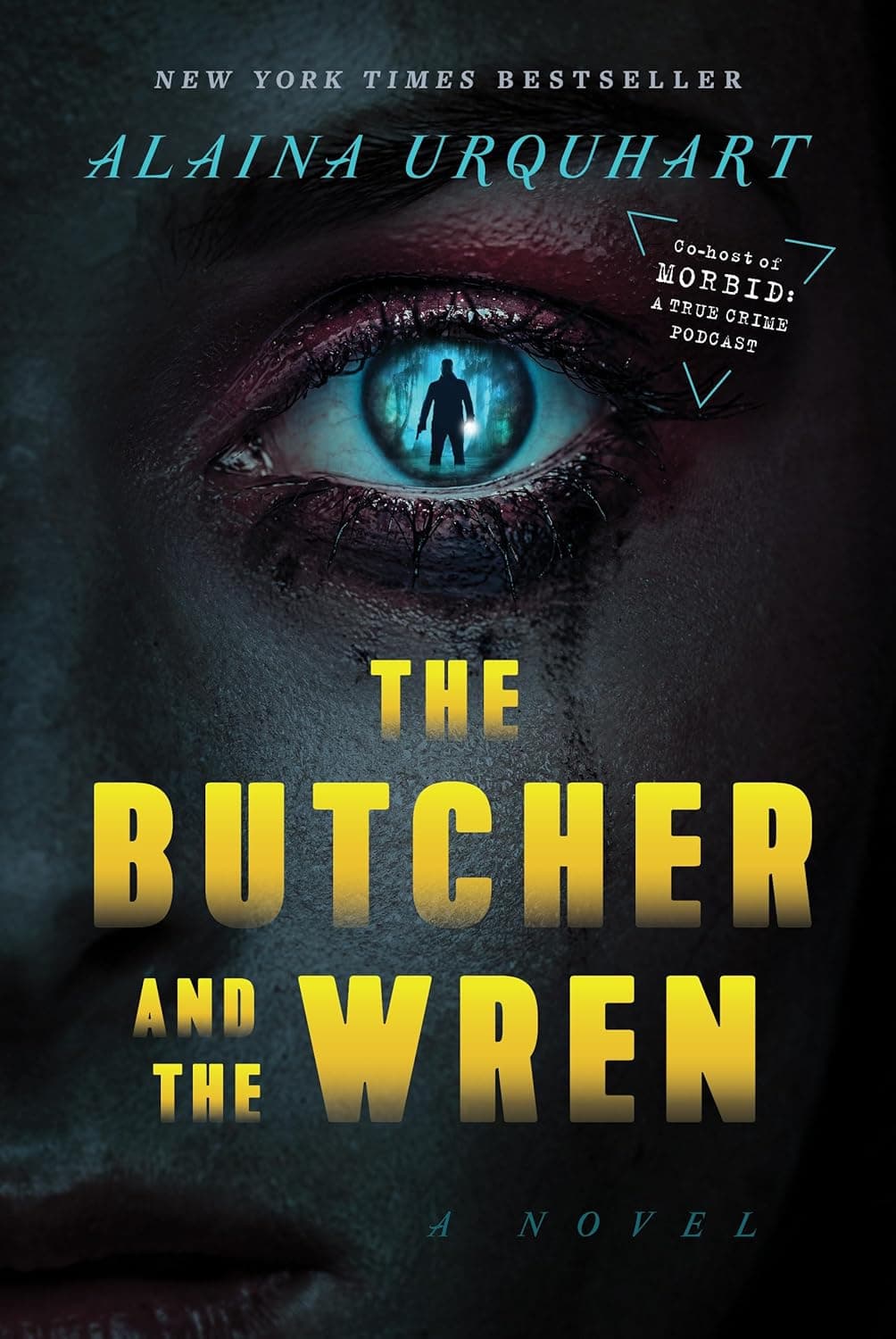
Alaina Urquhart’s The Butcher and the Wren maps a psychological battlefield where predator and prey, truth and disguise, science and instinct collide. Through dueling perspectives—the meticulous killer and the forensic pathologist on his trail—the novel probes how past wounds, crafted identities, and intellectual pride fuel a relentless hunt that rarely ends with a clean resolution. From the outset, the narrative establishes a ritual of pursuit and ego that shapes every choice and encounter (Chapter 1-5 Summary).
Major Themes
The Hunt: Predator vs. Prey
The Hunt: Predator vs. Prey structures the novel as a cat-and-mouse chase that keeps reversing the roles of hunter and quarry. The killer, Jeremy Rose, casts murder as a sport and designs a private bayou arena where he controls every variable—a “game” he escalates as he taunts Dr. Wren Muller with victims and clues (Chapter 11-15 Summary). This power-play culminates in a literal chase across his terrain, where the weapons (crossbow, knife) and setting (the Louisiana bayou) make the hunt visceral and primal (Chapter 31-35 Summary).
Identity and Deception
Identity and Deception reveals how names, faces, and professional roles can both protect and endanger. Wren’s new life is a survival construct: she was born Emily Maloney (Chapter 26-30 Summary; see Emma), and her forensic career grows directly from the assault she barely survived. Jeremy’s social camouflage—alias “Cal,” careful grooming, and disarmingly wholesome manner—works like a corpse flower’s bloom: superficially striking, but masking rot beneath, and it allows him to seed traps such as the bracelet discovery that collapses past and present (Chapter 21-25 Summary).
Past Trauma and Its Lingering Effects
Past Trauma and Its Lingering Effects drives both the investigation and the violence it seeks to stop. Wren’s nightmares and hypervigilance keep her tethered to the original crime even as she channels fear into skilled, empathetic work—“speaking for the dead”—a coping mechanism that both steadies and destabilizes her (Chapter 6-10 Summary). Jeremy’s childhood—dominated by cold instruction, surveillance, and control—hardens into a worldview that treats bodies as experiments and home as a laboratory of dominance.
Intellectual Pride and the God Complex
Intellectual Pride and the God Complex pits two minds convinced they can dominate the board. Jeremy believes he’s composing a magnum opus—sneering at other killers’ “patterns,” anticipating experts, and making the investigation part of his design—while Wren trusts methodical science and her autopsy suite to strip away his lies. Their duel escalates as he manipulates forensics (cooling a body, revising routines) and she tests the limits of evidence against intuition, including a psychic read that momentarily shakes her certainty (Chapter 11-15 Summary).
Supporting Themes
Control and Powerlessness
Control and Powerlessness extends the hunt’s logic into every scene of captivity and pursuit. Jeremy scripts fear—binding, drugging, and choreographing terror—while Wren’s arc becomes a reclamation of autonomy: a new name, a career that imposes order on chaos, and a determination to wrest the narrative away from her attacker.
Survival and Resilience
Survival and Resilience counterbalances the killer’s control with the sheer insistence of life. Wren’s survival transforms into purpose and grit, making her the only adversary who truly understands his theatre of cruelty. Victims such as Katie and Emma embody the raw calculus of endurance—thinking, resisting, and seizing even slim chances to disrupt the “game.”
The Nature of Evil
The Nature of Evil considers brutality as both inheritance and construction. Jeremy muses about evolutionary culling even as the narrative traces how a loveless home taught domination, not empathy. The ambiguity is chilling: evil appears as an ordinary, plausible face long before it becomes unignorable.
Science vs. Instinct
Science vs. Instinct stages a quiet debate inside the investigation. Wren’s faith in toxicology, timelines, and trace evidence keeps her grounded, yet intuitions—names that won’t let go, a tarot reading that lands uncomfortably close—nudge the case forward when data blurs; meanwhile, Jeremy weaponizes medical knowledge to mislead and prolong the chase.
Theme Interactions
- Past Trauma → Identity and Deception: Wren’s original victimization necessitates a new self, while Jeremy’s past sanctions the masks he wears. The constructed identity shields her; his camouflage weaponizes trust.
- The Hunt ↔ Control/Powerlessness: The hunt is how control is performed—his scripts aim to erase agency; her countermoves recover it. Terrain and tools (bayou, crossbow) visualize that imbalance.
- Intellectual Pride ↔ Science vs. Instinct: Their duel tests whether clean method or calibrated intuition has the final say; each recalibrates in response to the other’s gambits.
- Past Trauma → The Hunt: Old wounds dictate present tactics—Wren hunts to end a story that began years ago, and Jeremy restages harm to relive mastery.
- Identity and Deception ↔ The Nature of Evil: Evil hides best in ordinary veneers; the novel insists that danger is not exotic but proximate, recognizable only when masks slip.
From the opening gambits to the staged pursuit on the killer’s property, these tensions braid together, with each escalation in the hunt forcing new masks, triggering old wounds, and daring intellect to keep pace with raw survival.
Character Embodiment
Jeremy Rose
Jeremy personifies predation, deception, and a full-blown God complex. His “Cal” persona secures access, his wholesome presentation diffuses suspicion, and his bayou domain converts control into spectacle. Rooted in formative cruelty, his methodology fuses experiment and theatre, making the investigation itself part of his design.
Dr. Wren Muller
Wren embodies survival, scientific rigor, and the fragile power of a rebuilt identity. Born Emily Maloney, she leverages trauma into expertise, turning the autopsy suite into a place where facts can challenge fear. Her conflict—data versus intuition, composure versus memory—makes her both the hunter he fears and the prey he once marked.
The Victims (Katie and Emma)
Katie and Emma represent the stark end of the predator-prey spectrum, their terror and resistance powering the novel’s moral charge. Their moments of ingenuity and defiance expose the limits of Jeremy’s “control,” reminding us that even scripted horror can be disrupted by the will to live.