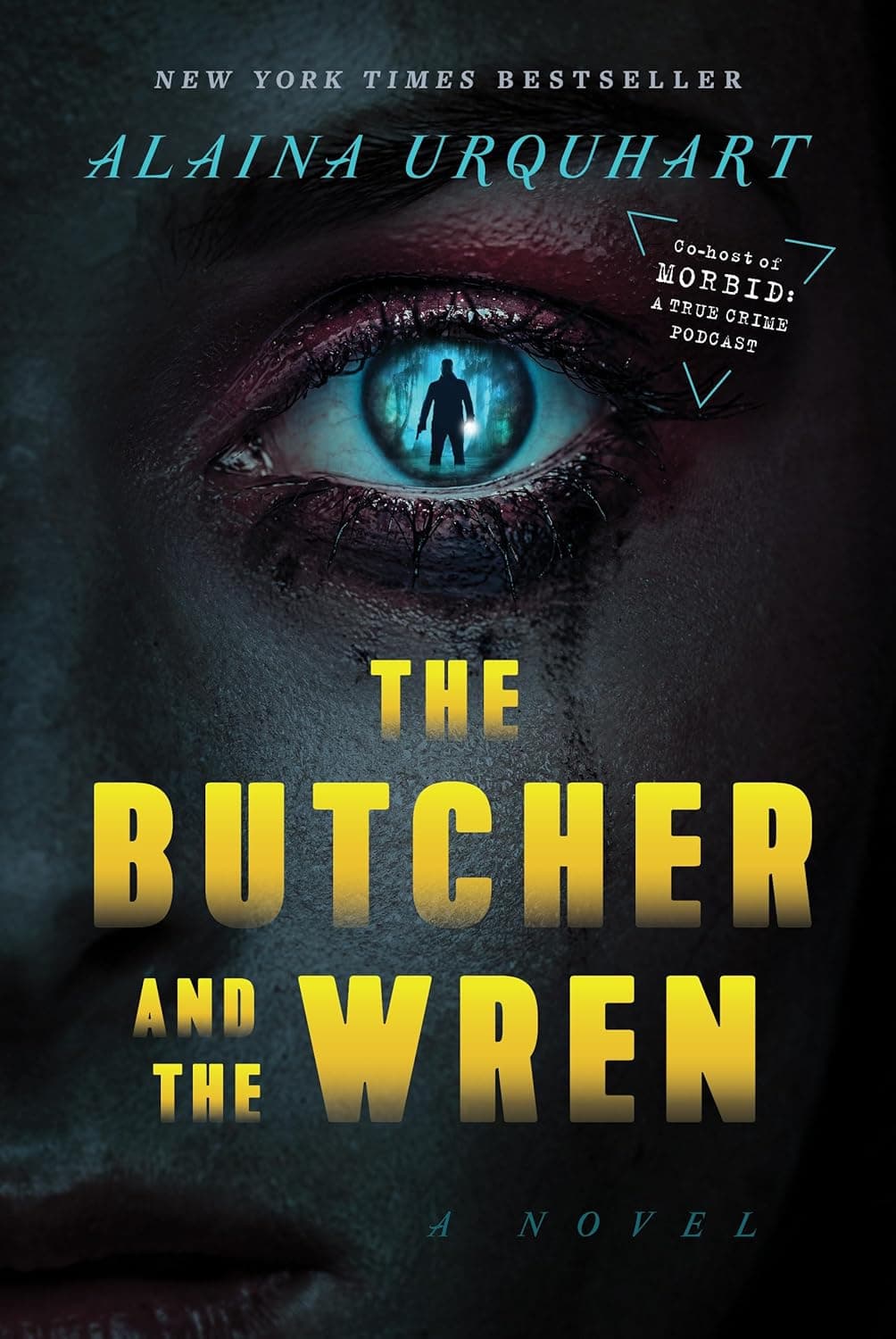
What This Theme Explores
Control and powerlessness in The Butcher and the Wren revolve around the duel between the killer, Jeremy Rose, and the forensic pathologist, Dr. Wren Muller. The novel asks who gets to define reality: the predator who scripts every moment or the investigator who imposes order on chaos. It probes how control can be both a performance and a shield, and how powerlessness can be physical, psychological, or institutional. Most of all, it suggests that dominance is fragile—undone by memory, chance, and the refusal of victims to remain voiceless.
How It Develops
The early chapters lock the reader into Jeremy’s manufactured world of mastery. He curates routines and calibrates fear, treating his “guests” like variables in a controlled experiment; meanwhile, Wren asserts professional command over the morgue’s cold certainties. Even here, control tilts: the killer refrigerates a body to distort lividity and timeline, an intrusion that wrests procedural authority away from Wren and telegraphs that the crime scene—and even the cadaver—belong to him first (Chapter 1-5 Summary; Chapter 6-10 Summary).
As the investigation expands, the predator-prey binary complicates. Jeremy escalates from a basement to a bayou “arena,” scaling up his god’s-eye vantage with speakers, cameras, and fences, and abducts Emily, convinced the terrain guarantees his supremacy (Chapter 11-15 Summary). Yet cracks appear: he leaves personal taunts that pull Wren into the narrative as a character he can direct, but the rescue of Emma from a live burial denies him the power to choreograph her death, a public rupture in his perfect system (Chapter 16-20 Summary).
In the later stretch, control flips from concealment to exposure. When Wren recognizes her old bracelet planted on a victim, she reclaims the name and history the killer tried to weaponize—Emily Maloney—and takes ownership of the story by disclosing her past, turning secret shame into investigative leverage (Chapter 21-25 Summary). Jeremy spirals: the murder of Tara Kelley is rash and sloppy, a sign that emotional volatility has overwhelmed his architecture of control (Chapter 26-30 Summary). In the finale, he even scripts his own apparent death, but the ruse is only another grasp at authorship—one that leaves Wren alive yet forced to admit that survival does not equal sovereignty, because her antagonist remains at large (Chapter 31-35 Summary).
Key Examples
Before examples, note how the novel pairs spectacle with subjugation: each set piece is designed as a theater of authority in which the killer writes the rules—and the narrative keeps asking who can rewrite them.
-
Jeremy’s ritualized dominance: His meticulous nighttime routine and insistence on silence frame murder as management. When Katie disrupts the script, he reasserts hierarchy with calculated terror: “Another sound out of you, and I start pulling out teeth. Understood?” The threat converts a human being into an instrument of his will, revealing control as both psychological coercion and self-soothing order.
-
The engineered helplessness of victims: Captives like Katie and Matt are IV-fed and chained, their very survival contingent on Jeremy’s administration—powerlessness literalized as dependence. In the bayou, speakers and cameras let him occupy omnipresence, while an electrified perimeter makes “escape” part of the spectacle rather than a possibility. This turns the landscape into a lab, and the victims into data points within it.
-
Wren’s undermined authority: In the morgue, expertise feels like a bulwark—until the killer plants her old business card, collapsing professional distance into personal threat. “I don’t like this, John. I mean it. This makes me want to run for the hills.” Her reaction exposes how easily institutional control falters when violation becomes intimate.
-
The pivot to reclamation: Wren’s recognition of her bracelet on Emma reframes the case as her own narrative to claim, not merely decode. By publicly owning her past as Emily, she transforms what Jeremy thought was leverage into purpose, shifting from being maneuvered to moving the investigation herself.
Character Connections
Jeremy Rose embodies control as compulsion and compensation. His childhood chaos becomes the blueprint for adult omnipotence: victims reduced to objects, environments weaponized into stages, evidence manipulated to puppeteer investigators. Yet his unraveling—anger at disruptions, impulsive violence, and the need to dramatize even his exit—shows that the god he plays cannot master his own volatility.
Dr. Wren Muller answers domination with discipline. She makes order from the incomprehensible, reading bodies as arguments that can be won by rigor. Her arc reframes power from suppression to integration: she stops partitioning her trauma and uses it to anticipate Jeremy’s moves, proving that agency grows when the past is faced rather than erased. In doing so, she challenges the novel’s prevailing power structure without pretending victory is permanent.
The victims—Katie, Matt, Emma, and Tara—render the theme in its starkest form. Chains, IV lines, and buried coffins show bodies commandeered and time stolen, but their resistance—Emma’s near-rescue, Katie’s screams, even fleeting acts of defiance—punctures the killer’s fantasy of absolute rule. Their suffering is the moral ledger against which the narrative measures every claim of control.
Symbolic Elements
The basement and the bayou operate as concentric prisons. The cemented chairs and surgical lighting miniaturize dominion into a clinic of pain; the fenced wetlands scale it into a sovereign territory where Jeremy controls sightlines, sound, and borders. Together they map his desire to be both surgeon and sovereign.
Implements split along a thematic fault line. Chains and ligatures literalize stolen agency; the scalpel in Wren’s hands becomes a counter-symbol, carving clarity from chaos rather than flesh from fear. Jeremy’s weapons—knife, crossbow—extend his will at distance, underscoring his preference for control without risk.
The ring and bracelet convert identity into leverage. By stealing Wren’s grandmother’s ring and planting her bracelet on Emma, Jeremy turns heirlooms—tokens of continuity—into instruments of intrusion. The items say: I can edit your past and prewrite your future. When Wren reclaims their meaning, the same symbols shift toward survival and self-definition.
Contemporary Relevance
The novel’s power struggles mirror modern anxieties about surveillance, coercive control, and the thin membranes between public persona and private violation. Jeremy’s stalking and his manipulation of personal artifacts echo contemporary fears about doxxing, intimate-partner terror, and the weaponization of data. The media frenzy and whiff of “satanic panic” portray how institutions and communities seek control through sensational narratives, often amplifying fear instead of restoring safety. By refusing tidy closure, the book acknowledges a truth many live with: safety is negotiated, not guaranteed.
Essential Quote
“Look, this game is simple. Your only job is to do your best to evade me as I make my way through the course. It’s that easy. The name of the game is to survive, my friends. Try to escape, if you can. The only thing between you and your freedom is a few acres of bayou … and me.”
This monologue crystallizes control as spectacle: Jeremy names the rules, defines success, and even frames survival as entertainment. By positioning himself as the single obstacle between life and freedom, he reveals the narcissistic core of his power—the belief that other people’s existence is meaningful only in relation to his will. The novel then works to dismantle that fantasy, showing how unpredictability, intervention, and memory puncture his authored world.