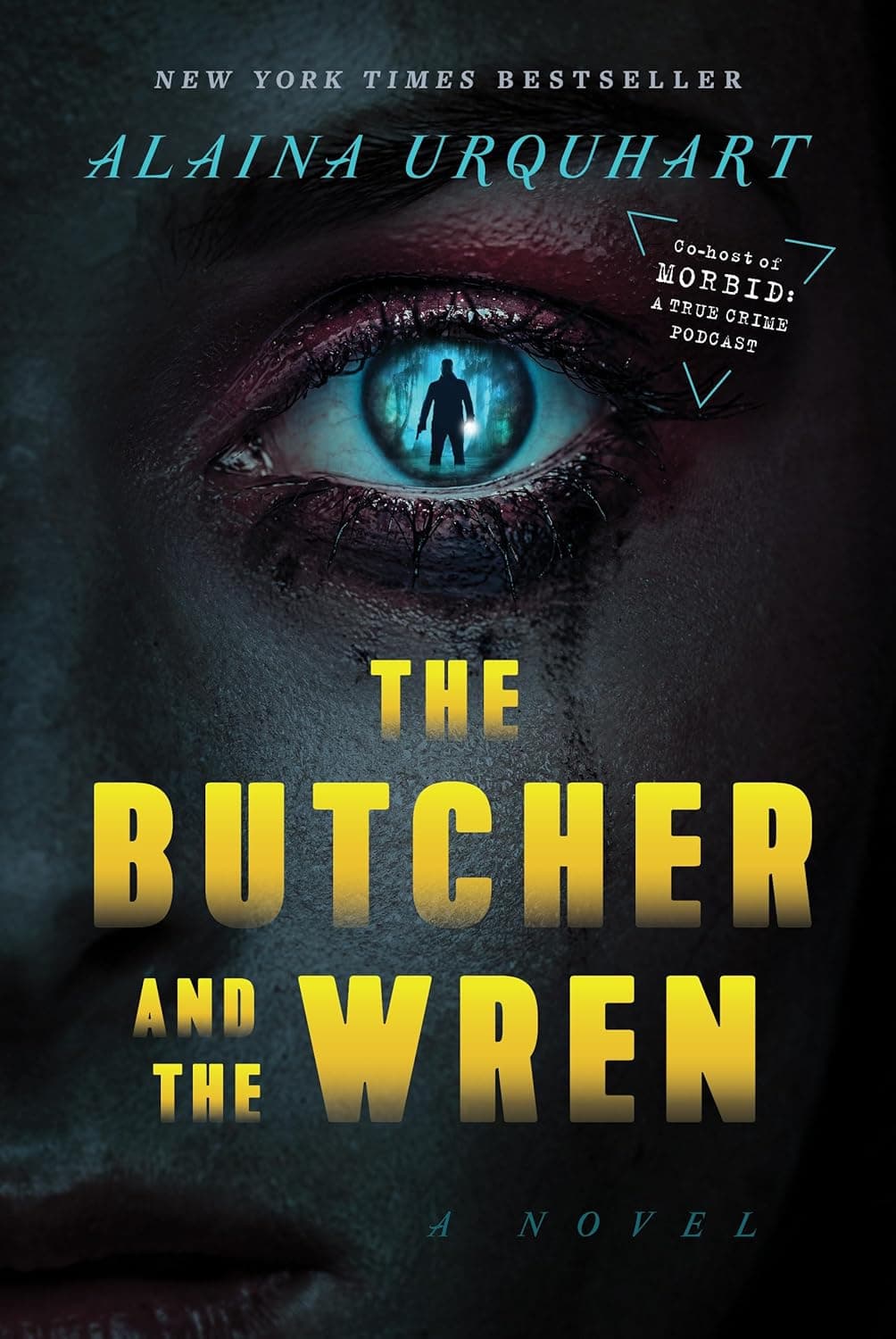
At a Glance
- Genre: Psychological thriller with true-crime and horror elements
- Setting: New Orleans and the Louisiana bayou
- Perspective: Dual POV—an exacting forensic pathologist and the serial killer hunting her
Opening Hook
Fog snakes through the bayou, and the bodies start appearing where the city can’t look away. In a game of intellect and impulse, a killer scripts his murders like rituals while the expert who reads the dead decodes his moves. Each clue is a dare, each body a message, until the investigation turns and the hunter’s mask slips. When the past resurfaces, the chase stops being a case—and becomes revenge.
Plot Overview
The first bodies surface in New Orleans, waterlogged and staged like public warnings. In a shadowed basement, Jeremy Rose perfects his “work,” keeping Katie and Matt alive just long enough to hone control and terror (Chapter 1-5 Summary). At the same time, Dr. Wren Muller studies the Butcher’s signatures in the field—meticulous presentation, deliberate water exposure, a killer growing bolder. Working with Detective John Leroux, she notes a chilling upgrade: a victim chilled to skew the time of death, a clinical tactic that points to a calculating mind with medical knowledge (Chapter 6-10 Summary).
The killer begins to taunt. Clues appear at scenes—pages torn from a book, a library card, a flyer hinting at a jazz festival—each one a breadcrumb leading investigators toward his chosen stage (Chapter 11-15 Summary). Wren and Leroux follow the trail to the festival grounds, where a body hidden beneath the stage offers another map: St. Louis Cemetery No. 1. There they encounter a horror timed to the minute—a young woman, Emma, buried alive. She’s rescued, but the reprieve is brief; Emma dies at the hospital, leaving behind a wake of poison and precision (Chapter 16-20 Summary).
Processing Emma’s effects, Wren finds a silver bracelet engraved with an E—her own. The discovery detonates the case. She confesses to Leroux that her name is Emily Maloney, and seven years earlier she survived the Bayou Butcher when he called himself “Cal.” The murders aren’t random; they’re an invitation designed for her return—his grand, personal hunt (Chapter 21-25 Summary).
The investigation snaps into focus. Wren links Jeremy to the hemlock that killed his mother—the same toxin used on Emma—then secures a warrant on the strength of a witness who saw him with Tara Kelley. Police raid Jeremy’s isolated home and uncover a basement laboratory of pain and proof, but he’s already moved the game outside. Music drifts from the bayou to draw officers into his terrain (Chapter 26-30 Summary).
The confrontation is swift and vicious. Jeremy fires a crossbow, dropping Leroux. Wren seizes his gun but hesitates at the edge of vengeance; Detective William Broussard shoots first, and Jeremy staggers into the brush. A final shot cracks the dark. The body recovered looks like suicide—until Wren’s exam reveals a staged decoy. Jeremy has vanished, and the city understands: this is not an ending, only the pause between hunts (Chapter 31-35 Summary).
Central Characters
For a full cast list, see the Character Overview.
-
Dr. Wren Muller (Emily Maloney): A forensic pathologist who speaks for the dead with clinical clarity, Wren is also the Butcher’s lone survivor. Her arc pulls her from professional detachment into a reckoning with identity—folding Emily’s terror into Wren’s resolve—until justice and survival become the same pursuit.
-
Jeremy Rose: Charismatic, hyper-rational, and cruel, Jeremy builds murders like proofs, disguising sadism as mastery. His fixation on finishing the “work” he began with Wren fuels escalating risk-taking, and his arrogance—more than evidence—becomes his most telling signature.
-
Detective John Leroux: Measured and empathetic, Leroux anchors the investigation in procedure while shielding Wren as the case turns intimate. His loyalty complicates the line between partner and protector, sharpening the story’s ethical stakes.
-
Detective William Broussard: A pragmatic counterweight to Leroux. His decisive action in the bayou saves lives but cannot close the case, underscoring how proximity to justice isn’t the same as closure.
-
Emma and other victims: Individual and symbolic, they embody both the Butcher’s precision and the system’s urgency. Emma’s brief survival exposes the killer’s toxicology and triggers Wren’s unmasking, making her a hinge between past and present.
Major Themes
For deeper exploration, see the Theme Overview.
-
The Hunt: Predator vs. Prey: The novel frames murder as sport and ritual, with Jeremy casting victims as quarry and Wren as the ultimate prize. When Wren claims the role of hunter, the power dynamic flips, turning forensic method into a form of pursuit—and survival into strategy.
-
Identity and Deception: Names are masks—“Cal” for Jeremy, “Wren” for Emily—and both protagonists manipulate persona to move undetected. The book asks whether identity lives in memory, in action, or in the story others tell about you.
-
Past Trauma and Its Lingering Effects: Trauma shapes both leads, but with opposite outcomes: Wren’s fear evolves into vocation and insight, while Jeremy’s childhood neglect curdles into control and cruelty. The case becomes a study in how pain can crystallize into purpose—or predation.
-
Intellectual Pride and The God Complex: Forensics and murder mirror each other as disciplines of mastery. Jeremy plays god with life and time; Wren resists that hubris with rigor—yet both stake identity on being the smartest in the room, making their clash a duel of minds as much as bodies.
-
Science vs. Instinct: Wren’s lab-tested certainty often converges with her survivor’s intuition, especially when evidence runs cold. Jeremy harnesses medical knowledge to hide the truth, but his primal impulses betray him, revealing how science and instinct battle—and inform—each other.
Literary Significance
The Butcher and the Wren revitalizes the cat-and-mouse thriller by fusing true-crime specificity with horror’s atmosphere. Its split narrative grants the killer and investigator equal gravity, then subverts the trope by revealing the investigator as the killer’s past target—a twist that reframes evidence as memory and procedure as reckoning. Urquhart’s autopsy-room precision lends the violence an unsettling authenticity, while New Orleans’ cemeteries and bayous act as living scenery, steeped in ritual and rot. The result is a tight, propulsive novel that treats trauma not as spectacle but as an engine for agency, pushing the genre toward a more intimate, psychologically exacting register.
Historical Context
Published in 2022 at the height of the true-crime boom, the novel speaks to an audience fluent in forensics, case files, and criminal psychology. Its use of toxicology, body staging, and timing plays to a culture trained by podcasts and documentaries to read evidence. Setting the story in New Orleans—where burial customs, folklore, and the swamp’s menace blur life and death—deepens the book’s Gothic mood and makes the landscape complicit in the terror.
Critical Reception
-
Praise: Reviewers highlighted the breathless pacing, the surgical accuracy of forensic detail, and the unnerving intimacy of the dual perspective. Many pointed to the twist—investigator as survivor—as the element that elevates the book beyond standard procedural fare.
-
Criticism: Some found secondary characters underdeveloped beside the central pair, and a few plot turns hinge on coincidence or demand generous suspension of disbelief. The open ending split readers—either a thrilling setup for a sequel or an abrupt stop to a otherwise complete chase.