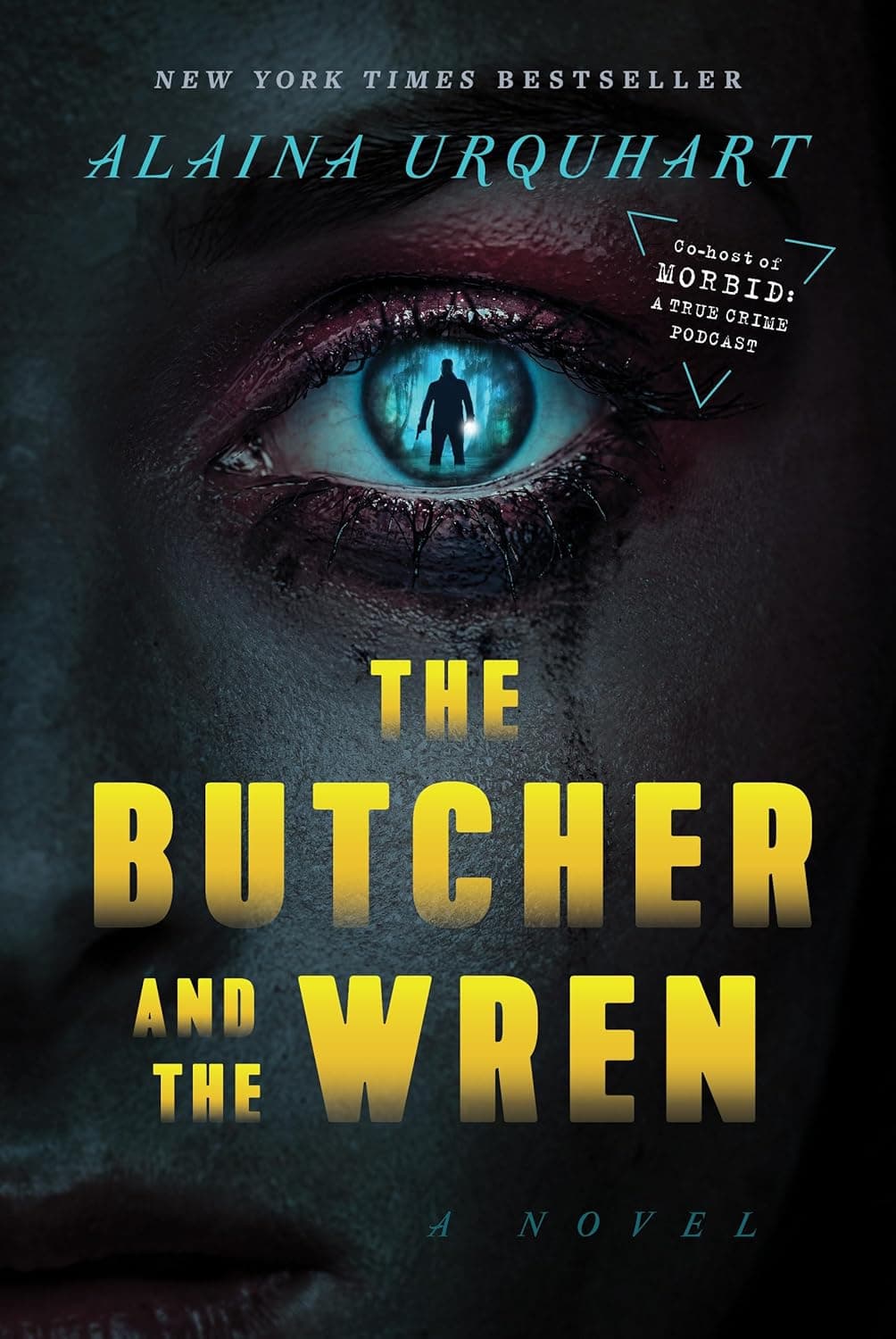
Opening
The cat-and-mouse explodes into open warfare as Jeremy Rose invades Dr. Wren Muller’s home, Wren pieces together his identity, and a high-stakes raid in the swamp turns into an ambush. The Butcher stages every beat, stealing a heirloom, baiting the police, and slipping away—leaving Wren to face both the evidence of his crimes and the shadow of her own hesitation.
What Happens
Chapter 31: He Watches Her
From the trees outside Wren’s house, Jeremy tracks her nightly ritual—lights on, locks checked, a perimeter sweep she believes keeps her safe. He luxuriates in his patience and in the imbalance of Control and Powerlessness he creates simply by watching. One flaw snags his attention: a basement window painted shut over a broken lock. To him, the oversight is a stain of mediocrity he intends to exploit.
After Wren and her husband sleep, he slips the paint seal with a knife and screwdriver and glides through the rooms, noting the “breadcrumb trail” she leaves behind: shoes, jacket, a book. At her bedroom door, his Intellectual Pride and The God Complex peaks—he can kill both sleeping bodies and chooses not to. Instead, he takes what he came for: the diamond-studded ring her grandmother once wore.
He studies Wren’s sleeping face, testing his impulse to end her, then checks himself. She must recognize him when he finally takes her life. The ring slides onto his pinkie, a trophy, and he ghosts back into the night.
Chapter 32: Hemlock
Wren, burned out and buzzing with dread, tries to rest. A single thread cuts through the noise: hemlock. It’s too rare to be coincidence. She remembers Mona Louise Rose, an elderly woman whose death by hemlock is ruled a probable suicide years earlier. She calls Detective John Leroux: Mona’s next of kin is Jeremy Calvin Rose. Leroux confirms that Philip Trudeau once named Jeremy as a person of interest, and a bar witness linked to Tara Kelley described a man with a crooked smile—Cal. The case tightens by way of Science vs. Instinct: Wren’s forensic recall fused with gut feeling.
Convinced, Leroux moves for a warrant. Wren refuses to sit out the raid. She argues they’ll need a medical examiner if they uncover bodies, and her presence might draw Jeremy into the open. Despite the pressure of Past Trauma and Its Lingering Effects, she promises Richard she’ll return and steels herself to face the man who has defined her nightmares.
Chapter 33: Welcome Back, Emily
At his secluded farmhouse, Jeremy holds the stolen ring and lets fury tear through his control. He slams his fist into a doorframe and hurls a crystal vase against a wall, leaving blood and glass as a calling card. The rupture exposes the feral core beneath his refinement—a flash of The Nature of Evil that he then coolly sutures shut.
He tapes his knuckles, walks the rooms like a museum going dark, and stages his final tableau. In the living room, he centers Wren’s grandmother’s ring on the coffee table, a beacon she cannot miss. It’s intimate, taunting, and perfectly legible to its intended reader. He smiles, satisfied. The stage is set.
Chapter 34: He Got Away
Wren, Leroux, and Detective William Broussard arrive with a tactical team. The farmhouse sits alone, hemmed in by swamp. Inside, the scent of death rolls over them. The parlor’s antiques mask a basement outfitted for torture—chairs bolted to the floor, straps stained dark, chains heavy with rust. On the coffee table, Wren’s grandmother’s ring gleams. In an unplugged freezer, they find a young woman’s body.
Music rises from the bayou, drawing them into the murk—The Hunt: Predator vs. Prey turned literal. They locate a decomposing male body. While Wren examines it, chaos detonates: an arrow skewers Leroux’s leg, another hits an officer. Jeremy appears with a crossbow, sighting on Wren, and calls her “Emily.” She raises Leroux’s gun and falters. Broussard fires first, striking Jeremy in the chest. Jeremy staggers and disappears into the trees.
Two gunshots crack from deeper in the swamp. An officer radios that the suspect is dead from an apparent self-inflicted wound. Wren moves to confirm. The body she finds isn’t Jeremy: no chest wound where Broussard’s bullet should be, a shot through the mouth, no gun. The corpse is a substitute. Jeremy has orchestrated the chase, sacrificed an accomplice, and vanished. In the ambulance beside a wounded Leroux, Wren says what neither wants to hear: “He got away, John.”
Chapter 35: The Bayou Butchers
Jeremy slips through the swamp, the welt on his chest proof that his vest took Broussard’s shot. He thinks ahead, not back, already building a new life and trusting his ruse of Identity and Deception to buy distance. Wren will understand soon—he counts on it—and her certainty will sharpen the hunt he craves.
He replays the moment she hesitates and concludes she won’t get another chance. The swamp answers him with its predators and decay; he recognizes himself in it and in the “true bayou butchers” that glide beneath. At the road, he steps toward erasure. The raid becomes another performance, and he exits on his own cue.
Character Development
Wren’s precision and fear coexist as she identifies the killer and then confronts her deepest trigger in the swamp. Jeremy reveals both the cracks and the craft of a sadist who performs for an audience of one.
- Dr. Wren Muller: Connects the hemlock deaths to Jeremy and insists on joining the raid; suffers the violation of her home and hesitates under fire; rebounds to make the critical call that exposes the decoy.
- Jeremy Rose: Executes a methodical break-in, leaves psychological totems, erupts in violence, then reasserts control through staging and escape; reframes the raid as his show.
- Detective John Leroux: Trusts Wren’s instincts, catalyzes the warrant, and takes an arrow in the field—removing himself from the final trigger pull and underscoring the hunt’s cost.
- Detective William Broussard: Acts decisively when Wren pauses and lands the shot that should end it; still gets outmaneuvered by Jeremy’s larger plan.
Themes & Symbols
Control wrestles with powerlessness across every setting and choice. Jeremy’s surveillance collapses the boundary of safety around Wren’s home; the staged ring and bloodied doorway convert domestic space into a theater of domination. The swamp chase flips the police raid into a reversal of roles, where the hunter scripts the prey’s moves. Deception permeates identity itself—Cal’s crooked smile, the decoy corpse, the fake suicide—turning procedure, sightlines, even wounds into unreliable data and forcing Wren to balance empiricism with intuition.
Symbols tie psychology to place. The ring, plucked from Wren’s bedside and later displayed, is more than a trophy; it’s a violation of lineage and sanctuary, proof that intimacy offers no shelter. The farmhouse’s curated charm conceals the basement’s industrial cruelty, mirroring Jeremy’s civilized veneer over feral appetite. Beyond the threshold, the swamp—with its music bait, blind corners, and predators—embodies the novel’s moral wilderness: once you step in, rules dissolve, and the most adaptable killer thrives.
Key Quotes
“He got away, John.”
Wren’s plainspoken verdict punctures the illusion of closure and reframes the raid as a failure of certainty. It acknowledges her hesitation and the team’s misread while setting a darker second act in motion.
“Emily.”
By renaming Wren in the moment of aim, Jeremy asserts ownership over her identity and past. The single word compresses years of trauma into one command, freezing her at the threshold of action.
“Fortress.”
Jeremy’s word for Wren’s house mocks the security she believes she’s built. His easy breach turns the metaphor inside out: walls and locks become props in his performance, not barriers to his will.
“Breadcrumb trail of her night.”
The phrase reveals how Jeremy reads Wren’s domestic space like a map. Every object is a data point, every habit a vulnerability, and he treats intimacy as an index to exploit.
“True bayou butchers.”
Jeremy aligns himself with apex predators and the swamp’s natural order. The label abandons pretense and declares the ecosystem—and the hunt—as his rightful domain.
Why This Matters and Section Significance
These chapters deliver the novel’s climax while refusing its tidy resolution: the Butcher is identified, his lair exposed, and his tactics laid bare—yet he engineers the outcome and escapes. The sequence cements Jeremy as a strategist who choreographs violence and perception, raises the stakes for the pursuit still to come, and deepens Wren’s arc by confronting her with a moment where trauma arrests training. The result is a thriller that trades catharsis for dread, insisting that evil adapts faster than institutions—and that the hunt is far from over.