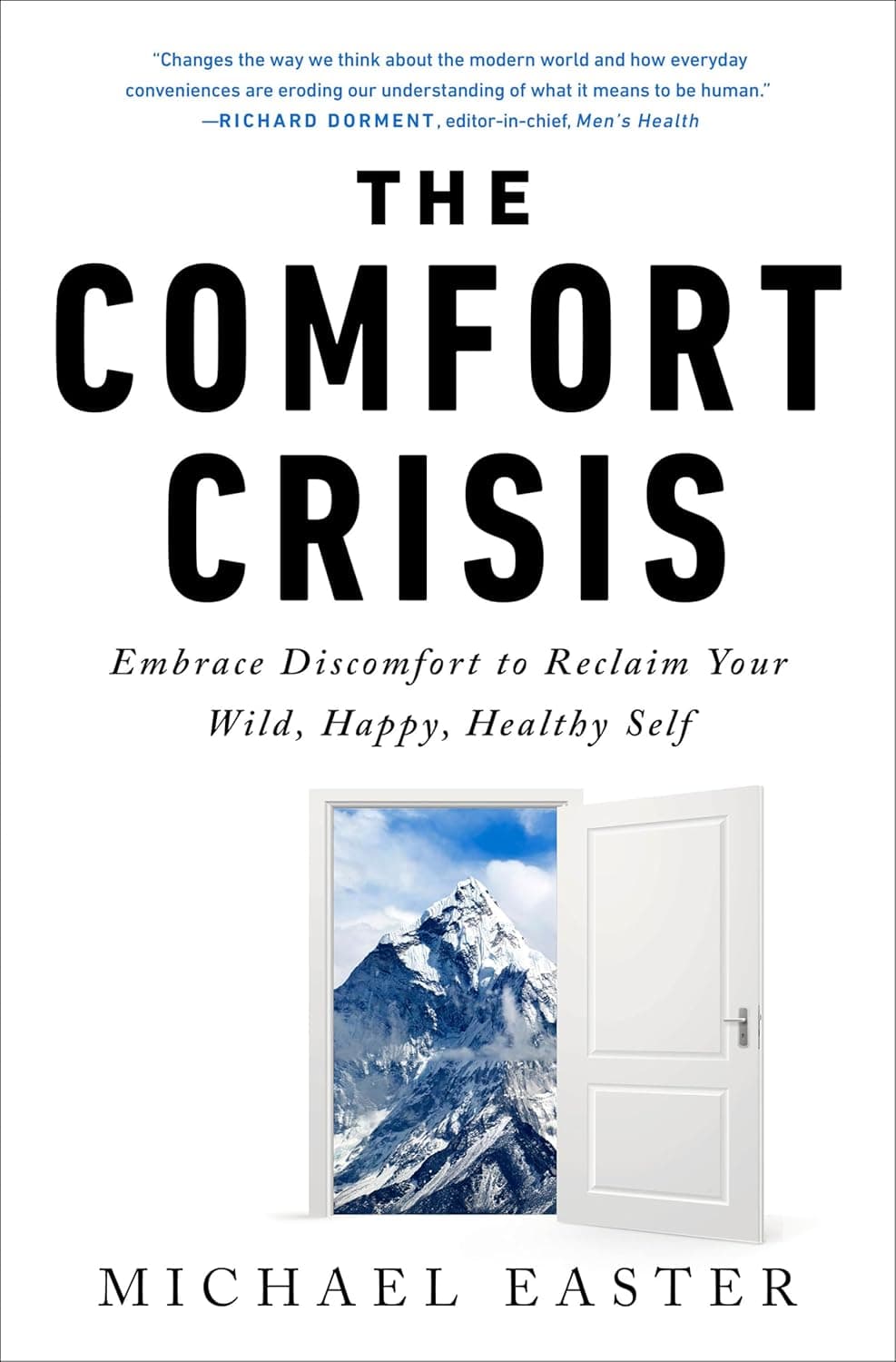
What This Theme Explores
Confronting Mortality for a Fuller Life asks how acknowledging death can puncture the numbing comforts that keep us anxious, distracted, and small. By deliberately turning toward impermanence, Michael Easter argues, we reclaim gratitude and urgency, trading a “checklist” existence for a life oriented around meaning rather than accumulation. The book explores whether everyday engagement with death—through reflection, risk, and participation in nature’s cycles—can make us less fearful and more compassionate. It ultimately suggests that discomfort with mortality is not a morbid fixation but a necessary discipline for living well.
How It Develops
The theme begins with raw fear. Early on, Easter confronts death as an immediate threat: he quits drinking to avoid an early grave and steps into the Alaskan backcountry where small mistakes can be fatal—choices that move mortality from abstraction to pulse-quick reality (Chapter 1-5 Summary). This fear—of the bush plane, of grizzlies, of the cold—creates a hum of vigilance that strips away complacency. Rather than paralyzing him, it recalibrates his attention to what actually matters, exposing how modern comfort dulls that focus.
The middle stretch deepens the theme by normalizing discomfort. Boredom, solitude, and hunting are presented not as exotic ordeals but as ancestral conditions where scarcity and danger taught presence. As Easter learns to watch and wait outdoors, he notices how food, weather, and time are entangled with survival, and how the hunt places him inside, not outside, the life-death exchange he usually consumes invisibly through packaged meat (Chapter 6-10 Summary).
The trip to Bhutan marks a pivot from survival-mode awareness to philosophical practice. Through conversations with Khenpo Phuntsho Tashi and a hospital lama, Easter encounters mitakpa—impermanence—as a daily discipline meant to realign values, attention, and compassion. Here the theme shifts from fear management to meaning-making: regular contemplation of death is framed as the engine of happiness, not its enemy. The point lands with visceral force when Easter performs CPR on a monk at the Tiger’s Nest monastery, collapsing theory into lived reality (Chapter 16-20 Summary).
Finally, the caribou hunt completes the arc from spectator to participant. Taking an animal’s life to sustain his own compels Easter to reckon with moral responsibility and to reject the sanitized distance of modern consumption. The butchering becomes an embodied meditation on gratitude, cost, and continuity—mortality as shared economy rather than private dread (Chapter 21 Summary). The book closes by scaling this insight historically: cultures hardened by exposure to death—like the Icelanders—grow resilient not in spite of mortality’s presence but because of it (Epilogue).
Key Examples
-
The first jolt of fear reframes comfort as risk avoidance rather than aliveness. Donnie Vincent names the danger plainly during the bush flight, stripping away polite euphemism and forcing Easter to acknowledge real stakes.
“I’m not telling you we’re not going to crash and die,” Donnie continues. “That is a real risk, OK? But this guy is good. So the odds that we’ll be in a plane crash are…” The bluntness punctures denial: by naming death, Donnie opens the possibility of choosing courage rather than clinging to false guarantees.
-
Bhutan reframes death contemplation as a happiness practice rather than morbidity. The khenpo’s metaphor of the cliff recasts mortality as a guidepost for ethical attention.
“When you start to understand that death is coming, that the cliff is coming, you see things differently. You change your mental course—you naturally become more compassionate and mindful,” said the khenpo. “But Americans, they don’t want to hear about the cliff. They don’t think about death.” The image clarifies cause and effect: awareness of the “cliff” redirects desire away from trivial pursuits toward compassion and presence.
-
Mitakpa (impermanence) becomes the book’s conceptual hinge—simple, repetitive, inescapable.
“Mitakpa is ‘impermanence,’ ” said the lama. He raised an arm and finger, like a professor stressing a point. “Impermanence, impermanence, impermanence.” This, he said, is the cornerstone of Buddhist teachings. It’s the idea that everything is, well, impermanent. Nothing lasts and, therefore, nothing can be held on to. The insistence on impermanence functions as both diagnosis (clinging causes suffering) and prescription (let go to live fully).
-
The failed resuscitation at Tiger’s Nest collapses distance between “thinking about death” and facing it.
“Twenty minutes, eleven seconds,” said the doctor. “You can stop.” He was gone. Here was a man who just minutes ago had hiked five steep miles, joking and laughing and talking with friends along the way. Death can come at any time. Mortality becomes immediate and indiscriminate, turning philosophical insight into embodied humility and gratitude.
-
The caribou kill forces moral ownership over nourishment.
I had never been so close to death, the moment where the life cycle ends for one living thing so that it may continue for another. The last meat I’d eaten came in a paper bag and between a bun, and was likely shipped from some secretive midwestern slaughterhouse. The scene exposes the ethical cost of eating and critiques modern insulation from that cost, transforming eating into an act of mindful reciprocity.
Character Connections
Michael Easter’s arc tracks the theme’s movement from avoidance to engagement. He starts by fleeing a slow death via alcohol and tiptoes into a landscape that makes fragility impossible to ignore. Bhutan then reframes fear into practice; the monk’s death and the caribou’s death anchor that practice in responsibility and empathy. By the end, Easter treats mortality as a compass—something to consult daily to prioritize purpose over comfort.
Donnie Vincent embodies fluency with risk and consequence. His steadiness in dangerous environments models an honest partnership with nature’s terms: the point is not to dominate danger but to accept it as the context of meaningful action. Donnie thus functions as a mentor in courage—teaching Easter to let fear instruct rather than control him.
Khenpo Phuntsho Tashi and Lama Damcho Gyeltshen provide the book’s philosophical chassis. They translate impermanence into everyday behavior—mindfulness, compassion, value clarity—showing how death contemplation dissolves petty ambitions. Their teachings tether Easter’s embodied experiences to a coherent worldview, turning isolated hardships into a sustainable practice.
Symbolic Elements
-
The Hunt: Hunting symbolizes consent to reality’s terms: life feeds on life. By making the taker answerable to the taken, it converts consumption from an invisible entitlement into a visible covenant—gratitude, restraint, and stewardship.
-
The Arctic Wilderness: The Arctic functions as a moral tutor through risk. Its indifference strips away illusions of control, forcing humility, attentiveness, and shared dependence—virtues that modern insulation often erodes.
-
Bhutan: Bhutan represents a culture that ritualizes mortality-awareness into civic and personal well-being. It stands as a countermodel to the West’s denial, suggesting that peace is found not by banishing death but by integrating it.
Contemporary Relevance
In a world obsessed with optimizing longevity while outsourcing discomfort, death becomes a technical glitch to delay, not a truth to live by. The result is a paradox: more safety and convenience alongside more anxiety, distraction, and emptiness. This theme proposes a corrective—daily contact with impermanence as an antidote to numbness, status-chasing, and the “checklist” life. By re-entering the cycles of nature, accepting risk proportionate to meaning, and practicing death contemplation, modern readers can regain urgency, gratitude, and a sturdier sense of purpose.
Essential Quote
“When you start to understand that death is coming, that the cliff is coming, you see things differently. You change your mental course—you naturally become more compassionate and mindful.”
This statement distills the book’s thesis: mortality is not a terror to suppress but an orientation device. The image of the cliff focuses attention and reorders priorities in real time, converting fear into compassion and distraction into presence—the essence of living more fully by facing the end squarely.