Opening
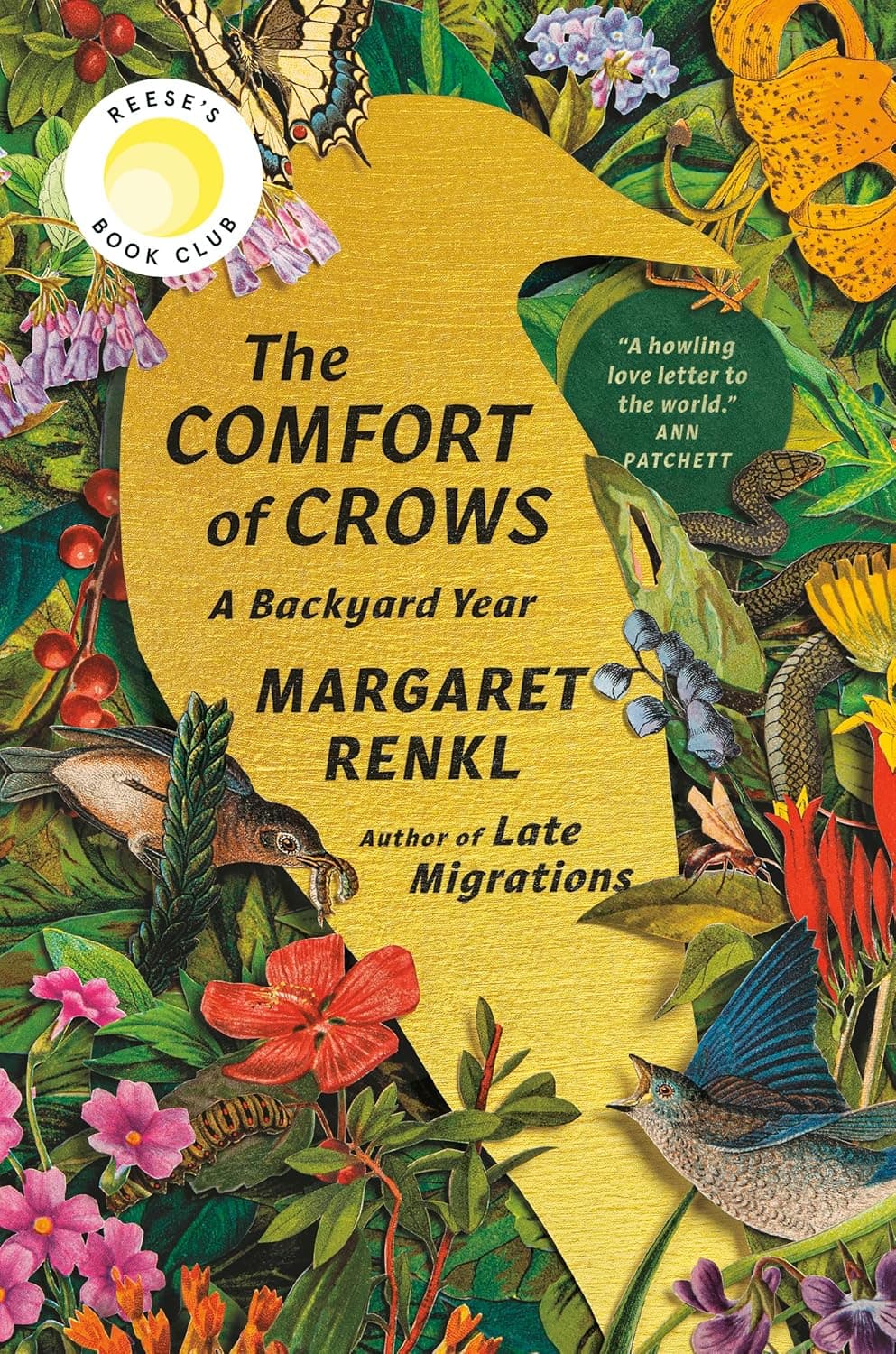
Spring returns and Margaret Renkl looks closer: gold in maple flowers, old names stitched to family, bluebirds stitching hope to grief. Across five chapters, illness loosens its hold, lawns become moral choices, and a nesting killdeer turns poetry into touchable truth.
What Happens
Chapter 21: Praise Song for the Maple Tree’s First Green
In the second week of spring, Renkl holds Robert Frost’s “Nothing Gold Can Stay” up against her own yard. As a girl in Alabama, she thinks “Nature’s first green is gold” belongs to New England alone. Now, the sugar maples in Tennessee flower in pale catkins that haze the trees with gold—“a miser’s hoard,” “Rapunzel in her tower.”
She knows the moment vanishes fast. New leaves will hide the fragile blooms, so she stands and stares, trying to memorize the light before it fades. The briefness of this beauty affirms the truth of Cycles of Life, Death, and Renewal: the first gold is precious because it cannot last.
Chapter 22: The Names of Flowers
Renkl turns to names as keys to belonging. The weed she calls “stickywilly” wears many other names—catchweed, bedstraw, cleavers—but the word she learned from her Wiregrass elders is the one that roots her to people and place, binding language to memory and to The Human-Nature Connection.
She pairs “stickywilly” with the serviceberry—also shadbush, juneberry—whose bloom once signaled thaw and burial in isolated communities. In contrast, modern spring unfurls with forsythia and Bradford pears: flashy non-natives that feed little and crowd out what does. The displacement of native plants marks cultural erasure and ecological harm, deepening Grief, Hope, and Environmental Change. Naming becomes identity and inheritance—tied explicitly to The Parents and Grandparents—and she closes with: “What you call the wildflowers will tell you who you are.”
Chapter 23: The Beautiful World beside the Broken One
After three weeks of Covid, Renkl emerges hollowed by doomscrolling. Outside, spring has leapt ahead: purple deadnettle pools in the grass, trout lilies star the ground, jays and chickadees tune the air. She steps into the “other world that has always existed apart from and alongside civilization,” and her panic loosens.
Indifference saves her. A bluebird gathers grass for a nest, an earthworm turns soil; neither cares about headlines. Soil microbes, she notes, lift serotonin—nature’s quiet pharmacology. She chooses to turn from the glowing screen and toward the steadying rhythms of the living world, finding a recurring emblem of renewal in The Bluebirds and their bright, ordinary work.
Chapter 24: Wildflowers at My Feet and Songbirds in My Trees
Renkl praises what most yards mow down: dandelion, fleabane, spring beauty. Her “ankle-high meadow” feeds hungry pollinators when little else blooms, while the neighborhood’s “rolling carpet of grass” demands water and poisons that kill insects, sicken birds, and endanger children. The immaculate lawn, she argues, isn’t neutral—it’s a choice with costs—and the gap between her yard and everyone else’s makes her feel alone.
A family shift magnifies that loneliness. She and her husband, Haywood, help their younger Sons find an apartment. Gratitude for their independence mixes with a sudden, “unexplainable” grief. The personal ache merges with ecological sorrow over collapsing insect and songbird populations, tying Aging, Family, and the Passage of Time to environmental unraveling. When a rabbit nibbles her flowers, the scene feels right. “The flowers are for her,” Renkl thinks—and means it.
Chapter 25: Praise Song for the Killdeer on the School Softball Field
In a brief classroom memory, Renkl’s students stumble over Gerard Manley Hopkins’s lines: “the Holy Ghost over the bent / World broods with warm breast and with ah! bright wings.” The image of a brooding bird is abstract to them—until one student remembers a bird on the softball field.
They go outside. A killdeer sits on speckled eggs nestled straight on the ground, nearly invisible among stones. The class watches the mother lower herself onto her “world-shaped eggs,” and the poem lands. Art, faith, and the natural world braid into a single, seen thing.
Character Development
Renkl moves through illness, private sorrow, and public concern by training her attention on what thrives at her feet and in her trees. Observation becomes practice; practice becomes care; care becomes critique—and hope.
- She shifts from convalescent doomscrolling to deliberate immersion in nearby nature as a mental-health discipline.
- Her stance hardens from gentle preference to ethical argument against manicured lawns and for native habitat.
- Motherhood transforms from daily presence to a reflective, interwoven identity with writer and naturalist as her sons prepare to leave home.
- Grief broadens: the “empty nest” mirrors the vanishing chorus of birds and insects, deepening her sense of responsibility.
Themes & Symbols
Renkl frames a core conflict: the manicured lawn versus the wild yard. The lawn promises order but enacts sterility—an aesthetic of control that depends on extraction and poison. The wild yard models reciprocity, asking little and offering much: nectar in lean weeks, seed and shelter later, a corridor for life across seasons. The choice reads as moral, not merely decorative, and it locates environmental action at the scale of a single lot.
Names anchor identity. Calling a plant “stickywilly” rather than cleavers preserves lineage, dialect, place. As non-native ornamentals replace serviceberry and other natives, people lose not just ecological functions but the language and rituals that made local seasons legible. Loss, in these chapters, runs on parallel tracks—family change and ecological decline—but the work of attention turns both into sites of meaning rather than erasure.
Symbols recur with clarity:
- The maple’s first gold signals beauty’s brevity and the disciplines of noticing.
- The bluebird’s nest stands for steady, ordinary hope.
- The killdeer brooding on ground-scraped eggs embodies protective tenderness, translating spiritual metaphor into a living tableau.
Key Quotes
“Nature’s first green is gold.”
Frost’s line becomes literal in maple catkins dusting the yard with light. Renkl uses it to frame a seasonal ethic: treasure the unstable state, because it is the point where change shows itself.
“What you call the wildflowers will tell you who you are.”
Naming reveals allegiance—family, region, and ecological knowledge. The sentence argues that language isn’t decorative; it is a map of belonging and responsibility.
“The flowers are for her.”
Watching a rabbit eat, Renkl rejects ownership in favor of participation. The line reframes a yard from personal property to shared habitat and turns sacrifice into fulfillment.
“the Holy Ghost over the bent / World broods with warm breast and with ah! bright wings.”
Hopkins’s image becomes legible when a killdeer settles on “world-shaped eggs.” The quote’s theological abstraction resolves into muscle, feather, and care, showing how nature unlocks art.
“the other world that has always existed apart from and alongside civilization.”
This phrase marks Renkl’s pivot from doomscrolling to dirt and birdsong. It names a parallel reality—resilient, indifferent, and healing—that any reader can enter by stepping outside.
Why This Matters and Section Significance
These chapters set the book’s heartbeat: attention as care, and care as ethics. Renkl moves from private recovery to public argument, insisting that small, local acts—letting dandelions bloom, learning a plant’s old name, leaving grass a little long—scale into repair. By entwining family transition with ecological decline, she shows how personal grief and environmental grief echo each other—and how both soften under the same remedy: watch closely, help what you can, and keep a place where life can go on.