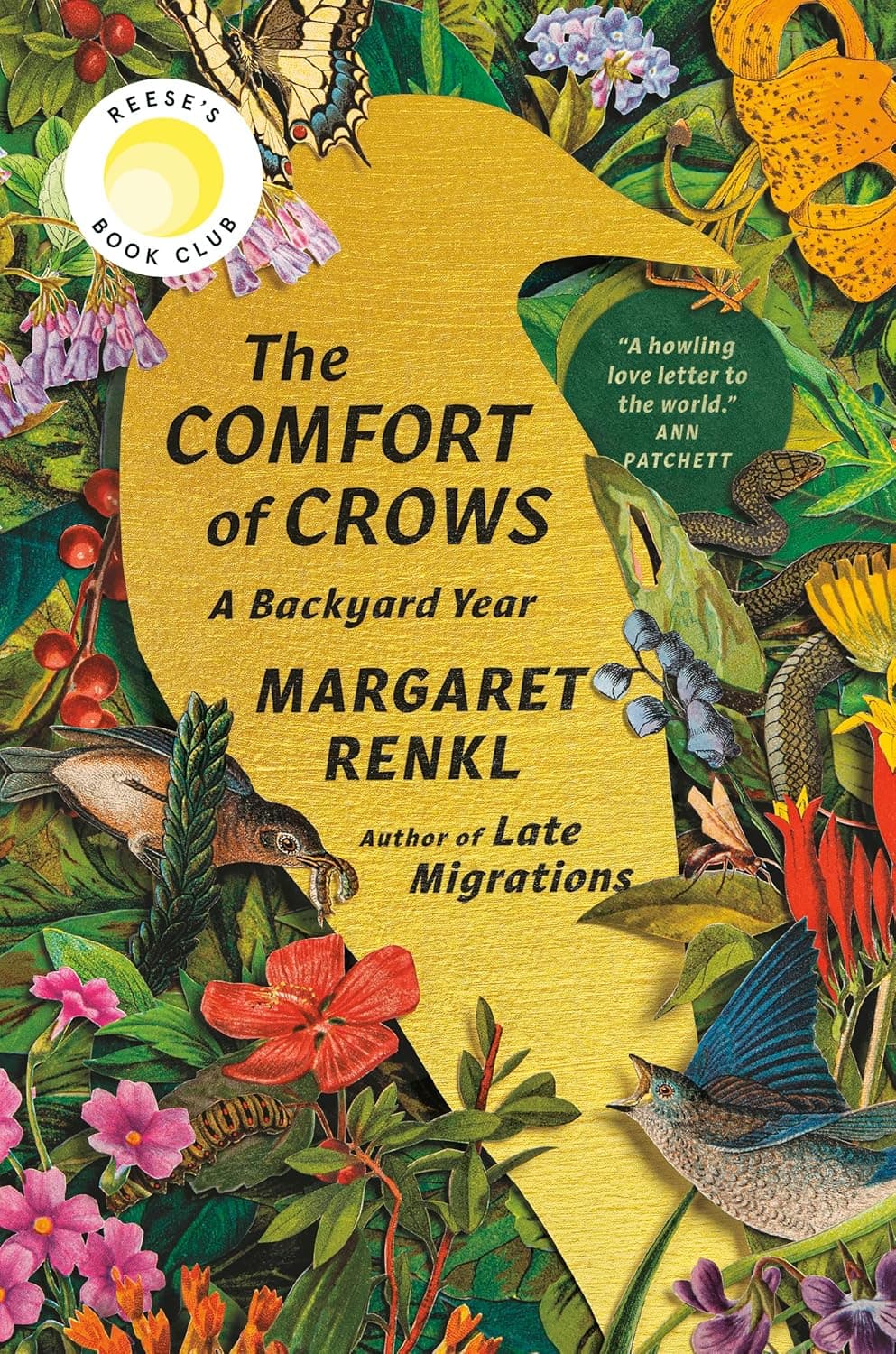
Opening Context
The Comfort of Crows turns one backyard year in Nashville into a meditation on belonging—how human lives braid into the living world’s cycles, costs, and consolations. Across the four seasons, weekly observations of birds, insects, plants, and family become a lens for life and death, grief and hope, and the passage of time. Renkl’s close attention to small, ordinary dramas reveals expansive truths about love, loss, and responsibility.
Major Themes
The Human-Nature Connection
The Human-Nature Connection anchors the book, insisting that people are participants in, not spectators of, the more-than-human world. Through the narrator Margaret Renkl, kinship becomes both practice and solace: observing and caring for one’s patch of earth deepens meaning and steadies the spirit. Even the backyard’s “edge” spaces—home to The Crows, vulnerable foxes, and resilient bluebirds—show that human homes and wild lives are bound up in a single, shared story.
Cycles of Life, Death, and Renewal
Cycles of Life, Death, and Renewal shape the book’s structure and its outlook: winter to spring to summer to fall, seed to bloom to decay to soil. Death is not a boundary but a turning—what falls apart becomes the basis for what returns. From rotting wood that shelters new seedlings to ephemeral waters that dry and then teem again, Renkl treats decay as an engine of generosity, a reminder that transformation is the world’s first language.
Grief, Hope, and Environmental Change
Grief, Hope, and Environmental Change describes the emotional weather of living in the Anthropocene. Renkl mourns the vanishing—poisoned lawns, dwindling insects, species lost—yet refuses to surrender the astonishment and joy that make care possible. Beauty persists beside damage; resilience persists beside harm. Holding both truths at once becomes an ethical stance and a way to keep acting.
Aging, Family, and the Passage of Time
Aging, Family, and the Passage of Time places personal milestones alongside seasonal ones: children growing up and leaving, elders dying, middle age bending toward its “last third.” Family life—her sons, her husband Haywood, her parents and grandparents—becomes legible through the yard’s rhythms, which comfort even as human time moves in one direction. The garden’s returns do not erase the finality of human loss, but they frame it, softening its edges with pattern and return.
Supporting Themes
The Value of Paying Attention
Attention operates as method and devotion. By lingering over “small” lives and everyday processes, Renkl renders them luminous and reveals how seeing clearly seeds compassion. This practice sustains the Human-Nature Connection and keeps Hope alive amid environmental grief.
Benign Neglect vs. Active Intervention
Renkl wrestles with her role as a gardener-steward—letting nature be versus stepping in to protect fragile lives in a world already shaped by human harm. This ethical tension threads through the yard: rescue attempts, habitat-making, and restraint all test the boundaries between care and control. The debate links directly to environmental grief and to the humility demanded by natural cycles.
Memory and Storytelling
Personal history roots observation in lineage; stories become an ecosystem of meaning that outlasts any single season. Memory bridges Aging and Cycles, turning private grief into shared narrative and teaching continuity without denying loss.
The Sacred in the Mundane
Holiness resides in leaf litter, sleeping bees, and a dog’s nose. By sacralizing the ordinary, Renkl reimagines Sabbath as intimate presence with the living world, weaving spiritual resonance through attention, kinship, and care.
Theme Interactions
-
Human-Nature Connection → Grief and Hope: Loving the backyard community intensifies both delight and sorrow. The same sight—a fledgling’s first flight—can console one day and ache the next when set against pesticides or warming seasons.
-
Cycles of Life, Death, and Renewal ↔ Aging, Family, and Time: Nature’s repeating patterns soothe the one-way march of human time. Yet where spring reliably returns, a parent’s death does not; this friction clarifies why natural renewal can comfort but not undo human loss.
-
Grief and Hope ↔ Cycles: Renewal underwrites hope—compost becomes bloom, dead trees become nurseries—while extinction and poisoned habitats mark breaks that cycles cannot mend. Hope remains, but it must reckon with irretrievability.
-
Attention → All Themes: Attentiveness is both the engine and the ethic that makes kinship real, reveals cycles, dignifies grief, and keeps hope practiced rather than presumed.
-
Intervention vs. Neglect ↔ Connection and Change: In a human-shaped world, “letting nature be” is not neutral. Each choice—act or abstain—carries consequences, sharpening the book’s moral inquiry into what care should look like now.
Character Embodiment
Margaret Renkl
As observer, gardener, and narrator, Renkl embodies the Human-Nature Connection and the discipline of attention. Her shifting emotions—grief for what’s lost, joy in what persists—trace the book’s core tension between environmental sorrow and practiced hope, while her family milestones ground the theme of aging.
The Crows
The crow family models multigenerational kinship, intelligence, and adaptability. They mirror human social bonds and suggest a hard-won, urban resilience—comfort found in creatures who thrive on the margins, even amid environmental change.
The Bluebirds
The bluebirds personify Cycles of Life, Death, and Renewal: eggs, fledglings, helpers at the next nest. Their cooperative family structure reflects human caregiving and becomes a living emblem of hope that is tender yet tenacious.
The Foxes
Sick and imperiled, the foxes render environmental harm visible and intimate. They embody the costs of human encroachment and the ethical quandaries of intervention, pulling grief and responsibility into the backyard’s daily life.
Parents, Grandparents, Haywood, and the Sons
Renkl’s elders and her own household carry Aging, Family, and the Passage of Time. Milestones—empty rooms, remembered kitchens, inherited habits—echo the garden’s returns and absences, revealing how love endures even as time moves in one direction.