Opening
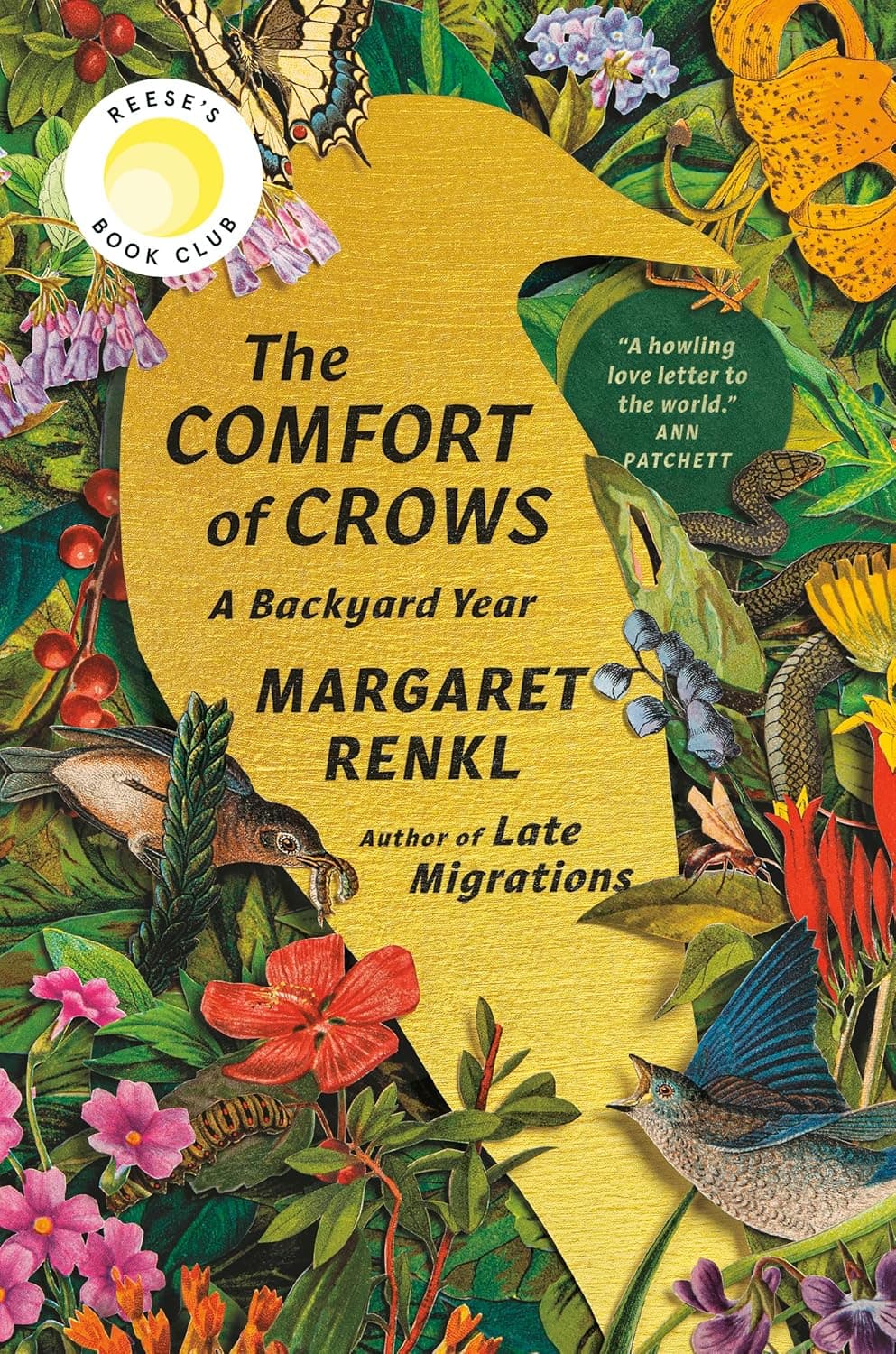
Across these chapters, Margaret Renkl moves from memory to action, from grief to care. She revisits a childhood teeming with amphibians, sings brief praises to bruised beauties in her garden, and tests what it means to really see. Along the way, she grounds the The Human-Nature Connection in lived moments, threads the Cycles of Life, Death, and Renewal through ordinary days, names the ache and persistence of Grief, Hope, and Environmental Change, and clocks Aging, Family, and the Passage of Time with a lifetime of small creatures.
What Happens
Chapter 26: Metamorphosis
Renkl evokes 1970s Alabama, where toads and frogs overflow the woods, gardens, and even town streets. Night air thrums with their “music,” and she and her brother Billy, “half feral,” scoop tadpoles from a creek into a cracked aquarium-turned-terrarium. They build a miniature world—a cereal-bowl pond, damp soil, sheltering leaves—and watch legs bud and bodies reshape. Childlike attention becomes reverence as tadpoles cross the threshold into toads.
As Dotodo and Otodo grow, the siblings learn to hunt for them: roly-polies, ants, crickets. A cricket lays eggs in the tank, and their mistake becomes an ecosystem. The toads eventually scale the glass, hop into the kitchen, and trigger their mother’s scream; that shock ends the experiment, and the siblings carry them to the woods. Years later, that same woods becomes a strip mall. Facing the quiet of her Nashville suburb, Renkl turns grief into action: with her youngest of The Sons, she buys a stock tank to make a small backyard pond, an offering to tree frogs. She calls it an act of faith, the kind she needs when the losses feel unstoppable.
Chapter 27: Praise Song for the Alien in the Shade Garden
In a brief lyric, a new fern-like plant lifts a “ruddy head on a ruddy stem,” fists clenched like an anxious traveler testing a hostile planet. Light and warmth coax it open. What lands as alien learns its place, fear softening into belonging as the garden invites it in.
Chapter 28: Hide and Seek
During Spring Week 7 at a friend’s Lost Cove cabin on the Cumberland Plateau, Haywood settles into rest while Renkl hunts for a pileated woodpecker. Their friend fears the birds have vanished after drought; Renkl hears the call for three days but sees nothing. She even leaves her dog, Rascal, behind so as not to spook the bird.
At last, a woodpecker bursts from the trees. Its “undulating flight” is so mesmerizing that Renkl forgets the camera in her pocket. Annoyance at the missed shot transforms into clarity: the urge to record can “stunt sight.” In standing still, she catches more—the ghost-brown flick of whitetails, goldfinches turned leaf by camouflage—and the moment becomes proof that unmediated attention can widen perception and deepen kinship.
Chapter 29: My Life in Mice
Renkl strings together dated scenes to chart a lifetime of small encounters:
- 1971: A “brave” child opens a sealed cracker box in a new apartment and feels a pregnant mouse’s feet brush her hand as it bolts free.
- 1973: Babysitting next door, she learns a pet guinea pig lives under the dishwasher—soft, safe, a domestic fugitive.
- 1976: Patient gifts of pecans tame a wild squirrel who perches in her lap and follows her indoors—until her mother ends the nut supply and the friendship dissolves.
- 1980: Homesick at college, she keeps a feeder mouse in her dorm, companionship tucked inside contraband.
- 1987: In a rustic cabin with Haywood, night rats creep and a single rat, lit by fire embers, reveals “teacup ears” and whiskers tipped with “a point of light.”
- 2000: A babysitter drops a child’s gerbil into the hamster’s tank. Blood smears the glass. The battered gerbil, still poised to attack, ends her experiment with cages: never again.
The mosaic becomes a ledger of tenderness, curiosity, and ethical change.
Chapter 30: Praise Song for the Redbird Who Has Lost His Crest and the Skink Who Has Lost His Tail
A crestless cardinal shows a skull gone “unsightly gray.” A skink, tailless from escape, zips across the stones. Both keep at the “work of springtime with all their usual fervor”: the skink’s mate lays eggs, the redbird stuffs nestlings in the holly. Broken bodies still complete the season’s assignment.
Character Development
Renkl moves from a child who containers a wild world to an adult who builds a habitat for it. The chapters track her sharpening attention and evolving ethics, especially around seeing versus capturing and caring versus caging.
- Margaret Renkl: Curiosity matures into stewardship. The stock-tank pond translates sorrow into practice; the Lost Cove epiphany shifts her from documenting to dwelling in experience; the gerbil–hamster trauma closes the door on keeping animals in cages.
- Haywood: A calm counterpoint—he proposes rest, sleeps through night rustlings, and lets Renkl’s vigilance have space.
- The Sons: The youngest joins the pond project, proof that care is contagious and hope can be taught.
Themes & Symbols
Renkl binds private memory to living systems. Childhood abundance of amphibians collapses into suburban quiet, and that silence births action. The backyard pond becomes a small repair, a ceremony of faith against disappearance. Across these pages, the Cycles of Life, Death, and Renewal move through tadpoles sprouting legs, a skink’s eventual regrowth, and a redbird’s feathers returning—all reminders that recovery is slow but insistent.
The pull to mediate nature—tanks, cages, camera—gives way to a humbler posture. The The Human-Nature Connection strengthens when she chooses presence over possession, coexistence over control. In parallel, the book’s elegy for lost habitats swells into the defiant tenderness of small acts, holding both Grief, Hope, and Environmental Change at once. The dated vignettes trace Aging, Family, and the Passage of Time, stitching personal milestones to a ledger of species and seasons.
Symbols:
- The cracked aquarium and cages: human impulse to own the wild—and the harm and naivety inside that urge.
- The stock-tank pond: active hope, a chosen future, an invitation for what is missing to return.
- The camera: a tool that can either widen attention or narrow it; restraint becomes a virtue.
Key Quotes
“Picture, now, the girl I was.”
- A direct address collapses time, ushering the reader into a remembered ecology and framing the book’s intimate, confiding voice.
The air is thick with the “music” of their calls.
- Sound becomes abundance you can feel, signaling a baseline of life that makes present-day quiet ring like loss.
I watched its “undulating flight” and forgot the camera in my pocket.
- Wonder overrides capture. The shape of the bird’s movement replaces the shape of a photo, redefining what counts as seeing.
The drive to document can “stunt sight.”
- A thesis for the Lost Cove sequence: technology is not neutral, and attention is a finite resource worth protecting.
“Never again will we keep a creature in a cage.”
- A line in the sand born of blood and shock, converting a lifetime of ambivalence into an ethical rule.
They continue the “work of springtime with all their usual fervor.”
- Even injured, the cardinal and skink fulfill their seasonal roles, a compact image of resilience that reframes beauty as persistence.
A rat with “teacup ears” and whiskers ending in “a point of light.”
- Language softens revulsion into regard, recoding a maligned animal as delicate and worthy of notice.
Why This Matters and Section Significance
This section establishes the book’s moral arc: memory names what’s been lost; grief clarifies what’s at stake; action—however small—keeps faith with the living world. “Metamorphosis” functions as a blueprint: abundance, diminishment, and then a human intervention sized to a backyard but aimed at a wider repair.
Together, the chapters refine Renkl’s stance as a naturalist. She values unmediated experience over proof, stewardship over control, and intergenerational transmission over solitary witness. The pond, the pocketed camera, and the emptied cages all point in one direction: a simpler, more attentive, and more ethical way to live alongside the wild.