What This Theme Explores
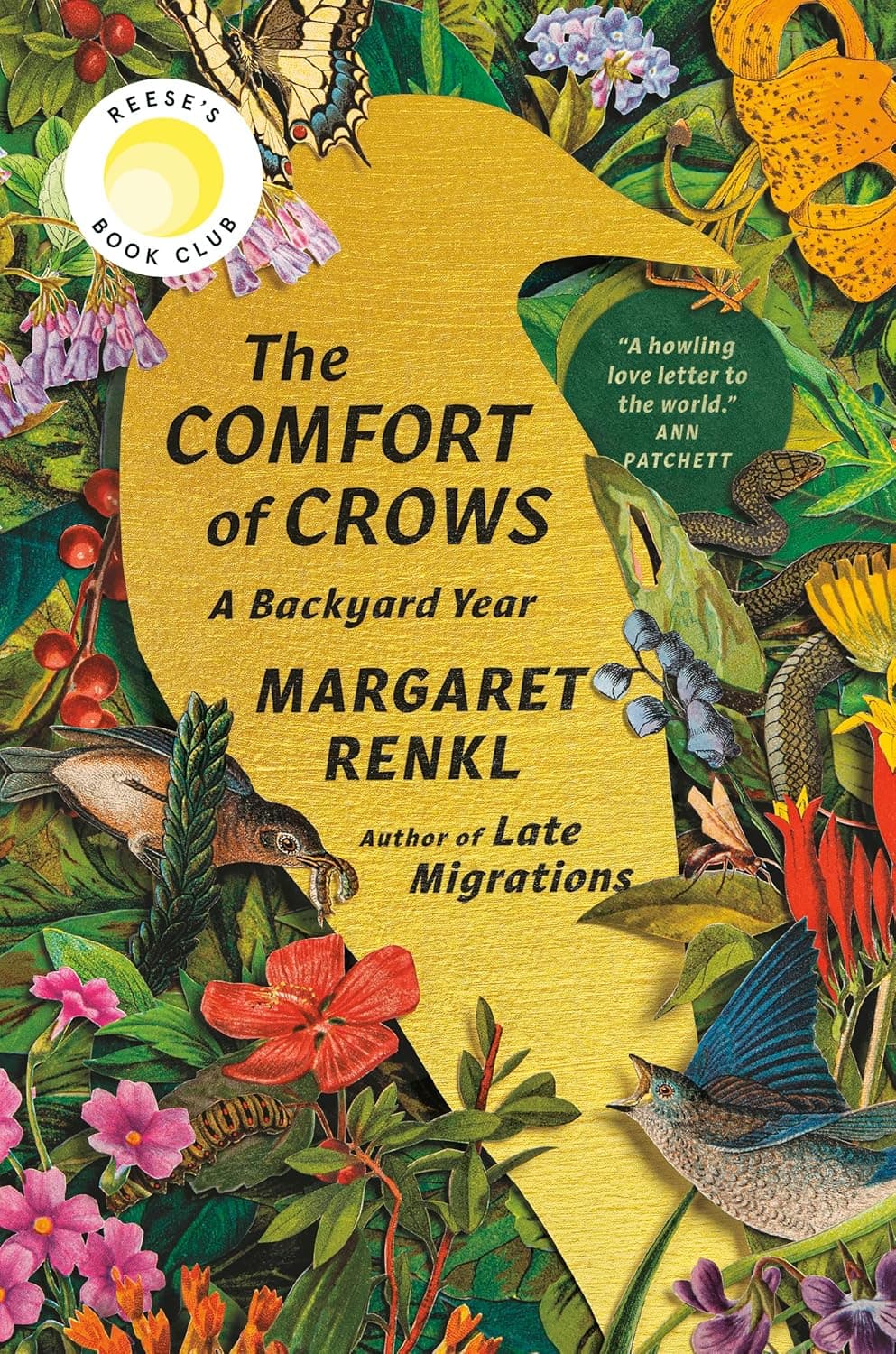
The Human–Nature Connection in The Comfort of Crows asks how attention to the living world can reshape our inner lives and restore a sense of kinship. For Margaret Renkl, nature is not scenery but family, a teacher that refracts aging, grief, and love through cycles of birth, decay, and renewal. The theme probes what we owe the creatures who share our habitats and how far our stewardship should go. Above all, it suggests that looking closely—truly seeing—reintegrates us into a community we never actually left.
How It Develops
Renkl’s seasonal structure lets the connection ripen across the year. In winter, bare branches turn the yard into a legible map; with the “contours of the earth” revealed, she can name birds, track foxes, and feel the tug of caretaking—heated birdbaths, improvised remedies, the steady presence of a human neighbor in a hard season. The bond begins as watchfulness and stewardship, an ethic of tending life amid dormancy.
Spring shifts from observation to participation. Renkl builds habitats—ponds for frogs, plots for pollinators—and then confronts the ethical costs of proximity when nestlings die or a predator appears. The connection grows more complicated: creation entails risk, and loving a place means consenting to its sorrows as well as its abundance.
By summer, immersion replaces management. Renkl embraces “unloved” animals—opossums, spiders, wasps—and recognizes her family’s changes in the social patterns of birds. Coexistence requires accepting the food chain’s brutality without withdrawing affection, discovering that tenderness and predation inhabit the same backyard.
Autumn brings a contemplative cadence. Migratory departures and thinning light make time’s passage visible, and small acts—like sheltering a swallowtail caterpillar—become rituals of hope. The connection resolves into letting go without despair: decline is not negation but a phase inside a larger continuity.
Key Examples
-
The Call to Attention: The opening essay, “Wherever You Are, Stop What You’re Doing,” is both instruction and thesis. Renkl invites readers to “stop and think for a time about kinship” by noticing particulars—ivy roots, a duck’s foot bones—arguing that intimacy with detail is the doorway to belonging. Attention becomes the practice that converts a yard into a community.
-
The Fox and the Trap (How to Catch a Fox, Chapter 1-5 Summary): Renkl’s attempts to treat a mangy fox reveal care as both moral imperative and humbling ordeal. She shoulders responsibility for harms entwined with suburban sprawl, yet discovers that intervention has limits. The episode reframes stewardship as faithful persistence rather than guaranteed rescue.
-
The Tadpole Terrarium (Metamorphosis, Chapter 11-15 Summary): A childhood aquarium that becomes a self-balancing ecosystem seeds Renkl’s lifelong reverence for interdependence. Watching toads metamorphose teaches that life’s changes are not aberrations but design. The memory grounds her adult attentiveness in wonder rather than control.
-
The Spider on the Desk (The Spider in My Life, Chapter 36-40 Summary): A desk-dwelling spider links compost worms, gnats, and hummingbirds into a miniature web of relations. The spider is not mere symbol; it performs real ecological work that calms Renkl when human systems feel chaotic. Function and comfort intertwine, making kinship tactile, not abstract.
-
The Lazarus Snail (Chapter 46-50 Summary): A seemingly empty shell revives after Renkl moistens it, collapsing the boundary between death and dormancy. The moment is a parable of resilience: life often persists out of sight, waiting on the right conditions. Renkl learns that hope is a practice of hospitality to possibility.
Character Connections
Margaret Renkl: As narrator, Renkl’s consciousness is the instrument that tunes the world into meaning. She refuses to treat her yard as property and instead occupies it as a member of a neighborhood of species; writing becomes her form of bearing witness. Her ethical oscillation—when to intervene, when to let be—animates the theme’s moral stakes.
The Crows: In “The Crow Family” (Chapter 6-10 Summary), their multigenerational society mirrors Renkl’s own kin, especially her grandparents. Their intelligence and communal care complicate human notions of “pest,” pushing Renkl to enlarge the circle of relational respect. The crows make visible the continuity between human and avian family structures.
The Bluebirds: In “Reverse Nesting” (Chapter 31-35 Summary), first-clutch fledglings feed younger siblings just as Renkl’s sons support one another while leaving home. The birds’ cooperative parenting reframes departure as connection, not abandonment. Watching them allows Renkl to bless change rather than resist it.
The Parents and Grandparents: Renkl’s elders impart a land-centered sensibility—gardening hands, rural memory—that underwrites her attention. Tending the yard becomes an ancestral practice, a way to keep faith with people and places at once. Family lineage thus fuses with ecological lineage, deepening belonging across generations.
Symbolic Elements
The Backyard: The half-acre suburban lot is a microcosm where epic dramas occur within arm’s reach. It proves that “wildness” is not elsewhere; it is latent in any place granted time and care. As a stage and a teacher, the yard turns ordinary maintenance into ritual.
Bird Feeders and Nest Boxes: These human-made structures materialize the threshold between care and control. They create portals of encounter, but they also attract predators, forcing Renkl to accept that inviting life also invites death. The symbols insist that kinship cannot be curated without consequence.
The Seasons: Winter’s austerity, spring’s surge, summer’s saturation, and autumn’s elegy structure both plot and psyche. The cycle enacts an emotional pedagogy: patience in dormancy, courage in emergence, humility in abundance, grace in decline. Time itself becomes the book’s most insistent natural law.
The Ephemeral Pond: The temporary woodland pool in “Ephemeral” gestures to hidden worlds that appear and vanish with rain. Its brevity intensifies attention, reminding Renkl that value is not proportional to duration. The pond sanctifies the overlooked and trains the eye to expect marvels at the margin.
Contemporary Relevance
In an age of doomscrolling, climate dread, and frayed social bonds, Renkl’s ethos reframes attention as an act of repair. By localizing planetary crises—a sick fox on a suburban street, vanishing toads in a familiar ditch—she personalizes stakes without shrinking them, making action feel possible. Her practice of witnessing, rather than numbing, offers a durable antidote to despair: hope as daily apprenticeship to renewal.
Essential Quote
The world lies before you, a lavish garden. However hobbled by waste, however fouled by graft and tainted by deception, it will always take your breath away.
We were never cast out of Eden. We merely turned from it and shut our eyes. To return and be welcomed, cleansed and redeemed, we are only obliged to look.
This passage crystallizes the book’s theology of attention: Eden is not lost but unseen. Redemption is not a distant miracle but a practice—opening one’s eyes to the lavishness persisting alongside brokenness. The Human–Nature Connection, then, is both worldview and discipline, teaching that belonging begins with the gaze.