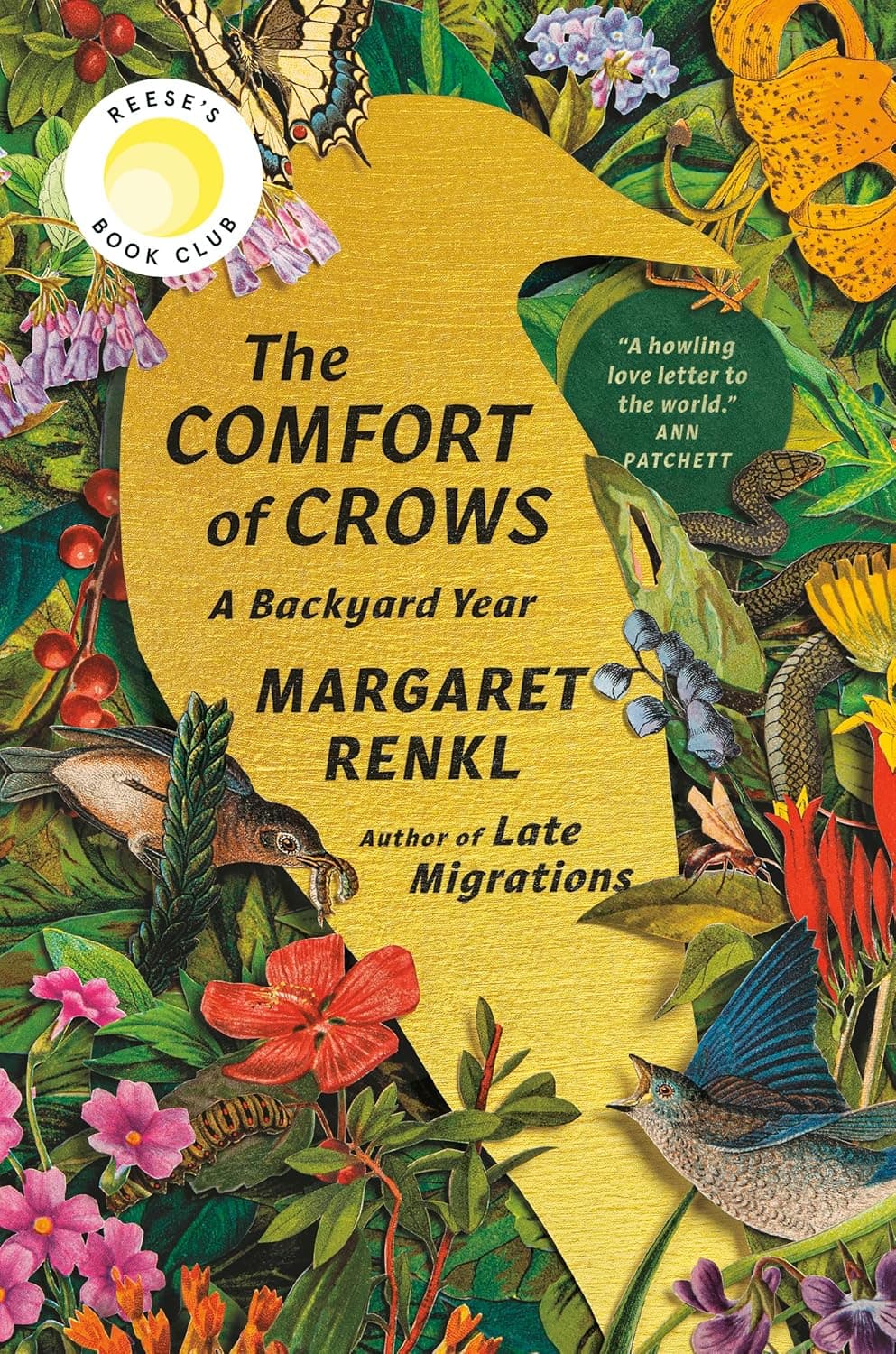
In this nature-infused memoir, the cast is made of real people and the living community of a Nashville backyard. Birds, insects, mammals, and trees become characters whose seasonal dramas mirror the author’s family transitions, griefs, and hard-won hopes. Together they illuminate cycles of loss and renewal, and the human longing for connection within a larger web of life.
Main Characters
Margaret Renkl
Margaret Renkl is the memoir’s narrator and guiding consciousness, a close watcher of the ordinary who finds meaning in the smallest seasonal shift. She balances eco-anxiety and personal grief with disciplined attention, translating backyard observation into reflections on aging, memory, and the possibility of hope. As she navigates an emptying nest and assumes her place as the family’s elder, her bond with the nonhuman world deepens, especially with emblematic species like crows, bluebirds, and foxes. Her marriage to Haywood steadies the domestic sphere, while the sons’ departures and the remembered presence of parents and grandparents frame her meditation on time. Serving as the bridge between human and wild, she learns to hold sorrow and joy at once, finding solace in nature’s relentless renewal.
Haywood
Haywood is the author’s husband and the memoir’s quiet ballast, pairing practicality with deep tenderness. Approaching retirement and sharing the empty-nest transition, he complements Margaret’s reflective temperament with action—building a stock-tank pond in “Thirty-Four Is Tadpoles,” mowing paths, and problem-solving small crises. His steady presence turns ordinary days into a life of shared purpose, anchoring the household through change. As father to the sons and son to a father he mourns, his experience of generational shift mirrors Margaret’s, forging a partnership grounded in endurance and care.
The Sons
The Sons embody the passage of time, their move from childhood bedrooms to independent lives marking the memoir’s central human transition. Their pandemic return briefly reverses the clock, but their eventual departure—chronicled in “Done with Waiting”—becomes the catalyst for their parents’ “reverse nesting.” Loving and closely connected to each other, they form a supportive unit even as they disperse, with the younger brothers planning to live near the eldest. Their leaving reshapes the household’s rhythms and sharpens Margaret’s attention to cycles, loss, and the joys that persist.
The Crows
The Crows are the title’s emblem and a recurring presence, chosen as the “first bird” of the year and returning as kin across the seasons. Intelligent, adaptable, and deeply social, they live within multigenerational family groups—echoed in human family stories Margaret cherishes from “The Crow Family.” As tender parents and ruthless opportunists, they embody nature’s dualities, forcing a reckoning with beauty braided to predation. Their constancy and cohesion offer comfort not through gentleness but through resilience, community, and clarity of purpose. In them, Margaret recognizes a mirror for how to endure.
The Bluebirds
The Bluebirds carry a delicate thread of hope through multiple nesting attempts, each brood a bet on spring’s return. Their story is edged with risk and grief—from weather and predators to a devastating, accidental loss—yet also marked by unexpected cooperation, as fledglings help feed a later clutch in “Reverse Nesting.” Their cycles of building, failing, and beginning again test Margaret’s instinct to intervene while teaching her to accept nature’s terms. Even their autumn roosting in the box suggests a modest, enduring promise. They are the memoir’s tender measure of vulnerability and resilience.
Supporting Characters
The Parents and Grandparents
The Parents and Grandparents live in memory as the moral and emotional root system of the book, tied to Lower Alabama’s land, faith, and practical resilience. Their stories—like multigenerational living after catastrophe and a mother’s love of gardening—shape Margaret’s sense of stewardship, grief, and belonging. As she becomes the oldest generation herself, her kinship with their mortality deepens, especially in elegiac moments like “Dust to Dust.”
The Foxes
The Foxes represent the wild at suburbia’s edge and the ethical complexity of intervening in nature. In “How to Catch a Fox,” a sick fox with mange spurs a fraught rescue attempt that accidentally ensnares a healthy, wily companion—proof of intelligence and the limits of good intentions. They remain memorable as both phantom grace and cautionary sign of human-made imbalance.
Rascal
Rascal is the family dog and Margaret’s walking partner, a joyful witness to the scented world humans cannot perceive. His keen nose alerts her to unseen neighbors—foxes, coyotes—long before she notices, expanding her awareness beyond sight. A steady presence, he models uncomplicated delight in daily ritual.
Billy Renkl
Billy Renkl, the author’s brother and the book’s artist, threads art and memory through the narrative. Shared childhood wonder—raising tadpoles in “Metamorphosis”—flows into adult pilgrimage to a night-blooming cereus, keeping their sibling bond alive in beauty. He embodies the family’s creative inheritance and reverence for transformation.
Minor Characters
- The Bobcat: A rare, electric sighting that reveals the hidden wild coursing through suburban edges.
- The Rat Snake: A recurring reminder of the food chain’s stark arithmetic, forcing acceptance of predation as part of the whole.
- The Rabbits: Secretive nesters whose vulnerable young spark protective dilemmas and quiet vigilance.
- The Insects: From office spiders to raised monarchs, they are the intricate, overlooked backbone of the ecosystem—metamorphosis made visible.
- Mother Ollie: A great-grandmother whose quiet faith and steadiness linger as an ethical compass in Margaret’s memory.
Character Relationships & Dynamics
At the memoir’s center, Margaret and Haywood form a durable partnership that steadies the household through generational shift, while the sons’ departures reconfigure family identity and intensify Margaret’s attention to cycles of change. Memory binds the living to the dead: parents and grandparents infuse the present with stories, skills, and a model of resilience that Margaret increasingly claims as her own. Rascal’s companionship translates the neighborhood’s invisible currents into daily wonder, drawing the human family into a wider, multisensory world.
In the backyard’s social web, the crows and bluebirds offer contrasting lessons about community. Crows model intelligence, kinship, and collective defense—mobbing hawks and navigating risk with tactical savvy—while bluebirds reveal the fragility of new life and the perils of intervention, even as fledglings exhibit surprising cooperation. The fox episode tests the ethics of helping: human care collides with wild autonomy, and the healthy fox’s escape asserts nature’s agency. Predators and prey—hawk and dove, snake and nestling, fox and mouse—compose the unsentimental baseline that Margaret learns to witness without turning away.
These threads divide loosely into human, domestic-wild, and untamed factions, but the memoir resists easy borders. The garden becomes common ground where love takes the form of attention—planting for pollinators, refusing poisons, accepting mess—and where beauty persists alongside loss. Alliances are built on care and humility, and the most enduring bond is the one tying a household to its living place, season after season.