Opening
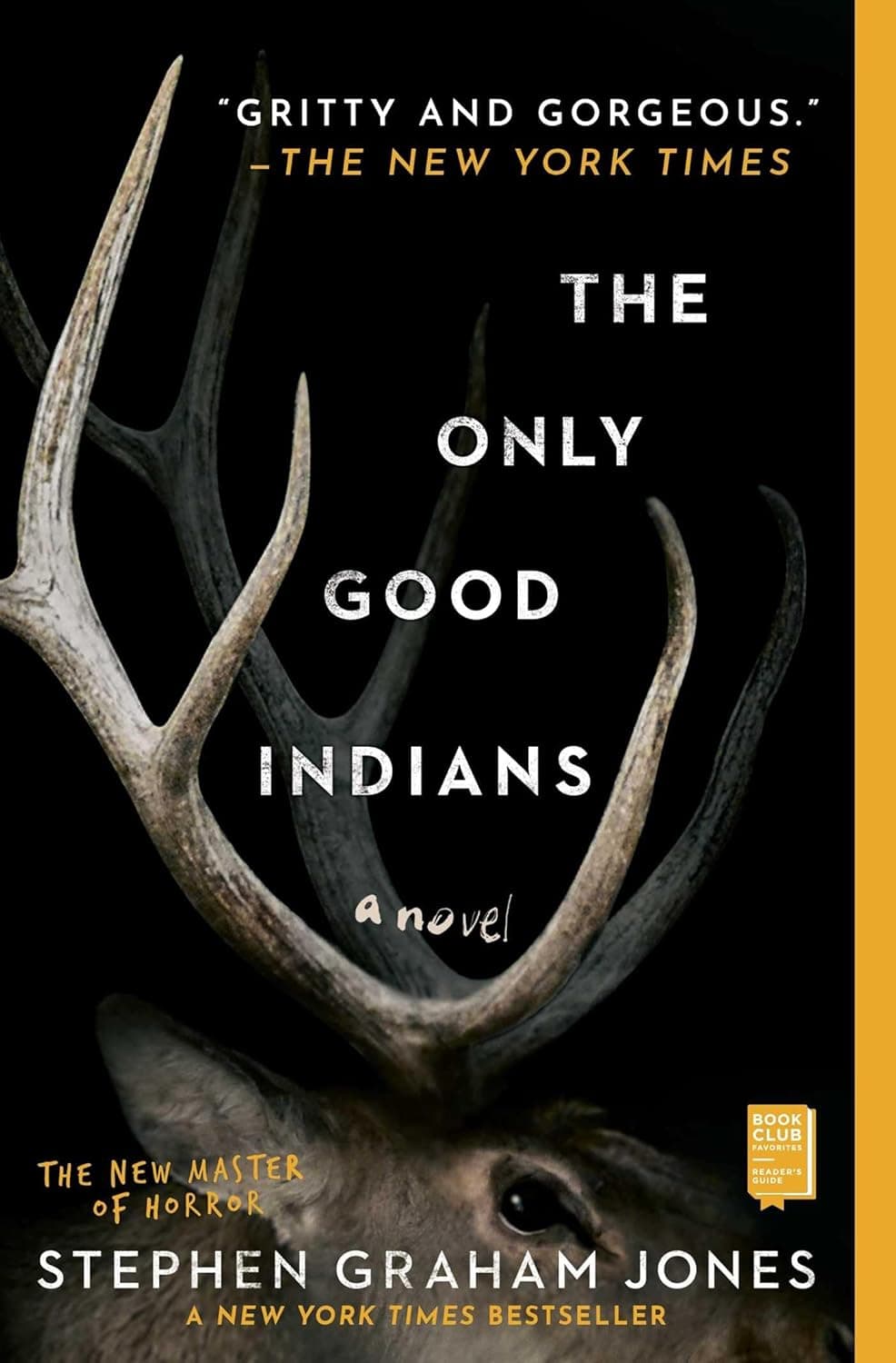
The hunt ends in blood, then begins again on the basketball court. From the cold, calculating vengeance of Elk Head Woman to the desperate, intelligent survival of Denorah Cross Guns, these chapters collapse a decade of anger into a single, shattering day and hand the story to the one person who can break its pattern.
What Happens
Chapter 26: And Then There Was One
Speaking in her own voice at last, Elk Head Woman savors the ten years she has waited to exact Revenge and Retribution. She doesn’t just plan to kill the last two hunters—Gabriel Cross Guns and Cassidy Sees Elk—she plans to make them “feel what you felt,” tearing apart their world before their lives. She stages the scene with precision: she kills Cassidy’s dogs; leaves a bloody rock and one of Gabe’s beers to frame him; and slips the engagement ring Cassidy meant for Jolene into Gabe’s pocket. When Cassidy finds his dogs dead and the ring on Gabe, grief and fury ignite. The men argue and obliterate each other’s trucks as Elk Head Woman quietly tightens the trap.
In a blind surge of anger, Gabe shoves over the old truck Jolene is working under, crushing her. Cassidy staggers to his Mauser, intent on killing his oldest friend—then wavers, their history of Friendship and Betrayal pulling at his trigger finger. Gabe drops to his knees and sings a makeshift death song. A white flash behind Cassidy makes him flinch; the rifle fires. Gabe believes Cassidy has just shot his daughter, Denorah. He snaps, beating Cassidy to death with a thermos.
The aftermath is a gallery of misread signs. The person Cassidy shot is not Denorah but Nathan Yellow Tail in an inside-out jersey. Victor Yellow Tail lies dead in the outhouse. Elk Head Woman steps from the margins and offers Gabe the rifle. He understands the reckoning for the elk massacre has arrived and bargains: he will kill himself if she leaves Denorah alone. She agrees, intending to break that promise. In one last, grotesque gesture of their bond, Gabe uses Cassidy’s cold finger to pull the trigger, finishing the four friends and completing her vengeance.
Chapter 27: Mocassin Telegraph
The story briefly shifts into a reservation gossip column, buzzing about that night’s junior high and high school scrimmages. Denorah is the headliner: a once-in-a-generation player who makes the whole community tilt toward the gym. A visiting college scout, supposedly in town to hunt elk, may be persuaded into the bleachers. The column frames the court as a sacred neighborhood—where talent becomes escape velocity and the future might finally outrun the past.
Chapter 28: It Came From the Rez
The morning after the sweat, Denorah drives to Cassidy’s place to collect the forty dollars her dad owes her. The silence feels wrong. The dogs are gone. The horse pen stands empty. The sweat lodge smolders and stinks. As she prowls the yard, she thinks about her father, the rez, and the shape-shifting demands of Cultural Identity and Assimilation. A stranger appears: Jolene’s cousin, Shaney Holds—athletic, confident, Crow—with an intensity that prickles Denorah’s skin.
Shaney says Gabe bragged about his daughter, then calls Denorah onto the concrete slab for a quick one-on-one. Denorah needs to save her legs for the scrimmage, but pride and curiosity pull her in. The backboard is rotted, the lines are ghosts, and a caved-in windshield on her dad’s truck flashes like a warning she ignores. They square up. The game is on.
Chapter 29: Thanksgiving Classic
The pickup turns into an epic. Shaney bangs and bullies, playing hard-edged “Crow ball,” while Denorah counters with footwork, angles, and IQ. Every possession feels like a skirmish; every stop lands like a punch. Then the mask slips: after a brutal fall, Shaney rises bleeding through her shirt. Her eyes go yellow. Her movements twitch wrong. Denorah sees it—this is not just a player on a slab, it’s a predator circling.
Shaney shows the melted scar on her forehead. “We met ten years ago. He had a gun. I didn’t,” she says, and vows to take everything from Denorah the way everything was taken from her. A shuffling Victor Yellow Tail lurches into view and shoots Shaney; the bullets force the full transformation, Shaney collapsing into Elk Head Woman’s monstrous form. In the scramble, Denorah stumbles to the sweat lodge and realizes it’s a mass grave—her father, Cassidy, the dogs. She runs.
Chapter 30: One Little Indian / Blood-Clot Boy
Denorah’s mind turns the chase into endgame basketball: conserve energy, pick angles, play the clock. She aims for the lake houses and a phone, then remembers her father’s story—elk fear trains. She threads behind a line of rusted boxcars, trusting the creature’s elk instincts to hold it back. The barrier buys her time. Knowledge becomes defense.
Near the road, she finds Nathan Yellow Tail barely alive on Cassidy’s horse, Calico. She makes the gut-check choice: she sends Nathan riding for help and deliberately draws Elk Head Woman after her. Denorah becomes the decoy by design, sprinting across the cold, open land. In doing so, she rejects the Cycle of Violence and the selfish survival that doomed her father’s generation, choosing leadership and sacrifice instead.
Character Development
The men’s story burns down to ash, and what rises is Denorah’s will. Each character’s choices tighten the trap—or spring it.
- Gabriel Cross Guns: Ruled by grief and jealousy, he’s easy prey for manipulation. Yet his last decision—to trade his life for his daughter’s safety—is an act of love and a broken form of Guilt and Atonement.
- Cassidy Sees Elk: He almost reaches steadiness with Jolene, but the bond with Gabe becomes the weapon that kills them both. His hesitation in the standoff reveals a loyalty that arrives one beat too late.
- Elk Head Woman: She pursues more than death; she engineers suffering, making her targets experience loss before extinction. By shedding the Shaney mask for the full elk-headed form, she becomes vengeance made flesh.
- Denorah Cross Guns: She transforms from prodigy to survivor-leader. She reads space, uses local knowledge as strategy, and chooses others’ lives over her own safety—staking a new moral center for the story.
Themes & Symbols
On the concrete slab, basketball becomes ceremony and battleground. The one-on-one isn’t just a game; it’s a contest between generations—Denorah’s modern skill and intelligence against an ancient grievance. The court lets Denorah fight on her terms, translating practice into survival, strategy into ethics. The abandoned boxcars work the same way: the industrial spine of the landscape becomes her shield as she weaponizes local knowledge.
Mistaken identity curdles into tragedy with Nathan’s inside-out jersey, a simple flip that turns white into black and triggers a fatal misreading—an emblem of The Supernatural and the Unseen twisting perception at exactly the wrong moment. Across these chapters, the pull of Parenthood, Legacy, and Intergenerational Trauma drives action: Gabe’s bargain for Denorah, Denorah’s decoy run for Nathan, and the larger struggle to stop inherited harm from choosing the future.
Key Quotes
“feel what you felt”
- Elk Head Woman’s mission is mirroring pain, not just dealing death. By engineering grief before the kill, she makes punishment experiential, collapsing past and present into one sustained wound.
“We met ten years ago. He had a gun. I didn’t.”
- The line snaps the story’s timeline tight. It reframes the pickup game as a reckoning, turning a local, everyday space into the courtroom for a decade-old crime and demanding a cost in kind.
“a makeshift death song”
- Gabe’s song is a tragic blend of ritual and resignation. He reaches for tradition at the moment misperception seals his fate, underscoring how scrambled signals and broken context lead to ruin.
“Crow ball”
- The phrase marks playing style as cultural signature. Denorah must solve it—read it, counter it—just as she must decode the predator behind Shaney, turning cultural literacy into tactical edge.
Why This Matters and Section Significance
This sequence detonates the men’s plotline and clears the stage. The four friends pay, one by one, for the Thanksgiving massacre; the payment isn’t just death but the destruction of their hopes, relationships, and self-images. The book’s horror shifts from haunting to hunt, from guilt’s echo to the body’s peril.
Most importantly, the center of gravity moves to Denorah. She isn’t merely the last survivor; she’s the one who changes the rules, choosing strategy over rage and community over self. By outthinking the monster and protecting others, she refuses the inheritance that defined her father’s generation. The result is a new kind of “final girl”—not lucky, but deliberate—carrying the story’s hope forward.