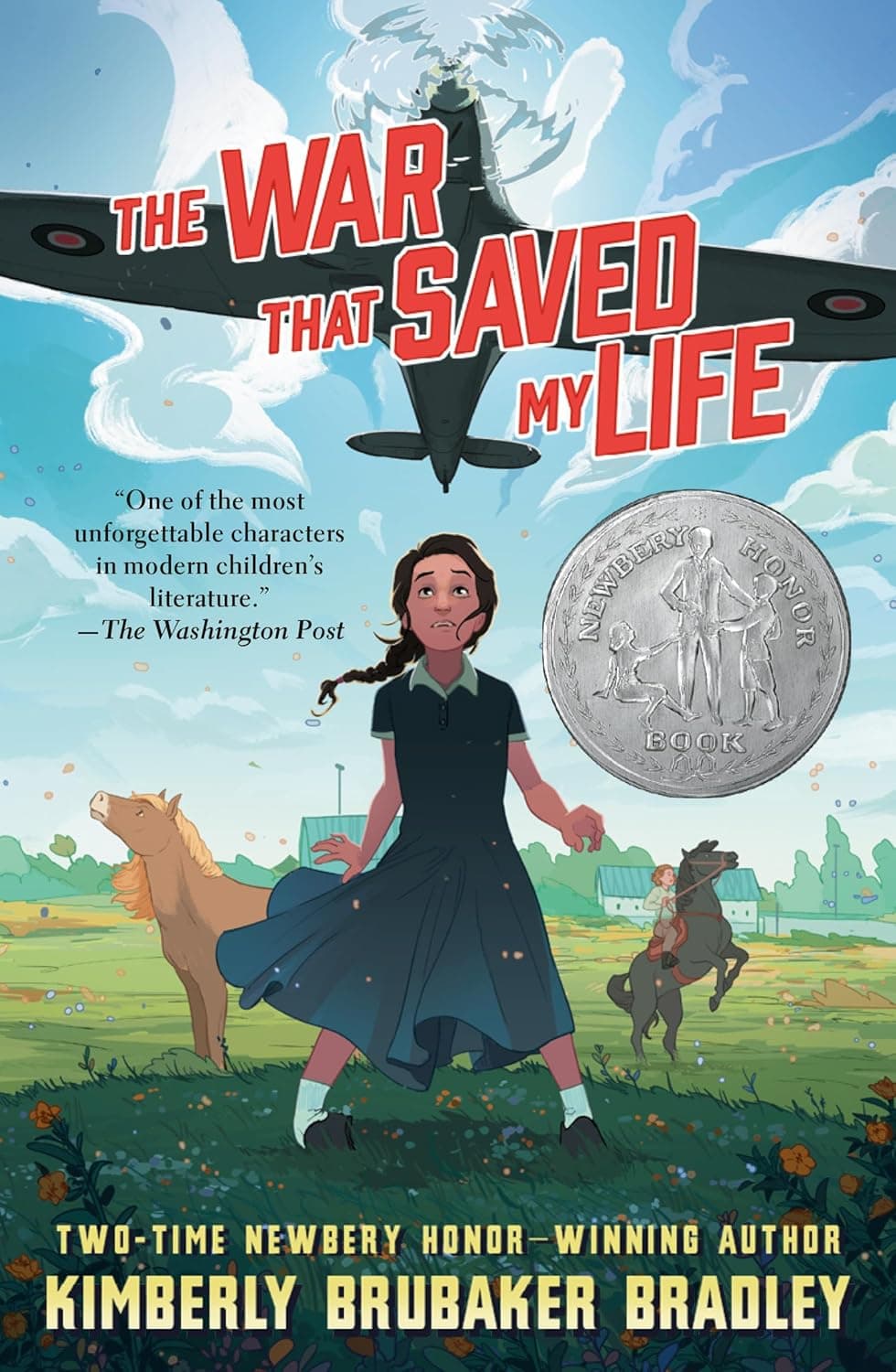
Opening
In the summer of 1939, ten-year-old Ada Smith lives imprisoned in a one-room London flat, abused and hidden because of her clubfoot. As England prepares for war, Ada wages her own—teaching herself to walk, escaping with her brother, and confronting a world that may not want her. These chapters chart the terrifying courage it takes to leave captivity and the painful uncertainty of what comes next.
What Happens
Chapter 1: Ada! Get back from that window!
In a cramped London flat, ten-year-old narrator Ada Smith peers from a third-floor window—her only view of a world she has never touched—until her mother, Mam, yanks her to the floor and slams her head against a chair. Mam’s shame over Ada’s untreated clubfoot fuels constant verbal and physical abuse; she calls Ada a “cripple” and a “disgrace,” and threatens to board up the window to cut off Ada’s last connection to outside life. The scene establishes the novel’s stark landscape of Trauma, Abuse, and Healing and Freedom and Imprisonment.
Inside the single room, Ada cares for her six-year-old brother, Jamie Smith, while Mam works nights and sleeps days. Ada hides bloodstains, soothes Jamie, and reads Mam’s volatile moods with practiced vigilance. War with Hitler looms, but Ada’s narration makes clear that her immediate battle—with her mother and with crushing loneliness—consumes everything.
Chapter 2: There are all kinds of wars.
Ada’s first “war,” she says, is with Jamie. As Jamie grows old enough to play outside with neighborhood children, Ada is left utterly alone in what she calls her “prison.” Desperate, she ties his hands and feet while he sleeps to keep him from leaving.
When Jamie wakes and silently cries, Ada is horrified—she has acted like Mam. She unties him and realizes she cannot make him stay. With school coming soon, her isolation will become permanent unless she changes something. That day, she decides to get out instead of trapping Jamie in—beginning a secret, painful campaign to walk, a defiant reach for Identity and Self-Worth. She links her private fight to the global conflict on the horizon, foreshadowing War as a Catalyst for Change.
Chapter 3: I began that very day.
Ada describes the agony: standing is hard; putting weight on her twisted foot brings searing pain. The skin rips and bleeds; bruises bloom as she falls again and again. She keeps her training secret and clings to the hope that if she can walk, Mam might finally be proud. The work leaves her ravenous. Jamie tries to help, stealing food—first fruit, then a meat chop. Caught, he’s marched home by the butcher.
Mam lashes out. When Ada instinctively stands to avoid a blow, Mam notices Ada’s growing strength and punishes her by shoving her into the damp, roach-ridden cabinet under the sink for the night. The terror hardens Ada’s resolve. The next day, Jamie brings news: London’s children are being evacuated. Mam agrees to send Jamie but snarls that Ada must stay because “Nobody” would want a girl with an “ugly foot.” Ada’s plan crystallizes—she and Jamie will escape together—showcasing Ada’s Courage and Resilience.
Chapter 4: In the wee hours of Friday morning, I stole Mam’s shoes.
Before dawn, Ada and Jamie slip out while Mam sleeps. Ada steals Mam’s shoes, stuffing them with paper so they’ll fit and hide her foot. The streets are brutal—uneven stones grind her skin, and the pain forces her to crawl part of the way. At the schoolyard, they run into Stephen White, who stares in shock: the lane always thought Ada was “simple,” not hidden for a physical disability. “I didn’t even know you could talk,” he says.
Stephen’s reaction shakes Ada’s certainty about Mam’s version of reality. When he learns she walked from home, he calls Mam’s treatment “crazy,” offering a piggyback to the train station—Ada’s first experience of unasked-for kindness. Amid crowds of evacuees, Ada and Jamie board the train. As London recedes, Ada feels something unfamiliar and enormous: freedom.
Chapter 5: The train was miserable, of course.
The train is cramped and uncomfortable, but the view out the window transforms Ada. Fields unfurl, an “astonishing green,” and then a girl on a pony keeps pace with the train, flying over a stone wall. Horse and rider move as one—powerful, joyful, free. Ada stakes a claim on that image: “I’m going to do that.”
The train stops in a Kent village, where the children file into a hall to be chosen by local families. For the first time, Ada sees her reflection and is shocked—she and Jamie look like “dirty street rats,” ragged against the polished village children. The selection turns cruel: villagers pick through the evacuees like fish on a slab, voice their disgust, and take everyone else. Ada and Jamie stand alone at the end—unwanted, just as Mam said—free of the flat but still without a place to belong.
Character Development
These chapters chart swift, painful change. Ada moves from isolation to action; Jamie’s widening world spurs her; Mam’s cruelty sets the stakes and the limits Ada must break.
-
Ada Smith:
- Reframes her “war” from clinging to Jamie to claiming her own freedom.
- Secretly trains herself to walk despite excruciating pain and repeated injury.
- Challenges Mam’s narrative after Stephen’s disbelief and unexpected kindness.
- Makes a bold, irreversible choice to escape London and seek a new life.
-
Mam:
- Enforces control through humiliation, violence, and confinement (the cabinet).
- Reveals deep, corrosive shame over Ada’s disability, refusing evacuation for her.
- Detects—and fears—Ada’s growing autonomy, escalating punishment in response.
-
Jamie Smith:
- Grows more independent, playing outside and preparing for school.
- Shows loyalty and ingenuity by stealing food to feed Ada.
- Refuses to leave Ada behind, standing as her emotional anchor and motivation.
Themes & Symbols
The opening foregrounds the damage of trauma and the possibility of healing. Ada’s internalized shame comes from years of abuse; her secret walking lessons challenge that script. The flat, the window, and the cabinet embody a childhood defined by surveillance and confinement, while the evacuation offers a paradox: national crisis opens a door to personal freedom. Ada’s determination reframes identity from something assigned by an abuser to something earned through action and endurance. War becomes the backdrop that turns the impossible—leaving Mam—into a path forward.
Symbols thread through Ada’s awakening. The window, always a lifeline, proves insufficient; the mirror introduces a new, harsher self-knowledge. The pony becomes a horizon line—freedom with grace, power without cruelty. Each symbol moves Ada from passive witness to active participant in her own life.
- The Window: A fragile lifeline to the world and a reminder of captivity.
- The Cabinet: Physical and psychological imprisonment; a tool of dehumanization.
- The Pony: Freedom, strength, and possibility—an image Ada vows to inhabit.
- The Mirror: Forced self-recognition; visible evidence of neglect and abuse.
Key Quotes
“Ada! Get back from that window!” This command defines the initial power dynamic: curiosity punished, vision restricted. The window becomes both a literal boundary and an emblem of how Mam polices Ada’s sense of self.
“There are all kinds of wars.” Ada reframes conflict as both global and intimate. The line positions her private struggle alongside WWII, elevating her fight from survival to transformation.
“I didn’t even know you could talk.” Stephen’s shock exposes how completely Mam has erased Ada from public life. His words validate Ada’s reality and crack Mam’s narrative of shame and silence.
“Nobody, that’s who.” Mam’s cruelty crystallizes Ada’s supposed worthlessness. The line becomes a challenge Ada answers by leaving, proving that chosen family may exist beyond the flat.
“I’m going to do that.” Watching the girl and pony, Ada claims a future self. The vow fuses desire with agency, turning inspiration into a compass for everything that follows.
Why This Matters and Section Significance
These chapters establish the novel’s central conflict: Ada’s fight to leave abuse and to become someone beyond it. They link her personal emancipation to wartime upheaval, showing how catastrophe can create unexpected avenues for change. By the end of Chapter 5, Ada has won her first victory—escape—but faces the harsher truth that freedom alone does not guarantee belonging. The stage is set for the next battle: finding safety, community, and a self defined by courage rather than cruelty.