Opening
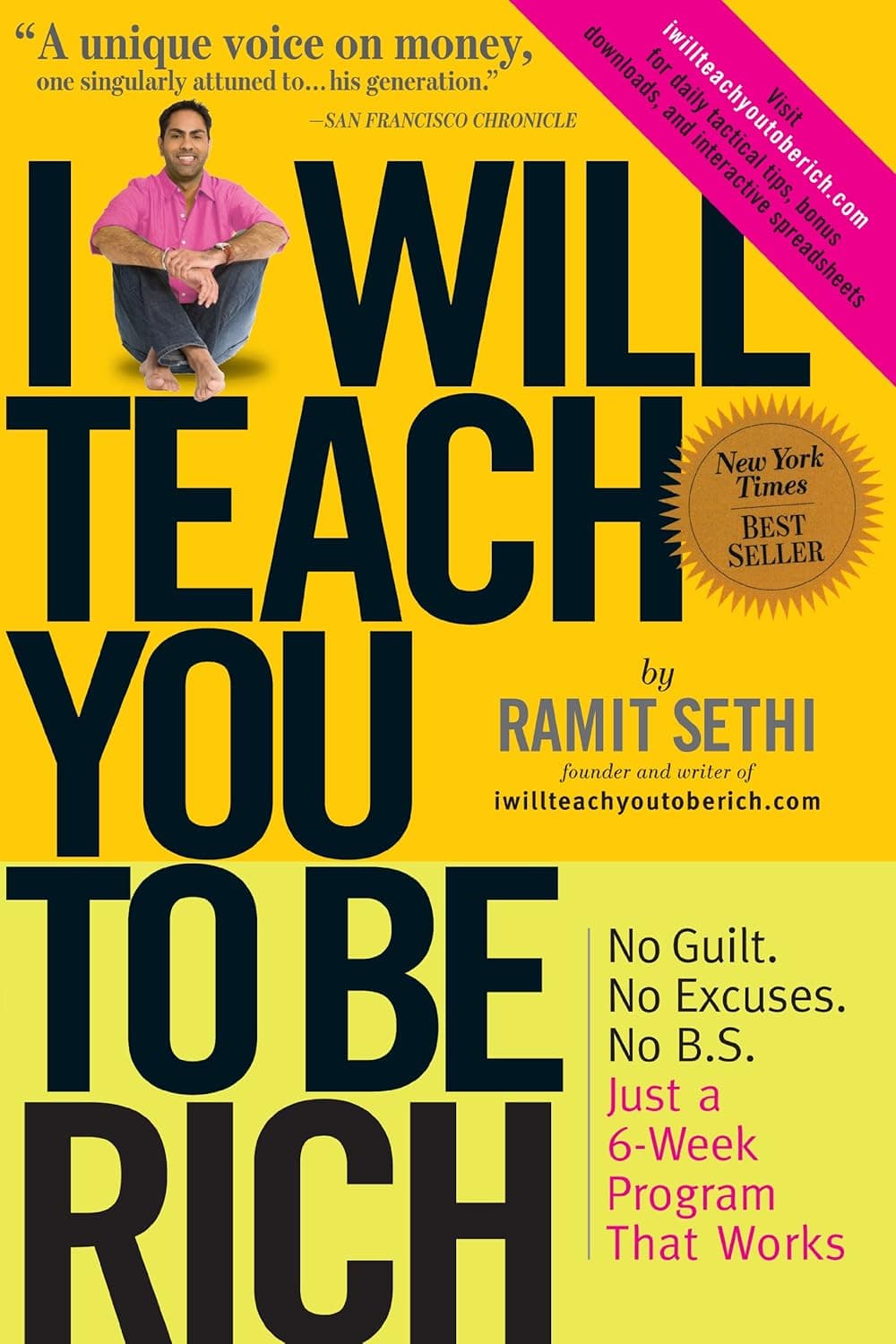
Chapters 6–7 shift the book from skepticism to execution. Ramit Sethi dismantles the aura of financial “expertise,” then hands readers a clear, automated plan to invest confidently without chasing hot tips or timing the market.
What Happens
Chapter 6: The Myth of Financial Expertise
Sethi opens with a sting: wine experts can’t tell an expensive red from a cheap white dyed red. He applies the analogy to finance—where pundits and fund managers claim skill yet routinely fail to beat the market—and argues that trusting them paralyzes ordinary investors. He urges readers to stop outsourcing judgment and to build a simple, reliable system instead.
He compiles evidence against market “gurus.” Pundits who try to “time the market” are rarely right and never accountable. A study shows that missing just the 20 best days over 20 years can slash returns in half, so staying invested matters more than guessing movements. He then targets actively managed mutual funds: most managers fail to beat the market roughly 75% of the time and still charge high fees. Industry tactics—“survivorship bias,” where bad funds disappear from the record, and “incubator funds,” where firms launch many and trumpet the lucky winners—mask mediocrity. Five-star rating systems (like Morningstar’s) don’t predict future success. For the average young investor, a financial adviser is often unnecessary; if one is needed, Sethi insists on fee-only, not commission-based.
The chapter culminates in active versus passive management. Human-run active funds often charge 1.5–3% and still underperform. Passively managed index funds—pioneered by John Bogle—use computers to hold the whole market (like the S&P 500) for a fraction of the cost, often under 0.2%. Over a lifetime, that fee gap compounds into hundreds of thousands of dollars. Sethi’s core message: embrace Long-Term, Passive Investing and ignore the costly myth of expertise.
Chapter 7: Investing Isn’t Only for Rich People
With the myths stripped away, Sethi turns to the “Promised Land”—the how-to of investing. A brief quiz reveals your Investor Profile and points you to one of two paths. Path one is the “set it and forget it” route, embodying Action Over Perfection (The 85% Solution): choose a single, low-cost fund and automate it. Path two is for those who want control and are willing to do extra work. Both paths rest on “Automatic Investing,” powered by Automation and Financial Systems so you never have to time the market or pick hot stocks.
Sethi introduces the “Pyramid of Investing Options.” At the base are individual stocks and bonds—tempting but risky and time-consuming—so most people should avoid them. The middle holds mutual funds and index funds; mutual funds diversify but charge more and underperform, whereas low-cost index funds track the market efficiently. At the top sits the lifecycle (target-date) fund, his default recommendation: a fund-of-funds that automatically diversifies across index funds and glides to a more conservative mix as you age. For those choosing the advanced path, Sethi stresses asset allocation—the percentage split among stocks, bonds, and other assets—as the main driver of returns, far outweighing individual stock picks.
He then lays out a step-by-step buy plan. First, contribute to a 401(k) up to the employer match. Next, fund a Roth IRA. Inside these accounts, the 85% Solution is simple: select a low-cost lifecycle fund from firms like Vanguard or T. Rowe Price and automate contributions. For advanced investors, he offers a model portfolio inspired by David Swensen, mixing domestic, international, and real estate index funds with bonds. Build it gradually using dollar-cost averaging—investing a fixed amount on a set schedule. The chapter closes with a guest essay by J.D. Roth, who describes investing heavily during a downturn to illustrate long-term discipline and being “greedy when others are fearful.”
Character Development
Sethi steps fully into his role as a data-driven coach who slices through industry noise and hands readers a system they can run alone. He challenges conventional wisdom, translates complex topics into plain language, and frames investing as a repeatable habit, not a talent test.
- Ramit Sethi: Combative toward high-fee products yet encouraging to readers; positions himself as an outsider who equips ordinary people to win.
- John Bogle: Cast as the quiet hero who democratizes investing through index funds, enabling investors to bypass costly intermediaries.
- David Swensen: The blueprint for the “Type A” path—sophisticated allocation, simple principles, rigorous discipline.
- J.D. Roth: A peer-mentor voice whose crisis-era investing story models calm, contrarian action in volatile markets.
Themes & Symbols
These chapters crystallize long-term, passive investing as the book’s core. The evidence against prediction and stock-picking funnels readers toward broad, low-cost diversification held for decades. The lesson is not “beat the market,” but “own it and keep your costs down.” The focus on automation turns good intentions into results, removing emotion and inconsistency from the process.
Action over perfection drives the structure: two clear paths, with a bias toward the simplest option that most people will actually use. By narrowing choices and prescribing default moves—401(k) match, then Roth IRA, then a lifecycle fund—Sethi lowers the friction that keeps beginners stuck.
- Symbol: The Myth of Financial Expertise—an institutional façade propped up by jargon, ratings, and fees that Sethi deconstructs to free the reader.
- Symbol: The Pyramid of Investing Options—a roadmap from seductive but fragile choices (individual stocks) to resilient simplicity (lifecycle funds).
- Symbol: Active vs. Passive—a clash between costly complexity and low-cost clarity, with compounding fees as the hidden antagonist.
Key Quotes
“The Promised Land.”
- Frames Chapter 7 as the payoff: readers move from skepticism to execution, signaling a decisive transition from learning to doing.
“Set it and forget it.”
- Captures the 85% Solution. The point isn’t perfection—it’s consistent, automated, low-cost investing that compounds over decades.
“Automatic Investing.”
- Names the system that makes behavior the edge. Automation sidesteps market-timing impulses and converts intentions into scheduled action.
“Greedy when others are fearful.”
- J.D. Roth’s crisis playbook echoes the long-term mindset. It reframes downturns as opportunities, reinforcing discipline when headlines scream panic.
Why This Matters and Section Significance
These chapters mark the program’s turning point: the reader stops optimizing accounts and starts building wealth. By dismantling the myth of expertise and laying out a two-path plan, Sethi removes the twin barriers of confusion and fear. The result is a system any investor can run—contribute to tax-advantaged accounts, choose low-cost, diversified funds, automate contributions, and stay the course.
The significance reaches beyond mechanics. It reframes investing as a learnable, repeatable process that prioritizes behavior and costs over bravado and prediction. That shift empowers readers to ignore noise, trust their plan, and let compounding do the heavy lifting.