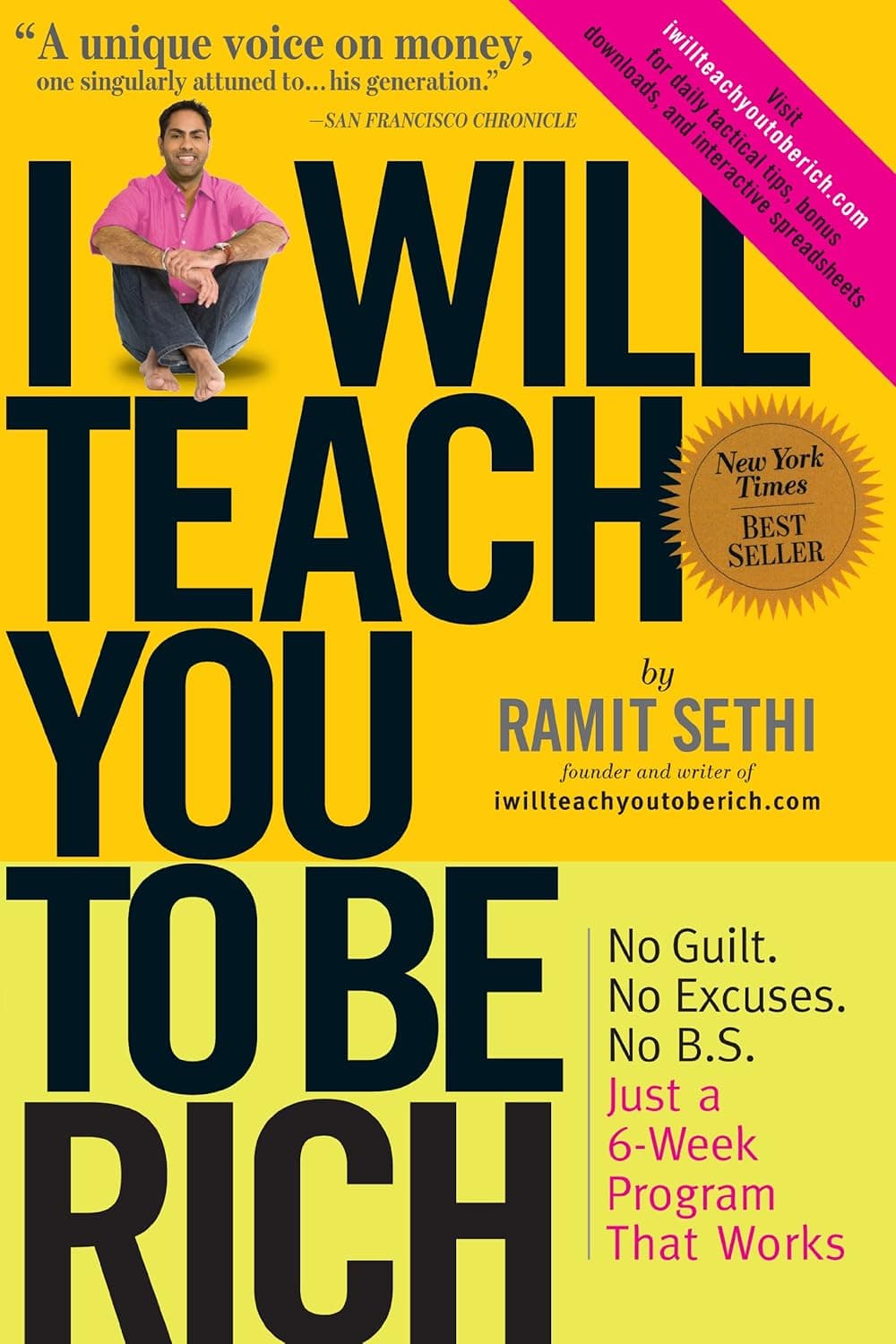
Ramit Sethi
Quick Facts
- Role: Author-narrator, skeptic of traditional finance, and no-nonsense mentor guiding readers through a step-by-step system for money and life design
- First appearance: Introduction
- Key relationships: The Reader; parents Prab and Neelam Sethi; mentors and respected peers like John Bogle, David Swensen, and J.D. Roth
Who They Are
Bold, brash, and deeply practical, Ramit Sethi positions himself as the anti-guilt guide to modern money. He rejects dusty “stop buying lattes” rules and instead asks readers to define their own version of a “rich life”—freedom, choice, and contribution—not just a larger bank balance, a philosophy he calls Defining a "Rich Life". The persona he crafts—“part frat boy and part Silicon Valley geek, with a little bit of San Francisco hipster thrown in”—is deliberate: approachable enough to feel like a peer, authoritative enough to bulldoze excuses. He frequently invokes his Indian heritage, especially around negotiation and frugality, reframing “immigrant hustle” as a skill set for the millennial economy.
Personality & Traits
Sethi’s voice blends comedian, coach, and product manager. He uses humor to disarm, data to persuade, and systems to make good behavior automatic. The result is a character who argues that financial mastery is less about perfect knowledge than about consistent, high-leverage action.
- Confident and cocky: He owns starting out as “a college kid with a cocky attitude” and calls readers “crybabies,” signaling he’ll confront self-sabotage head-on. The swagger serves a purpose: to jolt readers out of paralysis and position him as a results-first authority.
- Direct and unfiltered: “No Guilt. No Excuses. No B.S.” isn’t just branding; it’s his method. He strips away niceties to target behaviors that actually move money: setting accounts up correctly, negotiating, and automating.
- Action-oriented: He hates “debating minutiae” and elevates starting now over optimizing later—his Action Over Perfection (The 85% Solution) reframes progress as compounding and perfectionism as an expensive delay.
- Relatable and humorous: He foregrounds his own mistakes—like losing half his first scholarship check—to normalize failure as a learning cost and keep readers engaged through jokes and pop-culture riffs.
- Pragmatic spender: His Conscious Spending model encourages “extravagance” on priorities and ruthless cutting elsewhere, rejecting moralizing and making frugality feel chosen, not imposed.
- Systems thinker: He champions Automation and Financial Systems so that saving, investing, and bill pay happen without willpower, turning good intentions into default behavior.
Character Journey
Sethi’s arc runs from overconfident novice to system-building teacher. The inciting failure arrives early: after hustling for scholarships, he invests his first $2,000 award and immediately loses half. That sting reorients him from gambling to learning. At Stanford, he begins informally coaching friends, refining scripts and checklists into repeatable processes. A humbling episode—negotiating well on a car purchase but missing the best loan rate due to thin credit—pushes him to integrate behavior, psychology, and infrastructure: it’s not enough to be smart at the table if your systems aren’t set up beforehand. He consolidates these lessons into a program built on automation, low-cost diversified investing, and values-based spending, then scales them via his blog and book. By the time he defines his own rich life—funding a scholarship, helping his parents, choosing work for meaning—his authority feels earned, and, more crucially, copyable.
Key Relationships
- The Reader: Sethi’s primary relationship is pedagogical and provocative. He speaks peer-to-peer, mixing empathy with tough love to strip away shame and push action. The candor (“your financial problems are caused by one person: you”) creates accountability while his stories and scripts lower the barrier to starting.
- Prab and Neelam Sethi: He dedicates the book to his parents and credits them with expanding wealth beyond money to values and responsibility. His father’s relentless negotiating—spotlighted in the opening of the Chapter 1-2 Summary—becomes both a running joke and a template for confident, respectful self-advocacy.
- Financial “experts” and media: Sethi casts fee-hungry advisors and noisy media as foils. By dismantling jargon and sensationalism, he positions his approach—simple portfolios, automation, and long horizons—as the calm antidote to an industry incentivized to confuse.
- Mentors and respected peers: He grounds his guidance in the work of credible figures like John Bogle and David Swensen, and acknowledges community builders such as J.D. Roth. Citing them signals humility and situates his program within an evidence-based tradition.
Defining Moments
Sethi’s pivotal scenes dramatize his philosophy: pain teaches faster than theory, and systems beat swagger.
- Losing his first investment: After a $2,000 scholarship check goes into the market and promptly halves, he vows to learn how money actually works. Why it matters: It converts embarrassment into expertise and motivates his bias toward boring, automated investing over hot tips.
- Buying a car without sufficient credit history: Even with strong negotiation, he’s denied the best interest rate for having “not enough credit sources.” Why it matters: It reframes financial success as pre-work—credit building, account setup, automation—rather than one-off heroics at the register.
- Launching his scholarship: Naming a personal scholarship as a milestone of his rich life translates values into action. Why it matters: It proves that money is a tool for autonomy and contribution, not merely accumulation.
Essential Quotes
“Listen up, crybabies: This isn’t your grandma’s house and I’m not going to bake you cookies and coddle you. A lot of your financial problems are caused by one person: you.” (Introduction)
This is Sethi’s thesis of radical responsibility. The insult is strategic: by shocking readers out of defensiveness, he clears space for practical steps—scripts, checklists, automations—that they control.
“You don’t have to be an expert to get rich. You do have to know how to cut through all the information and get started—which, incidentally, also helps reduce the guilt.” (Introduction)
He demystifies finance and reframes progress as triage: ignore most noise, do the high-impact basics now. The payoff isn’t just monetary; acting reduces anxiety by replacing ambiguity with a plan.
“Spend extravagantly on the things you love, and cut costs mercilessly on the things you don’t… This book isn’t about telling you to stop buying lattes.” (Introduction)
Sethi turns budgeting into identity work: decide what you value, then fund it unapologetically. The discipline lies not in universal deprivation but in targeted cuts that make joyful spending sustainable.
“Well, I bought a few good funds five years ago and haven’t done anything since, except buy more on an automatic schedule… investment isn’t about being sexy—it’s about making money.” (Introduction)
He contrasts performative trading with quiet, process-driven wealth-building. Boredom becomes a virtue: automation and long-term compounding beat adrenaline and anecdote.
“I consider myself rich now that I can… make career decisions because I want to… help my parents with their retirement… spend extravagantly on the things I love and be relentlessly frugal about the things I don’t.” (Introduction)
Here, “rich” is defined as optionality and stewardship, not status symbols. The list operationalizes values—family support, autonomy, joyful spending—into concrete markers of a life well-designed.