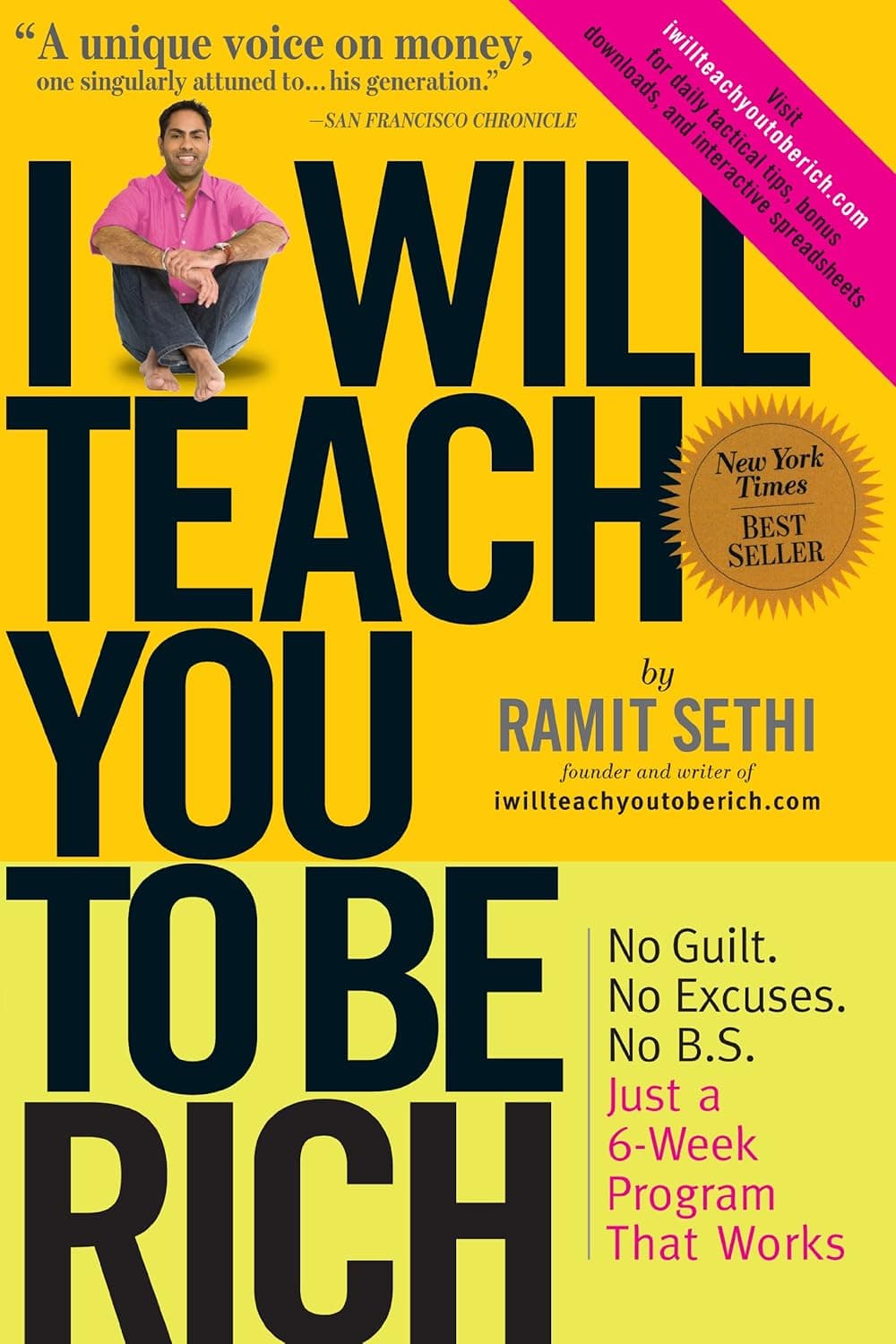
Opening
Chapters 8 and 9 shift from building your financial machine to running it smoothly and using it to design a life you actually want. With blunt humor and clear systems, Ramit Sethi moves you from setup and psychology to maintenance, major money decisions, and long-term purpose.
What Happens
Chapter 8: EASY MAINTENANCE
This short “extra credit” chapter focuses on optimizing the infrastructure you’ve already built with the Action Over Perfection (The 85% Solution). The first move is to “Feed Your System”: increase contributions to investment accounts and use online calculators to see how small monthly bumps compound over time. Sethi tells you to revisit your Conscious Spending Plan from the Chapter 3-4 Summary to free up more cash for investing—because once you’ve started, contribution volume largely determines how fast you get rich.
He warns you to tune out the “noise”—panicked headlines and bad advice—and stick to Long-Term, Passive Investing. If you built your own index-fund portfolio (instead of a lifecycle fund), you rebalance annually: pause contributions to funds that have grown beyond their target and redirect new money to the underweighted funds until you’re back on allocation. For taxes, he applies the 85% Solution: max out tax-advantaged accounts (401(k), Roth IRA) and you’ve handled most of what matters.
Sethi lays out the only three valid reasons to sell investments: a true emergency (after exhausting other options), a chronically underperforming holding, or hitting a long-term goal. Then he widens the lens to Defining a "Rich Life": map a ten-year plan, including an emergency fund, insurance, and education savings. He closes with philanthropy—sharing his scholarship story—and argues that, thanks to your Automation and Financial Systems, you’re now positioned to raise your sights and help others.
Chapter 9: A RICH LIFE
Sethi applies the system to high-stakes choices and relationships. On the classic “pay student loans or invest?” question, he recommends a hybrid: keep paying down debt while starting to invest early to capture compounding and tax advantages you can’t retroactively reclaim. He draws a firm boundary against letting parents manage your money and offers a persuasion-first framework for helping parents in debt.
With romantic partners, he suggests a gentle, staged “DTR” money conversation that culminates in the “Big Meeting,” where both partners put everything on the table—income, debts, goals, and spending—to build a joint plan. Couples who live together can split costs proportionally to income instead of 50/50. If one partner overspends, point back to the shared plan and goals rather than making it personal.
He then targets big-ticket traps. Weddings often balloon—average cost: $28,000—so set up automatic savings years ahead and cut the largest fixed costs instead of sweating napkins. He delivers a salary negotiation masterclass as the fastest legal way to make thousands: frame your ask in terms of company value, bring a competing offer if possible, and practice relentlessly. For cars, the winning move is to keep it 10+ years. For homes, treat them primarily as a place to live, not an investment; in many markets, renting wins. If buying, be conservative: save 20% down and choose a 30-year fixed-rate mortgage.
Character Development
Sethi’s role evolves from tactical instructor to coach for life design, without losing his sharp, data-driven edge. He pairs tough love with empathy, pushing readers past excuses while offering concrete scripts and systems.
- He doubles down on systems thinking: automate, increase contribution volume, and rebalance annually.
- He reframes adulthood markers—debt, weddings, homebuying—through a values-first lens.
- He models behavior with personal anecdotes (negotiating, philanthropy) to make tactics feel doable.
Guest experts (nickel and Trent Hamm) reinforce the book’s core philosophy:
- Nickel’s “One Pot Solution” clarifies how to streamline multiple investment accounts.
- Trent Hamm’s advice on raises emphasizes redirecting new income to goals, not lifestyle creep.
Themes & Symbols
A Rich Life, Defined Chapters 8 and 9 pivot from “how to get rich” to “what you want wealth to do.” Money becomes a tool for freedom, calm, generosity, and shared goals. Philanthropy, negotiation, and long-horizon planning aren’t add-ons—they’re proof the system works and serves your values.
Conscious Spending at Scale The framework expands from daily choices to the largest, most emotional ones. Weddings, cars, and houses test discipline; Sethi insists you decide what matters, plan early, and cut ruthlessly where it doesn’t. Big numbers don’t change the rules—just the stakes.
Action Over Perfection, Applied The 85% mindset dissolves paralysis: max out tax-advantaged accounts and you’ve handled most tax complexity; start a small auto-savings for a wedding now rather than waiting for the “perfect” budget; rebalance once a year instead of chasing market timing. Consistency beats optimization.
Key Quotes
“Feed Your System.” A mantra for the post-setup phase: once automation is live, increase contributions to accelerate compounding. It shifts focus from tinkering to throughput.
“Ignore the ‘noise.’” Sethi underlines that long-term, passive investing depends on staying the course. This guards you from panic-selling and trend-chasing.
“DTR” and the “Big Meeting.” By naming these milestones, Sethi normalizes financial transparency in relationships and provides a concrete path from awkwardness to alignment.
“The average wedding costs about $28,000.” A hard number that exposes self-deception around “simple” weddings and justifies early, automated saving and cutting the biggest costs first.
“I am going to jump up and beat someone with an onion.” His hyperbolic humor disarms readers and makes intimidating topics—mortgages, negotiation—feel approachable, while still delivering direct, actionable advice.
Why This Matters and Section Significance
These chapters complete the arc of the book. After building credit, banking, budgeting, and investing systems, you now learn how to maintain them, make high-impact choices, and aim your money at a life you actually want. The shift from mechanics to meaning turns personal finance from drudgery into design.
By tackling emotionally charged arenas—love and money, weddings, cars, homes, and career earnings—Sethi proves the system isn’t theoretical. It’s a toolkit for navigating real trade-offs with calm and intent. The result is the book’s central promise delivered: personal finance as a path to freedom, purpose, and a genuinely rich life.