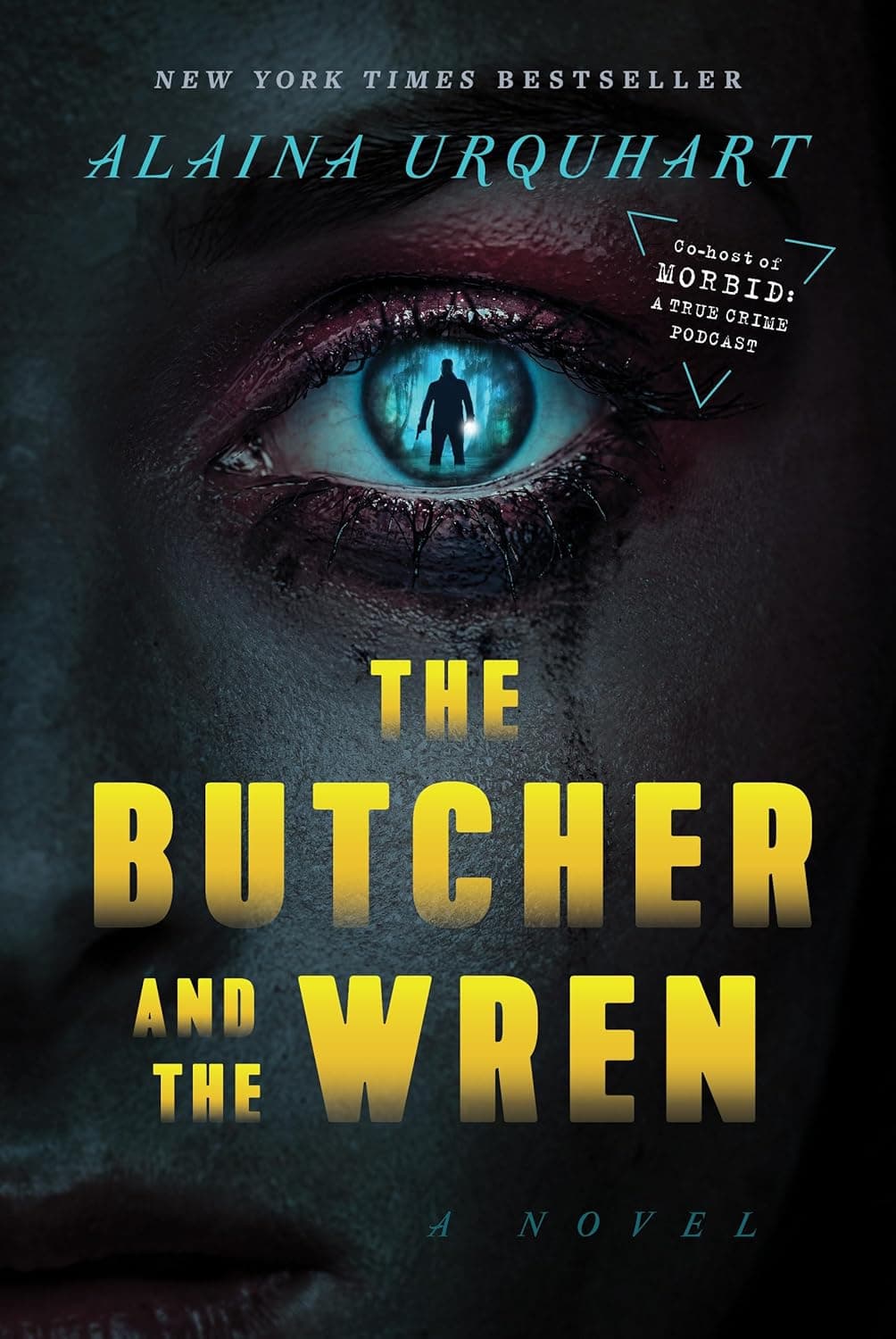
Opening
The mask finally slips. As the investigation tightens, Dr. Wren Muller admits she is Emily Maloney—the sole survivor of the Bayou Butcher—while the killer spirals from cold precision into reckless violence. These chapters fuse past and present, turning the case into a personal reckoning and setting the stage for a final hunt.
What Happens
Chapter 26: I’m Emily Maloney
Wren narrates the memory she has spent seven years burying. Back in medical school, her trusted lab partner “Cal” drugged and kidnapped her—he is the Bayou Butcher. She renames herself for the wren bird, clinging to its mythology of rebirth and trickster survival, and relives her escape: stabbed in the back, nearly paralyzed, she uses the body of her friend Katie to short-circuit an electrified fence and climbs to freedom. The guilt and pain of that night, long repressed, surge back in full.
The trigger is a small object with enormous meaning: her old bracelet—an “E” charm for Emily—found among Emma’s effects. Realizing the Butcher has been taunting her, Wren calls Detective John Leroux to the morgue and lays out the truth: Cal is the killer; he likely hunts on land inherited from his parents; and the library card name, Philip Trudeau, is Cal’s childhood friend. When she says, “I’m Emily Maloney,” she identifies herself as the only survivor of his original spree and ties the present murders to the cold case.
Leroux believes her immediately—his father worked Emily’s case—and fills in a key clue: the book page at a scene came from “The Most Dangerous Game,” reinforcing The Hunt: Predator vs. Prey. Recognizing her personal involvement, Wren steps away from the autopsy, honoring professional boundaries even as her Past Trauma and Its Lingering Effects roar back to life.
Chapter 27: A Return to the Basics
The narrative cuts to the killer, Jeremy Rose, boiling with rage after his “victory lap” with Emma goes wrong. Needing to reassert control, he hunts on impulse. At O’Grady’s Pub, he targets Tara Kelley—an easy mark he both despises and can manipulate—luring her out with the promise of cocaine.
Instead of his usual kill space, he drives her to a swamp trail in Elmwood Park, a childhood hunting ground. He arms himself with a knife and night-vision goggles, orders her to run, and chases her through the trees. This stripped-down, furious “return to the basics” is all about Control and Powerlessness: Jeremy must feel dominant again. But when two night hunters hear Tara’s screams and approach, he panics, slits her throat, and flees. He rages—not at being nearly caught, but at his own sloppy, unplanned mess.
Chapter 28: She Can’t Talk
Back at the morgue, Leroux and Wren process her confession when a call comes in from Detective William Broussard: a new victim has survived. At the hospital, Dr. Gibbons explains that Tara’s laryngeal nerve is severed—she can’t speak—but before losing her voice, she scrawled a single name on a blood-smeared paper: “Jeremy.”
It’s the proof the investigation needs: a living victim identifies the killer by name. The police also recover a receipt placing Tara at O’Grady’s Pub. Wren refuses to sit this out and joins Leroux and Broussard as they drive to the bar’s owner, determined to see the lead through.
Chapter 29: The Last Time
Jeremy wakes to the news that Tara survives and has given police “pertinent information.” The failure mirrors his botched attempt to paralyze Wren years ago and shreds his Intellectual Pride and The God Complex. He decides to flee—but first, he scripts his own finale.
In his basement, he props open a deep freezer and kills the power. Inside: a freezer-burned woman he once used for a failed lobotomy. He leaves the body to thaw, a grotesque gift designed for discovery. Then he readies a TenPoint crossbow and broadhead arrows. This time, his prey will shoot back. He converts his home into a battlefield.
Chapter 30: Take Me Home, John
Leroux, Broussard, and Wren head to Ray Singer, O’Grady’s owner. Mid-approach, the station calls: a witness from the bar has surfaced with information about the Elmwood Park attack. Leroux pivots, returning to the station, while Broussard continues at the bar.
In the car, the day’s revelations crush Wren’s carefully controlled life. She turns to Leroux and asks him to take her home. He agrees, no questions. Wind washing over her hand at the open window, she feels the old self surge—Emily Maloney, survivor—shouldering the weight of both identities at once.
Character Development
A survivor unmasks herself, a predator loses his script, and an investigator becomes an anchor. Personal histories snap into the present, reshaping loyalties and tactics.
- Dr. Wren Muller: Steps out from behind professionalism to own her past as Emily Maloney; withdraws from Emma’s autopsy out of integrity; insists on staying in the field, reclaiming agency and purpose.
- Jeremy Rose: Slides from meticulous hunter to volatile opportunist; botches Tara’s kill; stages his home for a final confrontation, clinging to control through spectacle.
- Detective John Leroux: Shifts from colleague to confidant and protector; believes Wren immediately; balances empathy with decisive pursuit of new leads.
Themes & Symbols
These chapters crystallize identity as a battleground. Wren’s confession collapses the divide between past and present, embodying Identity and Deception as a survival tactic rather than a lie. Her choice to speak reshapes the investigation’s power dynamics, countering Jeremy’s aliases and masks with truth.
Trauma and control drive every turning point. Wren’s resurfacing memories show how Past Trauma and Its Lingering Effects shape ethics and resolve; Jeremy’s unraveling exposes Control and Powerlessness as the engine of his violence. His collapsing Intellectual Pride and The God Complex reveals The Nature of Evil not as genius, but as brittle, desperate need.
Symbols sharpen the stakes:
- The freezer body: a frozen failure thawed into a taunt—evidence as performance.
- The crossbow: the hunter’s weapon repurposed for war, recasting the chase as a two-sided fight.
- The “E” charm: a small token that detonates identity and memory, turning evidence into confession.
Key Quotes
“I’m Emily Maloney.”
- Wren’s admission fuses her personal history with the open case, turning detached analysis into a survivor-led pursuit. The line reclaims narrative power while exposing the cost of silence.
“Jeremy”
- Tara’s blood-smeared note gives the police a name from a living witness. It converts rumor and profile into actionable identity, closing the gap between the killer’s masks and the man.
“The Most Dangerous Game”
- The recovered book page announces the killer’s ethos: human beings as quarry. It frames the investigation within The Hunt: Predator vs. Prey and foreshadows a final contest with equal firepower.
“Take me home, John.”
- Wren’s quiet request to Leroux acknowledges emotional limits and trust. It marks a pivot from stoic isolation to supported resilience, strengthening their bond before the endgame.
Why This Matters and Section Significance
This is the novel’s hinge. Wren’s confession collapses a cold case into the present and aligns every clue—the “E” charm, Philip Trudeau, the O’Grady’s lead—into a clear profile. The hunter’s identity is no longer hypothesis; it is named, witnessed, and pursued.
At the same time, Jeremy’s psychological disintegration transforms the story’s mode from mystery to siege. His staged evidence and armed stand promise an explosive “cat-and-mouse” climax where the prey fights back. With personal stakes at their peak, the coming confrontation is not just law against crime—it is Wren against the man who made Emily, at last, visible.