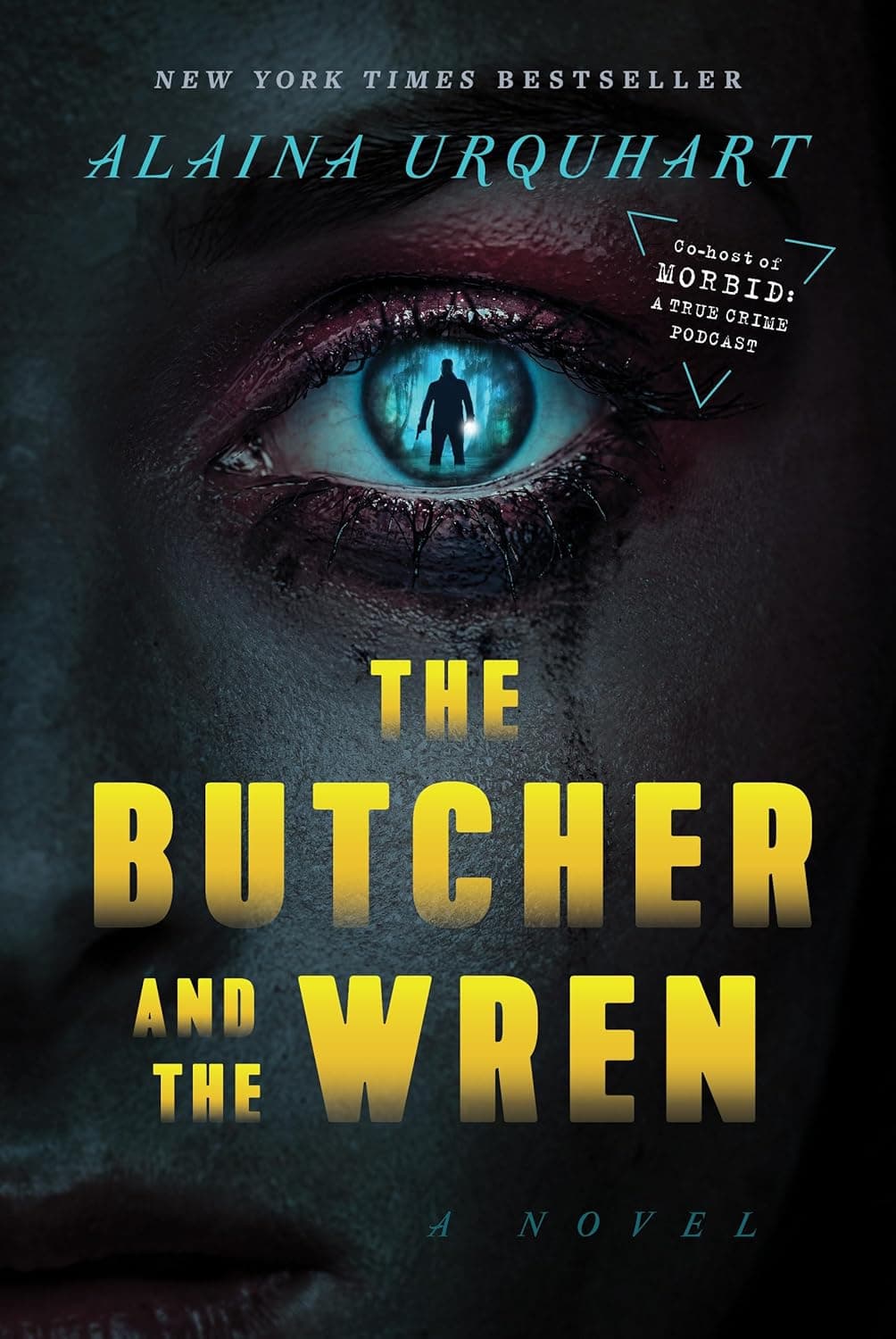
Past Trauma and Its Lingering Effects
What This Theme Explores
The novel treats trauma not as a closed chapter but as a force that keeps writing over the present—shaping identity, warping perception, and steering choice. It asks how people live with the aftermath of harm: Do they reenact it, rewrite it, or resist its pull? The story probes the seductive logic of rationalized violence alongside the grueling work of survival, recovery, and self-reinvention. At its heart is a chilling symmetry: predator and survivor are both bound to the same past, yet what they make of that bond diverges utterly.
How It Develops
Early on, Jeremy Rose moves through the world with practiced control that feels less like preference than defense—habits born from volatility. His rigid routines and hair-trigger responses in Chapter 1 foreshadow a history of scarcity and fear; the flashback in Chapter 7 makes that history explicit, mapping a childhood apprenticeship in cruelty into an adult creed. At the same time, Dr. Wren Muller carries a quieter residue of terror: the paralysis and pursuit formlessly return in her nightmare in Chapter 10, signaling that her present-tense expertise is shadowed by an unspoken past.
In the middle stretch, the past stops whispering and starts staging scenes. Jeremy’s taunts grow targeted—tokens and traces left to puncture Wren’s hard-won sense of safety. When an old bracelet surfaces on a victim in Chapter 24, the case ceases to be professional and becomes personal, collapsing the boundary Wren has kept between her mission and her memories. Trauma, once compartmentalized, breaks quarantine.
By the end, the narrative fuses origin with outcome. In Chapter 26, Wren reveals she is Emily Maloney, not simply investigating a pattern but surviving it—her name, career, and tenacity all sculpted by the night she lived through. Jeremy, haunted by his failure to kill her seven years earlier, treats that unfinished act as a wound of his own and pursues a “correction.” Their final confrontation is not just a clash of bodies but of stories: two versions of what trauma can make a person do.
Key Examples
The novel threads its theme through precise moments where past harm dictates present action.
-
The Lesson of the Doe (Chapter 7): Jeremy’s father forces him to kill an injured animal, dressing the act in the language of mercy and hierarchy. This scene teaches Jeremy to rationalize violence and transforms pain into a technology of control—less an aberration than an order of the world he then reenacts.
-
A Childhood of Neglect and Deception (Chapter 1): Jeremy learns to survive by lying and watching, noting his mother’s disengagement and cultivating a double life. Those early rehearsals mature into his adult “Cal” persona, enabling predation behind a mask of normalcy.
-
The Nightmare (Chapter 10): Wren’s dream of immobilized flight recurs not as memory but as sensation—body keeping the score when mind refuses. The faceless taunting captures trauma’s tendency to return as present-tense threat, pushing Wren toward confrontation rather than evasion.
-
The Bracelet (Chapter 24): The charm marked with “E” resurfaces on the victim Emma, turning evidence into a message. The object collapses Wren’s old and new selves, proving the past isn’t buried; it’s being wielded against her now.
-
The Confession (Chapter 26): Wren tells Detective John Leroux she is Emily Maloney, reframing her professionalism as an act of reclamation. Naming herself out loud converts private survival into public purpose, aligning her pursuit of the Butcher with a bid for agency.
Character Connections
Wren embodies trauma metabolized into vocation. Her work gives voice to the silenced, but it also risks becoming a refuge that keeps her from fully integrating her past. The revelation of her identity forces her to move beyond control-through-work toward control-through-truth, turning a private wound into a chosen stance. That shift lets her confront, rather than simply outpace, the origin of her fear.
Jeremy externalizes his hurt, converting learned helplessness into domination. The “order” he absorbed—some lives serve others—becomes a justification for predation, and his obsession with the one who got away exposes the fragility of that order. His spiral shows how unexamined trauma escalates, demanding reenactment to sustain a brittle sense of power.
Leroux reflects the subtler pressure of inherited hurt. His father’s history with the case shadows him, and in Chapter 14 he admits feeling he’s “letting my dad down.” That legacy turns duty into a personal trial, illustrating that trauma can be transmitted as expectation, not only as explicit harm.
Symbolic Elements
The Bayou: The swamp is both setting and psyche—murky, humid, and alive with unseen currents. For Jeremy it is a stage where he controls the terrain; for Wren it is a site of near-death and necessary return, a geography of reckoning where past and present touch.
The Name Change: Trading “Emily Maloney” for “Wren Muller” is less disguise than narrative rewrite. A wren—small, quick, resilient—signals chosen identity over assigned victimhood, showing how renaming can be a tool of survival and self-authorship.
The Bracelet and the Ring: The bracelet ties Wren to her former self, turned against her as a weaponized memory. The ring, stolen from her current life, violates the boundary she built afterward. Together they trace how objects hold time, making the past portable for both tormentor and survivor.
Contemporary Relevance
The story mirrors current conversations about PTSD, coercive control, and the long tail of abuse—how symptoms live on in bodies, routines, and relationships. It challenges reductive labels by showing victim and perpetrator as differently shaped by pain: one reroutes it into care and purpose; the other recycles it into harm. In doing so, the novel underscores that survival is a process, not a finish line, and that justice involves not only catching a criminal but repairing a narrative.
Essential Quote
“It’s life, son. You don’t let something suffer needlessly. And besides, there’s a pecking order. Some are on the top, and some are here to provide something to those on the top. This doe’s sacrifice will provide good meat,” he explained and yanked on the drop cloth, causing the injured animal to shudder with the sudden movement.
This lesson cloaks violence in moral pragmatism, teaching Jeremy to confuse dominance with natural order. The language of mercy (“don’t let something suffer”) disguises exploitation, modeling how abusers rationalize harm and how children inherit frameworks rather than just moments. The novel spends the rest of its pages testing that framework—showing that Wren’s refusal to accept it is the true act of defiance.