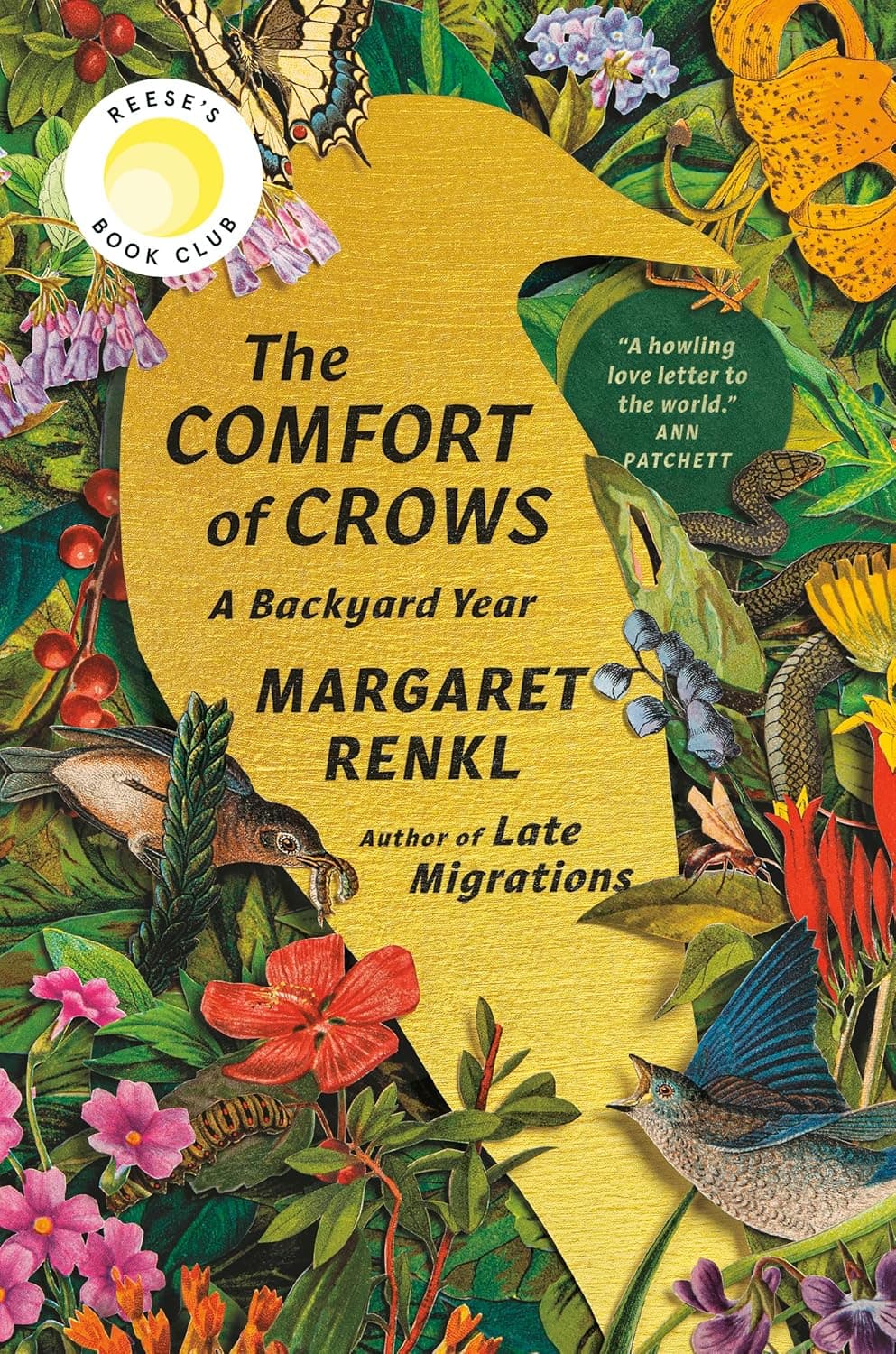
Opening
Across four winter weeks, Margaret Renkl learns to read the cold season as preparation rather than absence—an inward gathering of energy that mirrors her own aging and resolve. A crow sets the year’s tone, a mangy fox tests what help means, and backyard bird feeders expose the moral knots of intervention, launching the book’s cycle of watchfulness, grief, and hope.
What Happens
Chapter 1: The Season of Sleeping / Praise Song for the Coming Budburst (Winter Week 1)
Renkl shifts from craving summer’s blaze to drawing on an “internal source of warmth,” which lets her celebrate winter’s stripped clarity. With leaves gone, she sees small ground birds and the bare bones of the land; what looks empty proves busy with hidden work as sleeping trees pull water into their roots, readying for spring’s “budburst.” She frames winter as preparation rather than ending, aligning her view with Cycles of Life, Death, and Renewal and her own stage of life in Aging, Family, and the Passage of Time.
She undercuts and embraces metaphor at once: “Nothing in nature exists as a metaphor,” she writes, even as she learns from the dormant landscape that “Everything that waits is also preparing itself to move.” A brown winter bud—“like a mistake”—holds its future shape, sleeping with purpose. The chapter opens the year with quiet, readiness, and a promise that dormancy carries life forward.
Chapter 2: First Bird (Winter Week 2)
On New Year’s Day, Renkl joins the birders’ ritual of noting the year’s “first bird.” Hers is a sharp-eyed crow, and she delights in claiming it as her “theme bird,” recalling Aesop’s clever crow that uses pebbles to raise water in a pitcher. She celebrates the crow as bold, playful, ingenious, and tender—qualities she hopes will guide her year and define The Crows as central symbols in the book.
Her father-in-law’s dry “They squawk a lot, too” counters her enthusiasm, but she chooses what the crow means: not a harbinger of death—a “murder”—but a sign of adaptability and transformation. Newly in her sixties, she clings to the crow’s “promise of metamorphosis,” linking its resilience to her own desire for renewal.
Chapter 3: How to Catch a Fox (Winter Week 3)
Renkl spots one of The Foxes in daylight, digging near a mailbox—its eyes swollen with mange, its hunting erratic. She connects its suffering to suburban sprawl and poisoned food chains, locating her grief within Grief, Hope, and Environmental Change. Determined to help, she calls a wildlife rescue expert, who brings a trap, raw chicken, and sardines.
For two days she checks the trap, her dog Rascal trotting along. On the second night, she catches a healthy fox instead of the sick one. Following instructions, she offers a preventive mange pill hidden in bacon; the fox eats, and when she opens the door, it vanishes in a “phantom rush of wildness.” She resets the trap—no rescue yet, only resolve, patience, and the humbling limits of intervention.
Chapter 4: The Bird Feeder (Winter Week 4)
Laid low by a winter cold, Renkl watches her yard through the window: seed-filled feeders, a heated birdbath, and steady streams of desperate birds. Predators arrive, too—a Cooper’s hawk, then a barred owl—turning her sanctuary into a hunting ground and complicating The Human-Nature Connection. She remembers a woman who killed a rat snake to save a brood of The Bluebirds, a choice Renkl finds horrifying because predators must also eat.
She can’t bear to bait small birds for raptors, but she won’t demonize raptors either. Caught between helping and harming, she takes the feeders down for a while, unsure her choice is right. “I don’t know if I’m right to feel this way,” she admits—an ethic of care tempered by uncertainty.
Character Development
Renkl emerges as a tender, exacting observer who acts when she can and questions herself when she must. Animals become more than sightings; they are presences that shape her choices and beliefs.
- Margaret Renkl: Moves from abstract admiration of winter to hands-on engagement—trapping, medicating, and, when necessary, withdrawing aid. She frames aging as metamorphosis, not decline, and accepts ambiguity as part of ethical living.
- The Crows: Established as guiding emblems—clever, communal, resourceful—mirroring the intelligence and adaptability Renkl hopes to practice.
- The Foxes: Split into the mangy sufferer (a casualty of human pressure) and the released healthy fox (a flash of irreducible wildness), together embodying fragility and freedom.
Themes & Symbols
Winter recasts absence as effort. Dormancy becomes agency in disguise, reinforcing the cycle that carries life from rest to budburst to bloom. This seasonal lens lets Renkl reinterpret aging as ripening rather than depletion, aligning her private timeline with the year’s.
Human intervention proves double-edged. Feeding birds offers survival in hard weather but also gathers predators; trapping a fox aims at healing but risks stress and misfires. Renkl refuses simple villains: hawks and owls are necessary; snakes guard balance; even in grief, she locates hope in small, concrete care.
Key symbols focus these questions:
- Crow: Intelligence, resilience, transformation; a chosen compass for the year.
- Sick Fox: Environmental harm traced through a suburban food chain.
- Bird Feeder: The knot of good intentions and unintended consequences.
- Winter Bud: A plain “mistake” that contains a future self—purpose sleeping in plain sight.
Key Quotes
“Nothing in nature exists as a metaphor.”
Renkl acknowledges nature’s autonomy while admitting humans can’t help reading meaning in it. This tension licenses her reflective mode without reducing animals and seasons to mere symbols.
“Everything that waits is also preparing itself to move.”
This becomes the book’s winter thesis: stillness is work. It reframes dormancy, aging, and grief as phases that gather energy for change.
A brown winter bud that looks “like a mistake.”
The bud’s plainness hides design. Renkl’s attention to such “mistakes” models how careful looking reveals purpose where others see nothing.
“They squawk a lot, too.”
The father-in-law’s line punctures idealization, grounding Renkl’s symbolism in ordinary nuisance. The exchange keeps her hope pragmatic, not sentimental.
The crow’s “promise of metamorphosis.”
By choosing which meaning to carry forward, Renkl claims agency over aging and the year’s trajectory—change as invitation, not threat.
The fox vanishes in a “phantom rush of wildness.”
Release restores mystery. Even acts of care end with the animal’s own unknowable life, reminding Renkl of the limits of control.
“I don’t know if I’m right to feel this way.”
Ethical uncertainty is the point, not a flaw. Renkl centers humility as the practice of living alongside the more-than-human world.
Why This Matters and Section Significance
These winter chapters set the book’s weekly cadence and its guiding questions: how to watch closely, how to help wisely, and how to live with consequences you can’t fully foresee. They establish a narrative engine built from small, exact acts—choosing a theme bird, baiting a trap, taking down a feeder—that scale into meditations on responsibility and renewal.
By pairing the crow’s adaptability with the fox’s vulnerability and the feeder’s paradox, Renkl threads the year with the book’s core conflicts: observation versus intervention, grief versus hope, and rest versus readiness. The season’s bareness becomes a clean slate, where purpose gathers quietly before it moves.