Opening
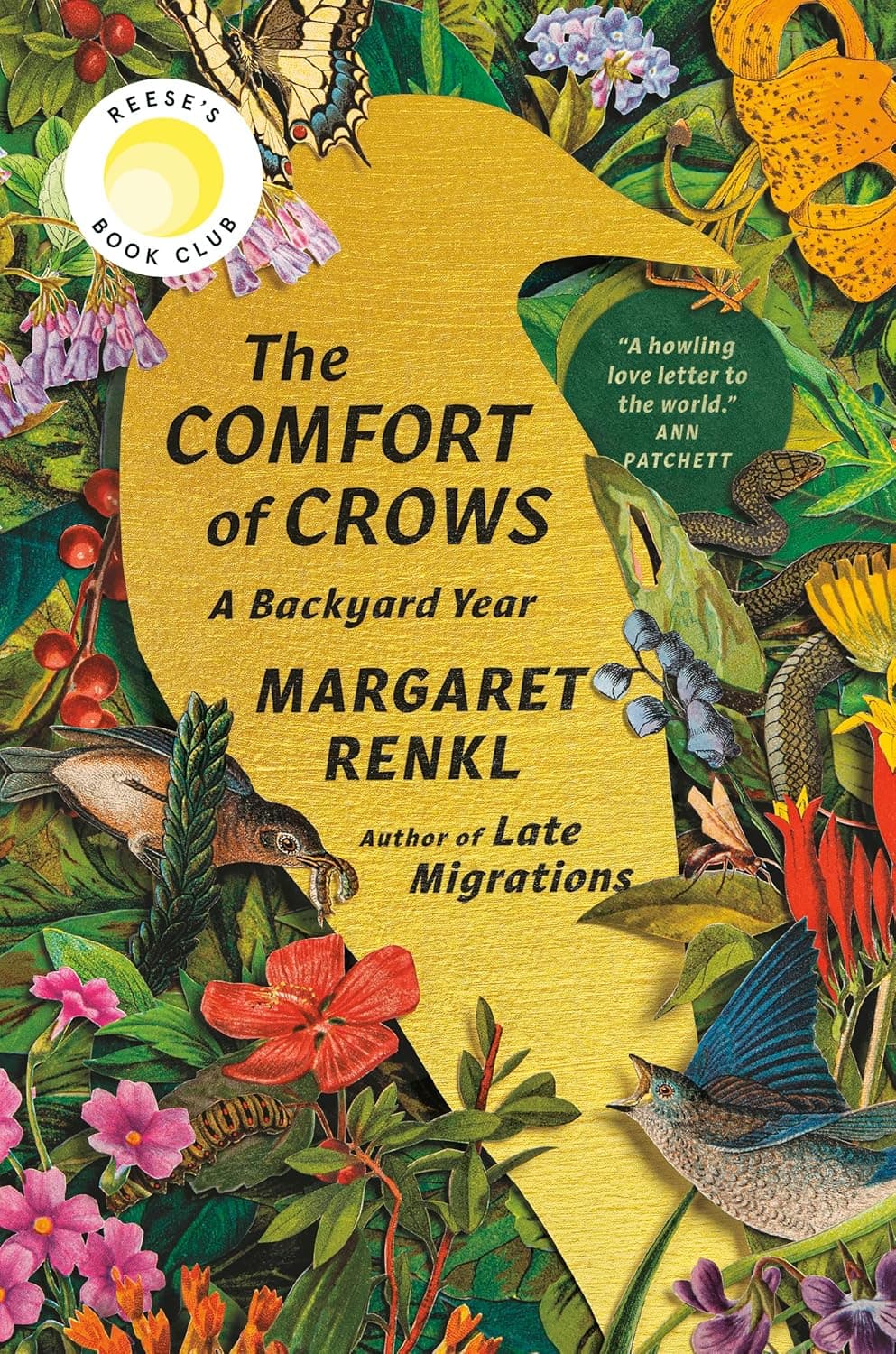
Across four winter chapters, Margaret Renkl learns to tend her yard as habitat, to let a single birdsong lift despair, and to balance resistance with retreat. The season’s quiet—frost-hushed beds, a lone sparrow’s anthem, a dog’s invisible scent-world—reveals the power of attention, responsibility, and hope amid uncertainty, grief, and change.
What Happens
Chapter 6: The Winter Garden
A neighbor spots a flock of robins crowded in Renkl’s snowy yard, their beaks orange with berry pulp. With the ground frozen, they feast on the monkey grass berries bordering the lawn—plants her mother tucked in decades earlier. The sight reframes Renkl’s and her husband Haywood’s “desultory” approach to gardening. Where she once clipped and cleared beds for winter, she now sees that an “untidy garden” is not neglect but habitat—an everyday lesson in The Human-Nature Connection.
She catalogs what a messy yard shelters: dried perennial stalks that secure butterfly chrysalises; leaf litter that blankets overwintering caterpillars and native bees; hollow stems that lodge beneficial insects; unremoved brush that feeds and protects small creatures and birds. Then memory darkens the page: the “alpha” cardinal who ruled her yard lies one morning in the snow like a “fallen battle flag.” She wonders whether a brush pile might have spared him on a lethal night, a private reckoning folded into Cycles of Life, Death, and Renewal and the personal responsibility at the heart of Grief, Hope, and Environmental Change.
Chapter 7: Praise Song for the Praise Song of a Song Sparrow in Winter
A single song sparrow—unexpected in her yard—arrives and claims the season. It sings from a pine, a power line, a holly bush, its voice so forceful it shudders its small body. The winter quiet turns resonant, loud as courage.
Renkl hears joy where cold and gray usually reign. The bird’s persistence recasts the yard; bleakness thins, and hope draws near. She concludes, “one exuberant, unceasing song can change everything,” and for a time, it does.
Chapter 8: Hate to See That Evening Sun Go Down
During “Winter Week 6,” Renkl confronts political dread that feels existential, threatening her values and the safety of people she loves. She turns, as she often does, to the more-than-human world for balance—yet decides that donations and watchfulness aren’t enough. She volunteers at a Nashville public school serving refugee families and, while teaching the Harlem Renaissance, is buoyed by the students’ curiosity and the school’s thrum of life.
Driving home, a radio newscast punctures her lifted mood. The resolve to resist collapses into a need to retreat. She veers to a nearby park, sits by a dam, and watches a great blue heron. Turtles sun. Birds speak their ordinary language. For a few minutes, the world’s indifference to human turmoil steadies her, and “it was enough.”
Chapter 9: A Seed in Darkest Winter
Renkl traces her history with winter from hatred to affection. As a graduate student in Philadelphia, she wears a bright red peacoat—portable Alabama cardinals and camellias—to survive the cold. With time, she accepts winter on its own terms: the pale architecture of a sycamore, beech leaves whispering, a great horned owl’s hoot spiraling through dusk, and the intricate conversations of The Crows. The change echoes Aging, Family, and the Passage of Time: she no longer needs to dress winter in false color to love it.
Climate change edges the season with fragility—daffodils bloom in February—and she adopts a maternal ritual learned from The Parents and Grandparents: poring over seed catalogs. After a storm fells a maple, she plans a new pollinator garden for the sudden sunlit patch, choosing native heirloom seeds. Imagining turned earth and seedlings “searching for the light” becomes a daily practice of hope and gratitude.
Chapter 10: Praise Song for the Dog’s Marvelous Nose
Renkl praises her dog Rascal, whose nose unlocks a world she cannot perceive. On walks he reads the invisible—bobcat, coyote, red fox—pausing mid-stride as if arrested by a story unfolding in scent. His absorption reveals a parallel reality, fully present yet beyond her senses.
She realizes Rascal lives in “an entire world that exists beyond my ken,” and that this is true for every living thing. The chapter widens into humility: the natural world is vaster than human perception, and wonder begins where certainty ends.
Character Development
Renkl’s winter self refines from observer to steward, from seasonal skeptic to winter’s attentive friend, and from political despair to a workable balance between action and refuge.
- She shifts from tidy, human-centered gardening to habitat gardening, accepting disorder as life-giving structure.
- The cardinal’s death imprints responsibility; future choices—brush piles, leaf litter—honor that loss.
- Tutoring signals a commitment to direct action; retreat to the park clarifies a sustainable rhythm: resistance and rest.
- Her relationship with winter matures from cosmetic coping (the red coat) to intimate appreciation of winter’s muted aesthetics.
- Planning a pollinator garden turns anticipation into an ethical practice of hope.
- Rascal’s scent-world teaches humility, expanding her sense of what reality contains.
Themes & Symbols
Renkl’s yard becomes a teacher. The “untidy garden” symbolizes the move from control to reciprocity: dried stalks, leaf litter, and brush piles form a winter commons where insects, birds, and mammals persist. That shift is ethical as much as aesthetic, knitting together the human household and the wider biome.
Emblems anchor the season’s emotional arc. The dead cardinal—“a fallen battle flag”—condenses grief and responsibility; the song sparrow’s tireless music embodies improbable hope; the vanished red coat marks a passage from surface comforts to deeper belonging; the dog’s nose is a living reminder that most of the world is hidden from us. Through these figures, grief, change, and renewal converge into a practice: pay attention, provide shelter, act when you can, and let nature’s resilience recalibrate despair.
Key Quotes
“Feel your feet solid on the Earth. You have already arrived.”
Opening Chapter 8 with Thich Nhat Hanh, Renkl frames presence as antidote to political vertigo. The directive grounds the chapter’s pivot from “resistance” to restorative “retreat,” locating stability in the literal earth underfoot.
“one exuberant, unceasing song can change everything”
The song sparrow’s winter anthem models how a single, sustained note can re-color an entire landscape. Renkl’s hearing becomes a form of hope—attention as transformation.
“a fallen battle flag”
Her metaphor for the dead cardinal fuses beauty, violence, and loss. It crystallizes regret into resolve, making habitat decisions an act of remembrance.
“it was enough.”
The spare sentence closes Renkl’s visit to the park after the news shatters her lifted mood. The line’s modesty rebukes all-or-nothing thinking: a few minutes of nonhuman company can meaningfully reset a human spirit.
“an entire world that exists beyond my ken.”
Rascal’s scent-world reveals the poverty of human certainty. The admission invites humility and wonder, urging readers to honor unseen dimensions of other lives.
Why This Matters and Section Significance
These chapters establish winter as the book’s moral proving ground. Renkl learns to replace control with care, to braid action with rest, and to treat attention as both ecological practice and emotional ballast. A messy garden becomes sanctuary; a sparrow reframes despair; a brief sit by water steadies political panic; a seed order turns waiting into hope; a dog’s nose exposes the limits of knowing. Together, they craft a durable ethic for difficult seasons: tend what is yours to tend, listen for small songs, and let the living world teach you how to go on.