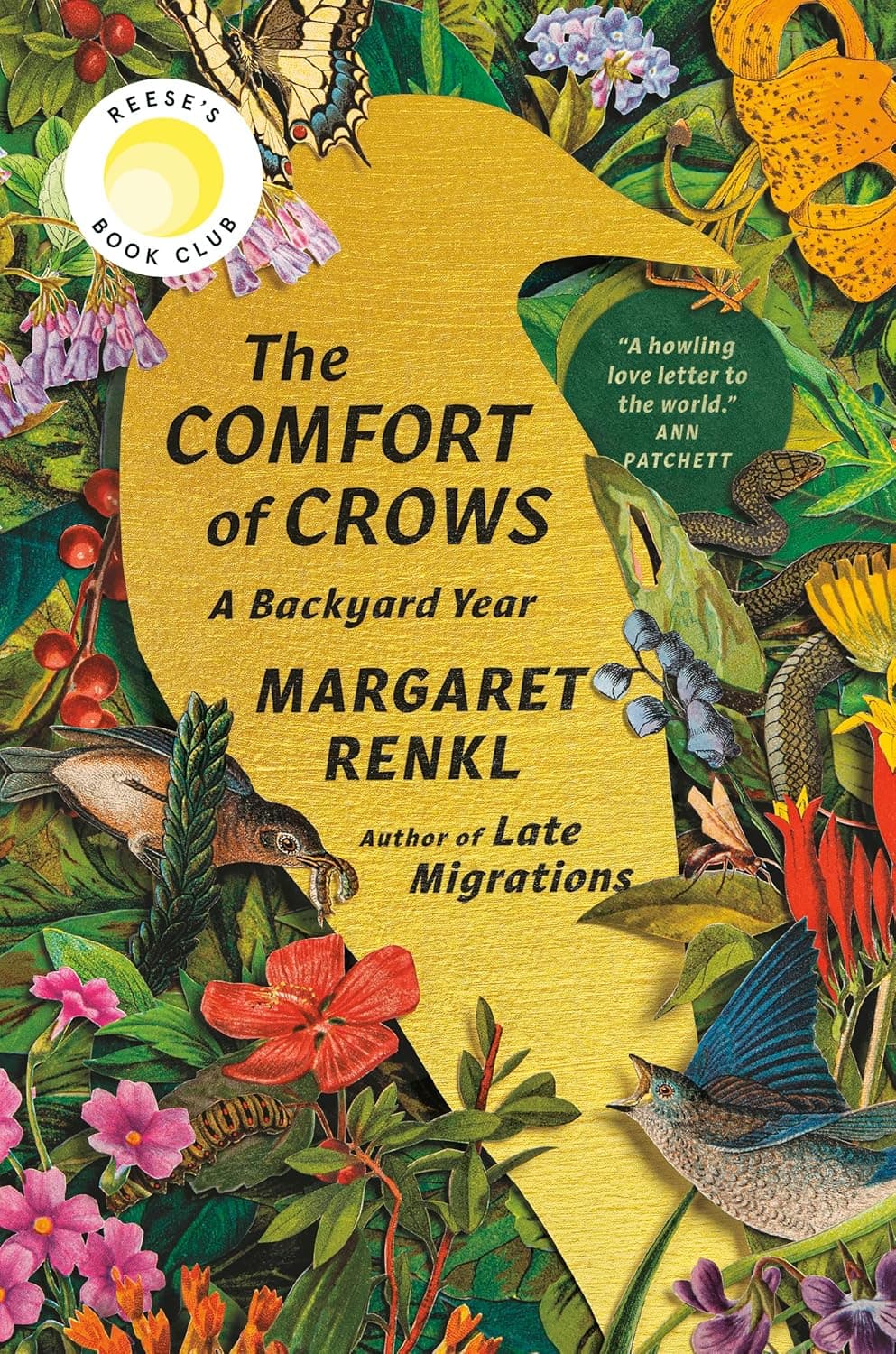
Opening
In the heat of midsummer, Margaret Renkl tends a new backyard pond like a small act of faith while her neighborhood is razed and rebuilt around her. A red fox screams in a driveway, unloved animals receive a praise song, and berries ripen in waves as memory and mourning braid together. Through it all, Haywood meets her grief with tender, practical love.
What Happens
Chapter 41: Thirty-Four Is Tadpoles
The new stock-tank pond looks ready for life—blue flag irises and marginal plants ring the rim—but no frogs arrive. A naturalist friend suggests snakes in the yard may deter amphibians, and Renkl suspects the pond lacks cover. She orders floating plants—hornwort, duckweed—to shelter whatever might come, and frets that predators make her yard less appealing than pesticide-soaked lawns next door.
Days before their 34th anniversary trip, a writing deadline compounds her worry—until Haywood calls the pond shop and discovers her months-old plant order was marked “pickup,” not delivery. He drives over, returns with the missing plants, and carries a secret home.
The next morning, he reveals his surprise: a bag with three tadpoles the clerk helped him net from outdoor tanks beside the highway. Renkl hesitates—unknown species, uncertain ethics—but she fears for their fate if they stay. She releases them, then mourns their disappearance into murk. She starts feeding boiled organic spinach every day anyway, an “exercise in hope.” One afternoon, a perfect slant of light strikes the water, and a “small black miracle” skitters across the muddy bottom—proof that life is at work, even when hidden.
Chapter 42: Praise Song for the Red Fox, Screaming in the Driveway
A red fox sits in a neighbor’s driveway and screams—an eerie sound that could be mistaken for a woman being murdered. The fox addresses its rage at a cat. Renkl admires her neighbor, who owns chickens and chooses to fortify the coop rather than evict the fox family nearby.
The cry pulls Renkl through a ledger of urban-wild encounters: a red-tailed hawk swooping near her infant son, a barred owl fixing its gaze on her dog Rascal, a coyote discovered in a downtown convention center bathroom. The chapter culminates in a question with no easy answer: Is it thrilling to know predators live among us, or heartbreaking to see how thoroughly humans have colonized their world?
The fox’s scream becomes a lament for creatures surviving only on the “vestiges of wildness” left to them, a pressure point in the book’s meditation on Grief, Hope, and Environmental Change.
Chapter 43: Loving the Unloved Animals
Renkl sings a praise song for the animals people revile. “Sing, O muse,” she begins, lifting the opossum’s “hideous scowl” into grace: a tick-eater, a roach-devourer, a subtle custodian who even keeps venomous snakes in check. The vulture rises next—not a ghoul, but a sanctifier of endings, turning death into “blood and feathers and hollow bones,” lifting the dead “on air.”
She asks readers to love the mosquito, the spider, the wasp: mosquitoes fatten chimney swifts and tree swallows; spiders gift hummingbird nests their silk; wasps patrol caterpillars that would strip tomatoes bare. A red bat flickers in twilight, a rat snake moves as a “silent celebration of muscle and grace.” The chapter closes in prayer: forgive our fear, our ignorance, our killing; may we learn to see the beauty and the holiness in all living things. The praise song swells the book’s vision of the Cycles of Life, Death, and Renewal.
Chapter 44: Pickers
After nearly three decades in her home, Renkl watches the neighborhood change. Working-class houses fall to backhoes; with them, mature trees and old wildflower gardens vanish—decades of patient life bulldozed for “commerce.” Before demolition, “pickers” descend in spotless cars to strip estate sales, “picking the bones of the dead.”
She admits she is “hardly better,” recalling the apron and signed book she bought after a friend’s death, a way to hold on to her. Overhead, The Crows quarrel in the branches. Carrion birds, she argues, participate in renewal—turning death into flight. The human version is sterile: a market for remnants that stops the cycle where it should turn. The elegy folds into the book’s meditation on Aging, Family, and the Passage of Time.
Chapter 45: Of Berries and Death
Summer ripens in sequence. Serviceberries disappear into mockingbirds’ beaks—exactly as intended. Blackberries swell, enough for family and birds both, and with them comes memory: her grandmother Mimi sending the cousins to pick with a casual, era-defining warning—“watch out for rattlesnakes.” The memory lays bare a vanished Alabama where rattlesnakes were ordinary; now, their habitats gutted, they are rare.
As blackberries fade, pokeberries turn toxic purple. A brown thrasher and a mockingbird battle among the clusters, which feed birds but endanger humans and dogs. Haywood trims a limb leaning over the neighbors’ yard, mindful of a toddler; Renkl trusts the birds will strip the plant before a berry drops. The chapter threads sweetness and loss, seed and story, and reveals the pulse of The Human-Nature Connection in a suburban yard.
Character Development
Renkl leans into caretaking as a counterweight to grief, practicing hope at pond-scale while naming the harms pressing in from beyond the fence.
- Margaret Renkl: Her daily spinach offerings to unseen tadpoles crystallize her ethic—nurture what you can, even when results stay hidden. Her reflections on predators, pickers, and lost snakes deepen a quiet, abiding solastalgia.
- Haywood: Problem-solver and soulmate, he turns worry into action—correcting the plant order and gifting tadpoles that align perfectly with her longing for life to take hold.
- The “Unloved” Animals: Recast as sacred laborers of the ecosystem; their work restores balance, cleanses decay, and undergirds the living world.
Themes & Symbols
The pond becomes a litmus test for hope. Its still surface hides a teeming, precarious biology—the same way city blocks hide raccoons, fox dens, and owls. Tadpoles embody fragile beginnings; caring for them without proof of their survival models a discipline of faith and stewardship when outcomes are uncertain.
Predators and carrion birds expose competing human responses to death and danger. Where crows and vultures complete the cycle, estate-sale “pickers” commodify endings, severing death from renewal. Across berries, snakes, and foxes, the chapters trace grief for what is disappearing and insist on attention to what remains—work that binds environmental mourning to daily acts of mercy.
Key Quotes
“An exercise in hope.”
Feeding tadpoles she cannot see reframes conservation as relationship rather than result. The phrase names a practice that sustains the caregiver as much as the cared-for.
“A small black miracle.”
The glimpse of a tadpole validates weeks of faith and suggests that life often confirms itself briefly—then vanishes back into shadow.
“Sing, O muse.”
Adopting epic invocation elevates maligned creatures into the realm of the sacred. The tonal shift invites reverence where disgust usually reigns.
“Turning death into ‘blood and feathers and hollow bones’ and lifting the dead ‘on air.’”
The vulture’s transformation ritual restores death to the cycle. Language of lightness and lift counters the stereotype of filth and fear.
“Is it thrilling to know these predators are among us? Or is it heartbreaking to understand how thoroughly we have colonized their world?”
The double question refuses easy comfort. Awe and sorrow coexist, sharpening the book’s ethical demand.
“Pick the bones of the dead.”
Applied to resellers, this carrion metaphor indicts a market logic that stops short of renewal. Unlike birds, humans here extract value without giving anything back.
“Watch out for rattlesnakes.”
A grandmother’s casual warning compresses a lost ecological normal. The line becomes a time capsule for a wilder past.
Why This Matters and Section Significance
These chapters anchor the book’s summer heart: creation flickers at pond-edge while demolition trucks idle down the block. The narrative scales gracefully—from three tadpoles to suburban predators to neighborhood erasure—showing how private acts of caretaking meet public landscapes of loss. The fleeting tadpole sighting serves as a hinge: hope is not naïveté but a practice that prepares the eye to recognize life when it appears, and to keep making room for it when it doesn’t.