Opening
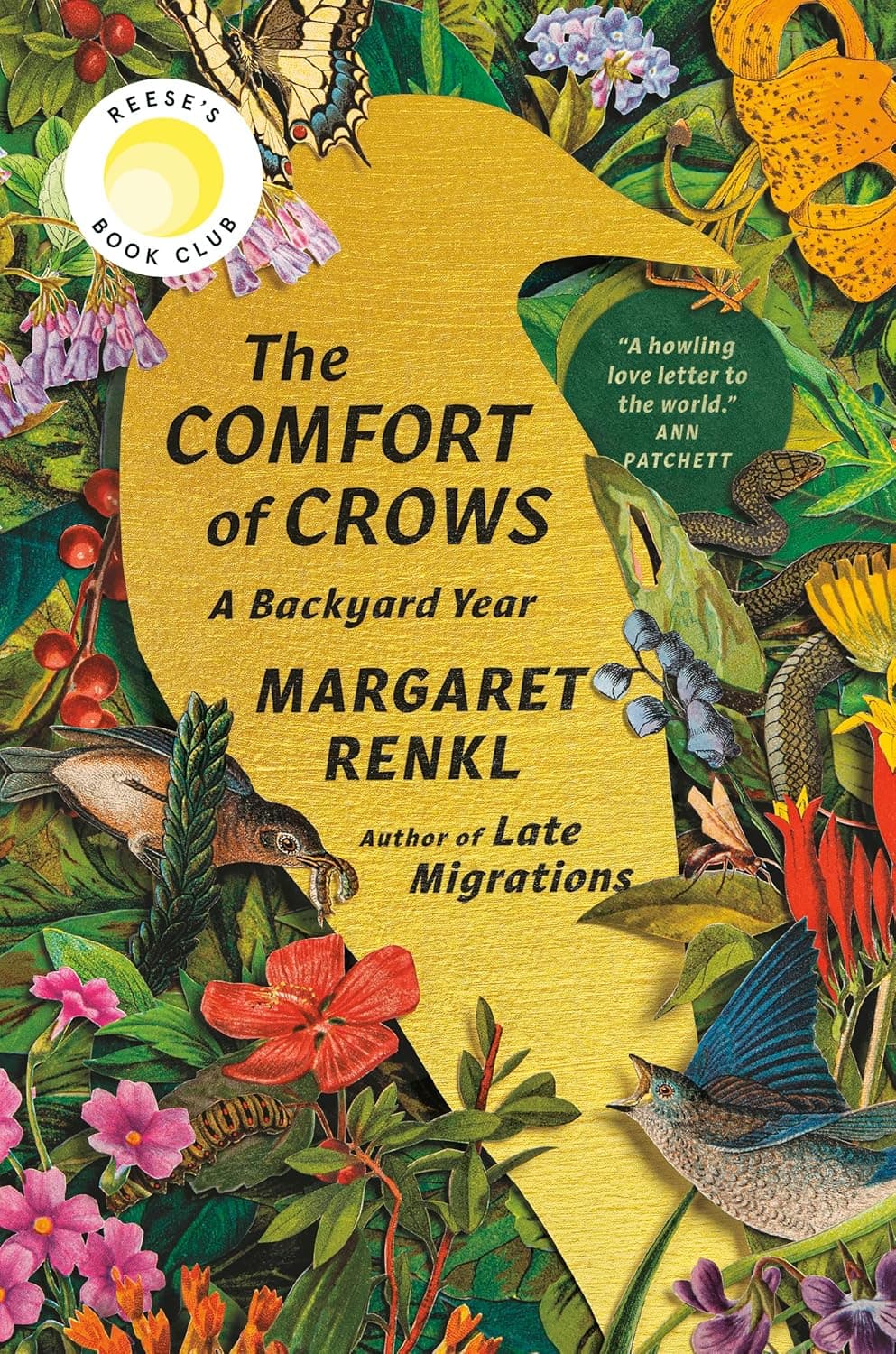
In high summer, Margaret Renkl moves through a world that teems with life while her own house grows quiet. Across five chapters, she watches bees carve a fence into fertility, fungi turn rot into renewal, bluebirds model a family in motion, and a spider spin order from chaos. Nature steadies her through creative block, empty rooms, and the wider world’s noise.
What Happens
Chapter 46: The Teeming Season
Late July vibrates with cicadas, frogs, and crickets as hummingbirds joust at feeders and bumblebees move in “ecstasy” among blossoms. Renkl’s favorite sound is the thin squeal of fledglings; she remembers her middle son’s quip that a baby bird’s “Feed me!” might sound like “Eat me!” to a predator, a reminder of how vulnerability reads differently depending on who hears it. The hungry racket of young jays echoes the chorus of her teenage sons calling from a fridge full of food.
Awkward young crows stumble “like drunks.” She watches one flip upside down from a power line, surrender the struggle, fall, and let its feathers break the landing—clumsiness becoming competence in real time. Though her yard overflows with food, she sprinkles mealworms for the bluebirds just to see them up close. When red wasps—parents with mouths to feed—claim the buffet, she leaves them. Abundance reshapes her instinct to intervene, rooting her in The Human-Nature Connection: this is her family, too, and the yard holds enough for all.
Chapter 47: Praise Song for the Carpenter Bees Eating Our Fence to Ruin
A “bumper crop” of maypops fattens the vines, and Renkl knows why: carpenter bees, the only pollinators big enough to work passionflower, are thriving. They burrow into the same fence posts that hold the vines, sleep in flowers, and make the system complete—support, shelter, and sustenance circle through a single line of boards.
She looks ahead to Cycles of Life, Death, and Renewal. Maypops will feed squirrels, raccoons, and foxes. The unloved fence will fall, its “destruction” revealing the path for a wilder garden. When it collapses, she sees vines spreading into “a bower and a banquet. A home.” Decay isn’t an ending; it’s the hinge that swings life open.
Chapter 48: Kept Safe in the Womb of the World
Blocked on deadline, Renkl goes walking—her cure. Rain makes the woods brighter, emptier, more alive. Studies say walking boosts creativity; she senses something deeper when the damp wakes the fungal world: turkey tail, witch’s hat, stinkhorn, jelly fungus—names that sound like stories.
Fungi work as “silent scavengers”: breaking deadwood, stitching tree to tree, routing what’s lost back into life. At a fallen oak, an open cavity holds a “secret terrarium”—soil, moss, clover, and one violet in a bowl of bark. Looking into this “death-opened place,” she sees exactly how to fix her essay. She texts a photo to her editor, who calls it a “little tree womb,” and the phrase clicks. Nature hands her a form and a faith: creative work grows if she walks long enough to let it.
Chapter 49: Reverse Nesting
Two younger sons move out, taking sofas and desks and leaving “a visible hole in nearly every room.” It feels like a burglary—her “babies” gone. Memory rushes in: the aquarium nursery with papier-mâché fish, the celestial room with glow-in-the-dark stars. She and her husband, Haywood, begin “nesting in reverse,” clearing closets, repainting, and remapping rooms—an honest, tangible chapter of Aging, Family, and the Passage of Time.
Outside, a counterpoint: first-brood bluebirds helping feed the second brood. Compressed nesting cycles—thanks to a late, brutal heat wave—keep older siblings at home long enough to join the work. The scene isn’t sentimental; it’s biological. But the sight of a family handing food down the line steadies her. As painters arrive, she asks for two preservations: keep the growth chart carved into the kitchen doorframe and the glow stars on the ceiling. Some signs of life should stay.
Chapter 50: The Spider in My Life
A gray spider webs her writing desk. Where a “better housekeeper” might flinch, Renkl welcomes her “deskmate.” In a news cycle that never stops breaking, the spider’s routine—catch, eat, repair—brings order. The comfort deepens into Grief, Hope, and Environmental Change: this creature isn’t just metaphor; it’s a worker in a tiny, complete world.
She maps the system with pleasure. A worm composter turns scraps into soil and fruit flies. She baits a feeder with fruit; hummingbirds snatch flies to feed their young. Escaped flies drift toward the desk—and into the spider’s snare. The “circular structure” means “nothing goes to waste.” When the human world fractures, this economy of purpose makes sense. Prayer, hobbies, pets—her version is watching “a cloud of fruit flies on their way to becoming a baby hummingbird’s wings.”
Character Development
Renkl endures the shock of empty rooms by training her gaze on intricate living systems at her doorstep. Creative practice, household transition, and backyard observation braid into one method: walk, watch, trust cycles to teach the next move.
- Renkl: Releases control (leaves wasps at the feeder), preserves memory (growth chart, glow stars), and reaffirms a craft ritual (rain walks for insight).
- Haywood: Prepares for retirement and claims the smallest room for a study because it looks onto the bluebird nest—choosing attention over space.
- The sons: Absent yet vivid; their artifacts and vanished furniture become a ledger of her changing role.
Themes & Symbols
Abundance against emptiness frames these chapters. Summer surges—bees, birds, fungi—just as rooms hollow out. The contrast clarifies how care operates: where the human world feels subtractive, the more-than-human world replenishes, redistributes, and reuses.
Transformation anchors everything: carpenter bees “ruin” a fence into habitat; fungi digest death into tenderness; fledglings teach resilience by falling; a spider funnels household drift into sustenance. Domestic loss turns into a reconfiguration of attention, and creative block becomes a walk, then a violet blooming in a log.
Key symbols:
- The empty house and “reverse nesting”: letting go as an active, shaping labor.
- The bluebird family: intergenerational care as a natural, time-bound behavior that still reads as love.
- The “little tree womb”: a cradle formed by breakage—form and function born from decay.
- The spider’s web: a circular economy where waste becomes wing.
Key Quotes
“Feed me!” might sound like “Eat me!”
This flips a plea for care into a predator’s invitation, distilling the precariousness of youth. Renkl hears both registers at once, bridging family life and field observation.
Fledglings stumble “like drunks.”
The image makes awkwardness endearing and instructive: falling is part of learning to fly. Resilience looks messy before it looks graceful.
“A bower and a banquet. A home.”
Decay transforms the unloved fence into habitat. Renkl reframes “ruin” as release, letting wildness redesign the yard.
Fungi as “silent scavengers.”
The phrase honors humble labor. Invisible work—decomposition, editing, mothering—quietly remakes the world.
“Nesting in reverse.”
A compact metaphor for the empty nest that centers action: taking rooms apart becomes its own kind of care.
“Burglars broke into my house and stole my babies.”
Raw hyperbole conveys the shock of absence. The line also names the irrational feel of transitions that are, in fact, natural.
The spider, “linchpin of a flourishing miniature ecosystem.”
Not a symbol first, but a worker among workers. The line grounds comfort in ecology, not escapism.
A “circular structure” where “nothing goes to waste.”
Purpose replaces panic; closed loops soothe in a world of leaks and losses.
“A cloud of fruit flies on their way to becoming a baby hummingbird’s wings.”
Nuisance becomes nourishment. Renkl’s hope is practical, almost alchemical: attention changes what we see waste to be.
Why This Matters and Section Significance
Chapters 46–50 mark a hinge in the book: domestic space empties as the yard overflows. Renkl articulates a practice for crossing life’s thresholds—observe closely, accept cycles, and let small, working systems model meaning. The result binds memoir to natural history and craft essay to field note, showing how to move through grief and change by watching the world that keeps remaking itself.