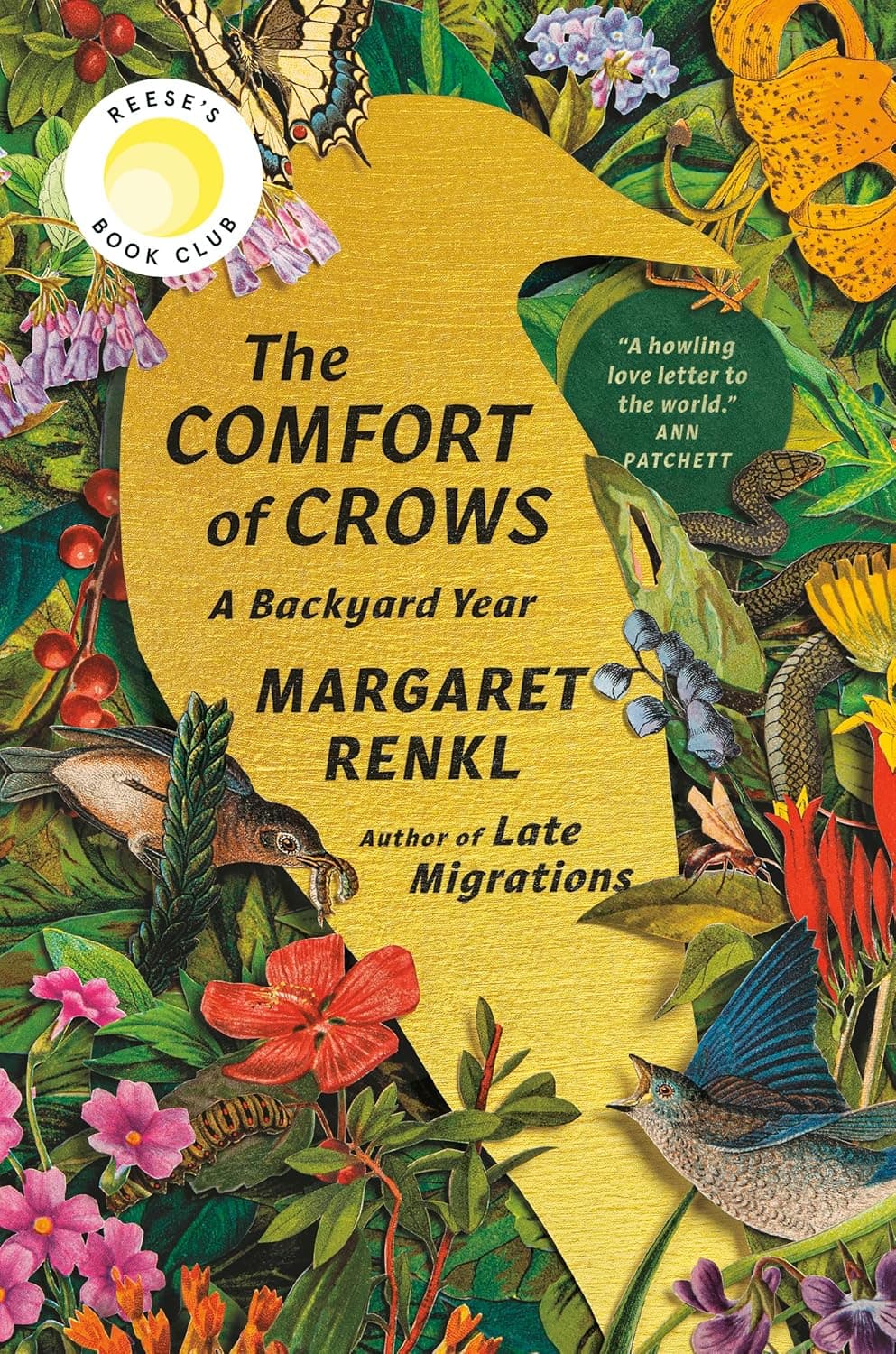
Opening
In these chapters, Margaret Renkl narrows her focus to the small, saving acts available to one person: rescuing two caterpillars, letting emails go unanswered, reclaiming a Sabbath, and drinking in a last wash of autumn light. The book’s gaze shifts between lyric attention and ethical decision-making, arguing that tenderness and rest are forms of resistance in a damaged world.
What Happens
Chapter 66: The Butterfly Cage (Fall Week 5)
Renkl finds a clutch of black swallowtail caterpillars fattening on parsley in her pollinator garden—rare abundance after a lean year. The joy fades as the caterpillars vanish, one day after another. She finally sees the culprit: a red wasp that butchers the young to feed its own larvae. When only two caterpillars remain, she breaks her rule not to interfere, pinches off their leaf, and brings them inside. The choice triggers an argument with herself: she quotes Lear’s fool—“Thou shouldst not have been old till thou hadst been wise”—but decides that in a human-altered world, “natural” no longer means untouched, and care may require action.
She avoids keeping them indoors, fearing the heat will derail their development. Instead she retrieves a mesh butterfly cage from the attic and sets it on the back deck; her husband, Haywood, supplies a large parsley pot to anchor the cage and feed the caterpillars. She hopes the nearness of the house—and the dog’s scent—will deter predators. One caterpillar forms a chrysalis and later ecloses. Renkl unzips the cage, the butterfly steps onto her hand, and then lifts away. The moment distills into a line she repeats like a prayer: “This one caterpillar. This one butterfly.”
Chapter 67: Praise Song for Sleeping Bees
Sleepless before dawn, Renkl walks into the cool, dewy garden and finds bumblebees tucked inside balsam blossoms, their “fuzzy bumblebutts” protruding like punctuation marks of peace. The flowers serve as shelter; the garden, as sanctuary. When she brushes a bloom, a bee jolts awake—angry, leg-waving, loud—and she recognizes how she appears to it: part of “the lumbering kind, the true bumbling trouble at the heart of the world.” The moment of wonder sits beside a confession about humanity’s role in the damage.
Chapter 68: Holiness (Fall Week 6)
Renkl contrasts her churning Sundays with the calm observance of her great-grandmother, Mother Ollie, a devout Baptist introduced within The Parents and Grandparents. Mother Ollie won’t do “handwork” on Sundays—not even to help a child—and her refusal becomes a soft rebuke across time to Renkl’s own “Hydra of email.” Renkl admits she could make room to rest but hasn’t remembered how.
A punishing book tour forces the issue: too exhausted to answer anyone, she collapses into hours of sleep. Rereading the commandment, she wonders, “What if resting, all by itself, is the real act of holiness?” She begins honoring Sunday with deliberate idleness—often a slow walk at her favorite lake. Fawns step from cover, herons stalk, fungi flare from rot, and a cricket’s thin music carries like a hymn. Rest becomes a discipline that renews her capacity to be of use.
Chapter 69: Praise Song for Forgetfulness
Confessing to a priest friend that she has ignored hundreds of emails for years, Renkl receives a joking “absolution”—a blessing that still lifts her shame. She turns to squirrels as a parable: they bury acorns intending to retrieve them all, but forgetfulness leaves seeds in the ground, and those losses ripen into forests. Not every undone task is failure; some are fertile beginnings.
Chapter 70: Because I Can’t Stop Drinking in the Light (Fall Week 7)
Renkl times her dog walk to “crow light,” the late-autumn gleam that burnishes the world just before dusk and makes the glossy black feathers of The Crows shine. Neighborhood children, briefly unscheduled, fill the hour with play, and her heart lifts as she and Rascal move through the glow.
The beauty carries an undertow: the clock soon “falls back,” yanking that hour into dark. Children lose their after-school playtime; her walk shifts to night; wildlife, tuned to human traffic by habit, mistimes their crossings and dies in greater numbers. The chapter becomes a small elegy for a fleeting light and the lives that rely on it.
Character Development
Renkl inches from watcher to caretaker, from compulsive responder to someone who permits herself silence and renewal. The chapters chart a moral practice made of small interventions: protect what you can, rest when you must, attend to what is beautiful before it’s gone.
- She crosses a personal boundary to save two caterpillars, embracing small-scale stewardship in the face of vast Grief, Hope, and Environmental Change.
- She reframes rest as a spiritual discipline, not a luxury, and institutes a weekly Sabbath of walking, listening, and letting be.
- She releases guilt over the “Hydra of email,” accepting limits and allowing creative “forgetfulness.”
- Mother Ollie remains her touchstone of steadiness and sacred rhythm, guiding Renkl toward humane restraint and renewal.
- Haywood’s quiet, practical help—parsley pot in hand—models companionable care that makes small rescues possible.
Themes & Symbols
Renkl deepens The Human-Nature Connection by moving from observation to intervention: the butterfly cage represents a choice to act within an already altered ecosystem. Care is not abstract; it has a mesh door, a parsley stem, a hand held out to a new life. Across these pages, she also insists that attention itself is ethical—watching bees sleep, listening to a cricket, arriving on time for crow light.
Cycles of Life, Death, and Renewal thread the section: predation and metamorphosis, acorns buried and forgotten that sprout into forests, the way rest composts exhaustion into clarity. And because the clock change steals light from children and animals alike, the chapters meditate on Aging, Family, and the Passage of Time: a great-grandmother’s Sabbath, a modern inbox, a shrinking hour of day.
Symbols and motifs:
- The Butterfly Cage: a humane intervention that tests the line between protection and overreach.
- The Sabbath: a reclaimed space for restoration that enables further care.
- “Crow Light”: a brief radiance that measures what’s precious precisely because it ends.
- Sleeping Bees/Forgotten Acorns: images that reveal how stillness and imperfection generate life.
Key Quotes
“Thou shouldst not have been old till thou hadst been wise.”
Renkl invokes Lear to question the wisdom of intervening, then decides wisdom sometimes requires refusing helplessness. The line frames her act as a risk—one she takes anyway in a damaged world.
“This one caterpillar. This one butterfly.”
The pared-down cadence turns rescue into liturgy. The repetition refuses paralysis by scale, honoring the singular life that can be saved.
“What if resting, all by itself, is the real act of holiness?”
This question reorients the commandment toward bodily and spiritual maintenance. Rest becomes prerequisite to sustained care for people and the more-than-human world.
“Fuzzy bumblebutts.”
The playful phrase captures tenderness without sentimentality, reminding us that joy in small creatures fuels protection more effectively than dread alone.
“The lumbering kind, the true bumbling trouble at the heart of the world.”
Renkl names humanity from the bee’s perspective, a sharp ethical check that keeps affection from sliding into self-congratulation.
Why This Matters and Section Significance
These chapters argue for a scale of action anyone can hold: save a single life, keep a Sabbath, forgive what you cannot finish, show up for the hour of light while it lasts. Renkl links interior practices—rest, attention, relinquishment—to outward care, suggesting that activism without renewal burns out, while renewal without action curdles into complacency.
By setting a butterfly’s survival beside a wasp’s hunger, a child’s playtime beside a time-change policy, and a great-grandmother’s Sabbath beside an overflowing inbox, the section shows how private choices ripple into shared ecosystems. The ethic is modest and muscular: do the good that is yours to do, and be restored enough to do it again tomorrow.