Opening
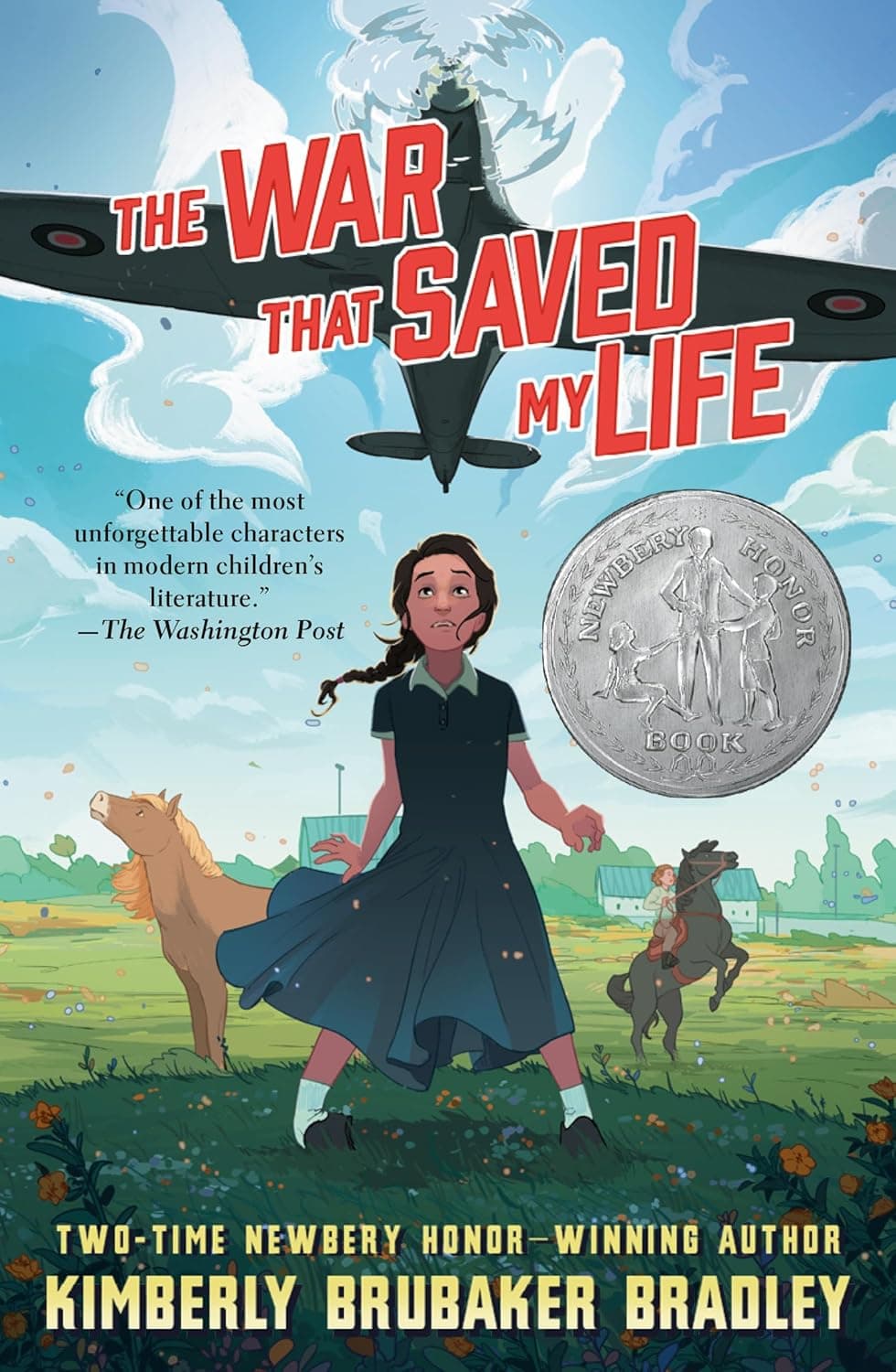
Evacuated from London and deposited in a reluctant stranger’s house, Ada Smith and her brother Jamie Smith begin a tense, transformative new life with the grieving, no-nonsense Susan Smith. Escorted by the “iron-faced” billeting officer, Lady Thorton, the children meet a yellow pony who feels like a promise and a war that forces change faster than anyone is ready for. Baths, bandages, crutches, and a single shoe remake Ada’s world as the country declares war—and Ada refuses to go back.
What Happens
Chapter 6: The Reluctant Guardian
Ada and Jamie, the last evacuees unclaimed, are hauled by Lady Thorton to a “single lady” who “isn’t that nice” and doesn’t want them. Ada’s bad foot buckles; the officer scoops her into a car—an astonishing first—before they pull up to a gray, overgrown house. Inside, Susan protests she knows nothing about children and doesn’t want the responsibility.
While the adults argue, Ada spots a yellow pony with a white blaze in a nearby field and decides she must stay here. In the dim, stuffy house, Susan demands their names; Ada snaps that their surname is “Hitler,” then grudgingly amends it to “Smith.” The officer leaves them behind with an irate Susan, who storms back inside and warns, “I don’t know a thing about taking care of children.” The chapter locks in the uneasy arrangement and plants the pony as Ada’s first true desire.
Chapter 7: Baths and Bandages
A louse in Ada’s hair triggers Susan’s brisk command: bath time. Hot water from a tap, a drain, clean towels—luxuries that feel unreal. When Susan asks for their other clothes, there are none. Seeing Ada’s foot clearly, Susan dismisses the cart story and names the truth: a clubfoot. When Susan reaches toward Ada, Ada flinches—an instinct born of Trauma, Abuse, and Healing.
Susan proves practical and steady rather than sweet. She cleans and bandages Ada’s bleeding foot, hands them her own shirts, and cooks scrambled eggs, buttered bread, and sugared tea. Over dinner, Ada can only confirm Jamie’s six; she doesn’t know her own age or their real surname because Mam said it “didn’t matter.” Susan’s face shows the shock of neglect. Before bed, Ada asks about the pony. Susan says his name is Butter, a gift from Becky, and the first thread of trust begins to form.
Chapter 8: Crutches and a Diagnosis
At dawn, Ada slips outside and meets Butter in the pasture, breathing in his sun-warm coat and feeling, for the first time, a pulse of Freedom and Imprisonment shifting toward freedom. She spends the day with him, falling asleep in the grass. Susan finds her sunburned and hungry, scolds her for disappearing, and then feeds her and summons a taxi to the doctor.
Touch is unbearable for Ada, but the exam brings clarity: both children are malnourished; Ada has impetigo and early rickets. The doctor prescribes sunlight, good food, and milk. He calls Ada’s condition an “untreated clubfoot,” noting such cases are usually “successfully resolved in infancy,” language that feels like blame. A specialist might operate, he says. Today’s miracle is simpler: crutches. With them, Ada moves without agony and—astonishingly—smiles.
Chapter 9: A Shoe and a Tantrum
On her crutches, Ada steps into the town like a new person. She enters shops, chooses produce at Susan’s request, and feels her Identity and Self-Worth stretch to fill the space she’s allowed. Susan buys underwear, sturdy clothes, and shoes. When a shopkeeper sneers about “filthy” evacuees, Susan’s hard look silences him. Ada leaves with a leather shoe for her good foot—a symbol that she belongs.
That night, change overwhelms Jamie. He refuses vegetables, hurls his plate, and screams. Ada tackles him and tries to force-feed him—violence she learned from Mam. Susan steps in, separates them, and takes the sobbing boy upstairs. Later, Ada wakes from a nightmare to find Susan waiting in a chair. Susan shares her own sleeplessness and grief since Becky died three years ago; the house and Butter belonged to Becky. When Ada quietly asks her to stay, Susan lies down with them, a small but real step toward The Meaning of Found Family.
Chapter 10: War is Declared
Morning brings a wet bed and Jamie’s shame. Susan is matter-of-fact—wash the sheets, buy a rubber one. On the radio, a solemn voice announces that England is at war with Germany, and the War as a Catalyst for Change becomes tangible. Jamie cries to go home. Ada, more afraid of Mam than bombs, silently begs never to return.
Susan tries to calm them, though worry slips through. Later, Ada overhears talk of selling Becky’s hunters to make ends meet and offers to eat less. Susan rebukes this: she will look after them. The chapter closes on a split: Jamie is homesick and miserable; Ada is fiercely resolved to stay, seeing safety and possibility for the first time.
Character Development
Across these chapters, the children’s survival instincts collide with Susan’s grief-hardened kindness, reshaping all three. Care arrives not as tenderness but as food, baths, clean shirts, medical help, and presence through the night—acts that begin to rewrite what “home” means.
- Ada: Gains mobility with crutches; discovers Butter as a safe anchor; begins to trust practical care; still defaults to violence and bracing for blows; takes pride in a single shoe and the right to enter a shop.
- Susan: Protests responsibility yet consistently provides it; reveals grief for Becky; sets boundaries and offers comfort; resists charity from the children, insisting on her duty.
- Jamie: Acts out and wets the bed under stress; craves the familiar even when it was harmful; begins relying on Susan’s steadiness despite fear and confusion.
Themes & Symbols
These chapters pivot Ada from confinement to possibility. Practical care—baths, food, clean clothing—becomes the first antidote to internalized shame, gradually replacing fear with competence. The countryside’s open fields, the doctor’s clear words, and the simple technology of crutches transform Ada’s daily imprisonment into movement and choice.
Butter embodies nonjudgmental acceptance. With him, Ada experiences touch without pain and love without cost. Objects carry weight: the crutches as liberation, the single shoe as belonging, the rubber sheet as pragmatic compassion for Jamie. War looms as a terrifying backdrop that nonetheless protects Ada by keeping her far from Mam; catastrophe outside becomes the condition that enables healing inside.
Key Quotes
“I don’t know a thing about taking care of children.”
Susan’s warning sounds like rejection, yet everything she does contradicts it: bathing, bandaging, feeding, and staying through the night. The line frames her arc—care without sentiment—that slowly teaches Ada what safety looks like.
“Nice people won’t have us.”
Jamie’s fear exposes how neglect has shaped the children’s self-worth. The billeting officer’s reply—and Susan’s later defense in the shop—begin to dismantle that belief, showing kindness can arrive even from flawed, struggling adults.
“Untreated clubfoot…almost always successfully resolved in infancy.”
The doctor’s clinical phrasing echoes Mam’s blame in Ada’s mind. Still, the diagnosis reframes her “ugly foot” as medical, not moral, and the crutches turn knowledge into immediate freedom.
“Our name’s Hitler.”
Ada’s barbed joke shields her from humiliation and tests Susan’s reaction. It also folds the looming war into the room, linking Ada’s private battles to the public conflict that will transform her life.
Why This Matters and Section Significance
Chapters 6–10 establish the novel’s core: a reluctant placement that becomes a lifeline, a guardian who insists she isn’t kind but acts with unwavering responsibility, and a child who learns movement, dignity, and choice. The declaration of war raises stakes while paradoxically granting Ada safety, pushing the trio into a makeshift household where care is earned in deeds, not words. By the end of this section, the promise is clear: if they can hold together, Ada’s world can be remade.