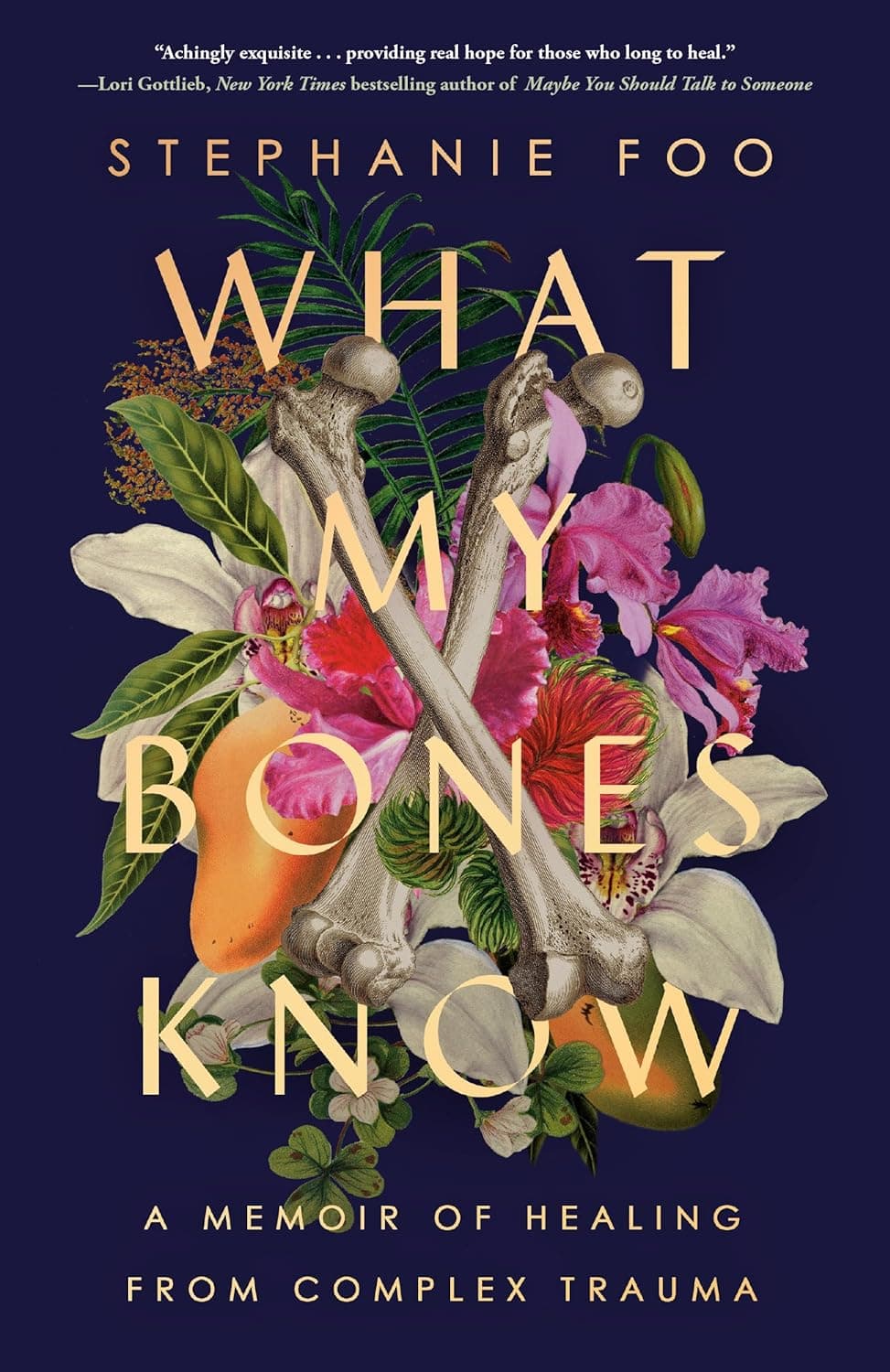
Identity, Self-Loathing, and Self-Acceptance
What This Theme Explores
The memoir asks: Who am I when my earliest lessons taught me I was unlovable, and a diagnosis seems to label my very personality as disordered? For Stephanie Foo, identity begins as polished performance—achievement as armor—before collapsing into the frightening belief that she is nothing but pathology. The book probes the tension between survival strategies and “true self,” showing how shame can calcify into self-hatred and how curiosity and care can pry it open. Ultimately, Foo’s journey reframes healing as integration rather than erasure: accepting the past without surrendering her whole self to it.
How It Develops
At first, the memoir traces a precarious equilibrium: Foo’s confidence rests on professional success, a persona designed to outrun the past. Beneath this, a chronic hum of “dread” and a hunger for external validation signal instability. From the Prologue through Chapter 11, the C‑PTSD diagnosis detonates that identity. The label doesn’t just name her suffering; it seems to swallow her, converting quirks and strengths into symptoms. Self-loathing floods in as she mistakes a map of injury for a mirror of her essence.
In the middle stretch, research and rumination deepen the crisis. Seeing herself as a “burden” and “minefield,” she voices the book’s central identity question—where does the disorder end and she begin? Attempts at healing aren’t linear: EMDR yields a first, fragile moment of self-compassion when she can love her child-self; a return to San Jose destabilizes her further as memory proves unreliable; and peer validation steadies her sense that her experiences were real. Around Chapter 31, the ground shifts from shame to inquiry—she begins to test whether her traits are only damage, or also adaptations.
By the end, therapy with Dr. Jacob Ham models a different stance: replace judgment with curiosity. “Reparenting” becomes daily practice, offering the nurturance she lacked and allowing tender parts to emerge without fear of annihilation. Her wedding functions as a public rite of belonging—she authorizes a new story about herself, one confirmed by her community—and the pandemic reframes certain hypervigilant habits as hard-won “superpowers.” In Chapter 42, she names an identity capacious enough to hold both trauma and wonder.
Key Examples
-
The Diagnosis and the Spiral of Self-Loathing: When the C‑PTSD label arrives, Foo reads diagnostic criteria as an indictment of her entire personality—an identity takeover rather than a tool.
The more I read, the more every aspect of my personhood is reduced to deep diagnostic flaws. I hadn’t understood how far the disease had spread. How complete its takeover of my identity was... I am far from normal. I am the common denominator in the tragedies of my life. I am a textbook case of mental illness. This early moment in the Prologue turns knowledge into self-hatred, showing how medical language can be misused as a mirror that erases complexity.
-
The Monster Identity: Years of terror twist anger into an identity she can wield; after her father threatens her life, she later confronts him with an ax, savoring the reversal.
"How do you like it?" I said quietly, in that same chilling, deadpan, serial-killer tone I knew so well, and it felt delicious in my own mouth. "How does it feel to be on the other side of things?" In Chapter 5, self-protection blurs into self-definition: to feel safe, she becomes what she fears, confusing survival tactics with essence.
-
The Search for a “Fixable” Self: Quitting her job, she devours the literature—and despairs.
This was the most disorienting and upsetting idea that emerged from my reading: the idea that C-PTSD was baked into my personality, that I didn’t know where my PTSD stopped and I began. If C-PTSD was a series of personality traits, then was everything about my personality toxic? The question reframes the theme: healing isn’t about peeling off “bad traits,” but learning which parts are wounds, which are gifts, and how to care for both.
-
The Wedding and Public Acceptance: Her speech reframes her origin story, crediting the chosen family who raised her in adulthood.
Here’s a theory: Maybe I had not really been broken this whole time. Maybe I had been a human—flawed and still growing but full of light nonetheless... Perhaps what was really happening was that, along with all of my flaws, I was a fucking wonder. The community’s response allows her to internalize worth; self-acceptance becomes relational rather than solitary bravado.
Character Connections
Stephanie Foo: The memoir tracks her movement through three selves—high-functioning achiever, “broken” patient, and integrated adult. Each phase exposes a different trap: performance without safety, diagnosis without dignity, and finally a self that can feel messy feelings without equating them with moral failure. Her arc argues that identity is not found beneath trauma but forged while holding it.
Stephanie's Mother: By calling her “stupid, ugly, unwanted,” she seeds a corrosive core belief: unworthiness. This voice becomes the soundtrack of Foo’s self-loathing, making later self-compassion an act of resistance against an internalized parent.
Stephanie's Father: His volatility and abandonment confirm the fear that she is disposable. Even adult confrontations with him risk cementing a “monster” identity, dramatizing how the abused can mistake strength for cruelty.
Joey: He models radical acceptance—“it’s okay to have some things you never get over.” By loving her “as is,” he disrupts the premise that only a “fixed” self deserves belonging, making room for a livable, imperfect identity.
Dr. Jacob Ham: His therapeutic stance—curiosity over condemnation—teaches Foo to decouple behavior from worth. By naming adaptations as contextually intelligent, he helps her see that what once ensured survival need not define her forever.
Symbolic Elements
The C‑PTSD Diagnosis: A double-edged symbol—first a curse that collapses personhood into pathology, later a key that opens language, community, and targeted care. Its evolution mirrors the shift from self-erasure to self-understanding.
The “Dread”: A felt sense of impending ruin that functions like an inner weather report. It embodies how shame colonizes the present, making every calm moment feel fraudulent.
The Ax: Power seized in a single, dangerous object. It marks the moment control returns, but at the cost of aligning selfhood with menace—an emblem of protection that risks becoming identity.
The Wedding: A communal rite that rewrites authorship of her story. Instead of an origin in violence, she claims an origin in chosen love, transforming private self-acceptance into a shared, sustaining truth.
Contemporary Relevance
In an era of proliferating diagnoses and social-media confessions, many people feel both seen by labels and trapped inside them. Foo’s story cautions against substituting pathology for personality while honoring the relief of having a name for pain. Her arc offers a realistic model of healing—iterative, communal, and compassionate—resisting tidy “overcoming” narratives in favor of integration that dignifies endurance and growth. It speaks to anyone learning to hold their history without letting it hold their identity hostage.
Essential Quote
Here’s a theory: Maybe I had not really been broken this whole time. Maybe I had been a human—flawed and still growing but full of light nonetheless... Perhaps what was really happening was that, along with all of my flaws, I was a fucking wonder.
This statement is the thematic keystone: identity reclaimed not by denying damage but by expanding the frame to include light alongside it. It replaces the binary—broken or cured—with a more humane truth: a self that is multiple, resilient, and worthy now, not after perfection.