Opening
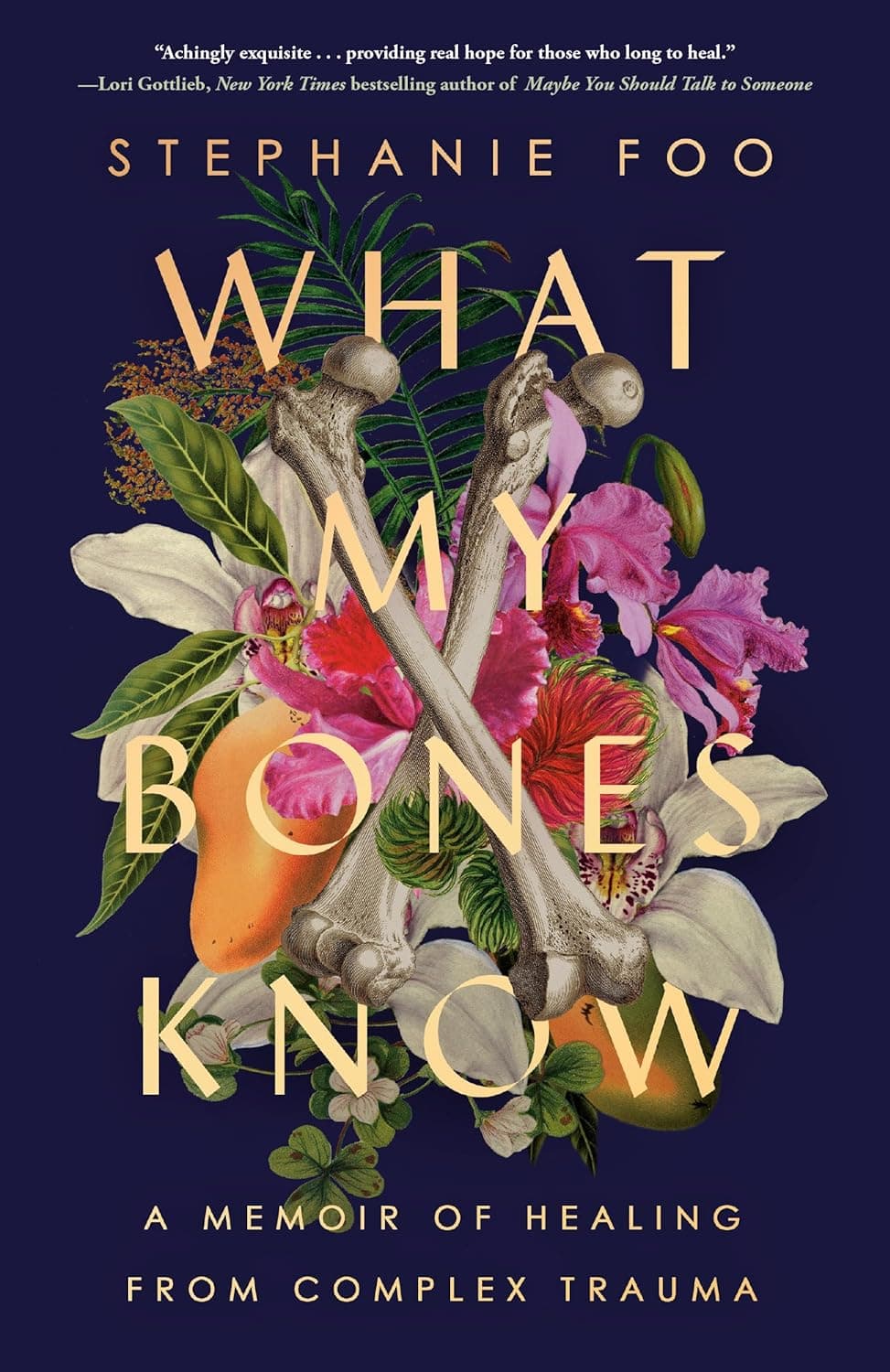
Stephanie Foo traces the roots of her pain from inherited wounds to present choices: she excavates family history, confronts her father, chooses estrangement, learns to reparent herself, and accepts a new family. These chapters chart the turn from diagnosis and explanation to action, self-compassion, and belonging.
What Happens
Chapter 31
Stephanie connects ancestral beliefs about lineage to modern epigenetics: the chemical markers on DNA can change after trauma and pass to future generations. She recalls studies where mice inherit fear of a cherry blossom scent paired with shocks and where maternal separation echoes across three generations. Rachel Yehuda’s research on Holocaust survivors and their children shows shared epigenetic tags on a stress-regulation gene, reinforcing Intergenerational and Cultural Trauma as both biological and historical.
Spurred by this science and the death of her Auntie, Stephanie digs into family archives. During the Malayan Emergency—a 12-year conflict between the British colonial government and the mostly Chinese MNLA—her grandfather, a low-level plantation employee, is arrested without trial after his company gives food to guerrillas under duress. He returns three years later toothless, broken, and emotionally unreachable, numbing himself with drink and gambling.
Stephanie wonders what “epigenetic scarring” her grandfather carries into her Stephanie's Father, and then into her. She also senses blank spaces on her mother’s side—the adoption, the rage—and suspects an unspoken lineage of harm.
Chapter 32
A year before her diagnosis, Stephanie’s father starts calling multiple times a week, treating her like a therapist as he spirals over his marriage and stepchildren. When he expresses suicidal ideation, she explodes—terrified and furious that her father is asking her to carry his life. He responds with a bewildered question that exposes their reversal: “How did you become the parent and I became the child?” He later asks for a checklist to earn closeness; she resents the assignment, fearing even a perfect performance won’t unlock forgiveness. Their pattern crystalizes the theme of Childhood Abuse and Family Dysfunction.
Visiting New York, Stephanie meets his new family. The step-sons are kind but know almost nothing about her—not even that she once lived nearby. At dinner, they ask basic questions as if she’s a stranger. The realization detonates: “This time, I am the secret.” She sees herself as the shame her parents bury to build unblemished lives, fueling her struggle with Identity, Self-Loathing, and Self-Acceptance. Months later, after her diagnosis, she emails her father a link to C-PTSD with the subject “FINALLY GOT AN OFFICIAL DIAGNOSIS.” The unspoken accusation—You ruined my life—hangs in the silence when he never replies.
Chapter 33
Stephanie studies estrangement with fellow journalist Catherine Saint Louis, who is also estranged from an abusive father. Catherine reframes it not as a cure but as a boundary: you stop touching the hot stove. It is a necessary act of self-preservation and part of The Journey of Healing and Recovery.
The final meeting unfolds in an Oakland café, with Joey there for support. Her father arrives defensive and wounded, claiming the role of the victim. The conversation fractures into old patterns. When he demands one sentence explaining her decision, she answers: “Because you don’t love me.” He rages, denies, and storms out: “Have a nice life.” He reaches toward Joey, who snaps, “Don’t you fucking touch me.” Afterward, Stephanie sobs—there is nothing left to salvage. Even then, she texts his wife to check on him. Estrangement is not relief, she decides, but an end to contorting herself to earn love that will never come.
Chapter 34
With her parents cut off, Stephanie turns to rebuilding. Healing from Complex Trauma and Its Lifelong Impact requires receiving the parenting she never had. She tries Internal Family Systems, but struggles to face the parts she hates—especially the needy “black puddle of sludge.”
A guided meditation breaks something open. The teacher invites the class to feel love for another, then direct the same warmth inward. Drawing on EMDR, Stephanie holds earlier versions of herself and whispers, “You are suffering, but you are trying so hard.” A new feeling rises—unconditional self-love. She builds a practice: in meditation, a future, wiser self wraps her in a hug, quieting her mother’s inner critic and teaching her to offer herself care, comfort, and belief.
Chapter 35
Christmas once magnifies Stephanie’s loneliness. With Joey’s family, it becomes a season of belonging. From their first holiday together, he engineers warmth, rituals, and a crowded table. His mother says, “Well, forget about them; we’re your family now. You’re ours.” The declaration plants roots.
On their third Christmas, Joey creates a sprawling treasure hunt threaded with inside jokes. The final clue sends Stephanie alone to his grandmother’s house, its walls dense with family photos. There, he says he wants to be her home forever and proposes. She accepts through tears. The ring marks not a single moment but “three years of barbecues and escape rooms and raspberry pear pies”—evidence of a tribe that shows up, holds fast, and chooses her, again and again.
Character Development
Across these chapters, Stephanie shifts from explaining her hurt to changing her life. She stops negotiating with harm, learns to give herself the care she missed, and risks accepting love that lasts.
- Stephanie: Moves from research and remembrance to action—estrangement; learns self-parenting through meditation; reclaims holidays; accepts commitment and community.
- Stephanie’s father: Remains static—parentifies his daughter, deflects blame, refuses accountability; final meeting reveals his love as conditional and performative.
- Joey: Models secure attachment—protective at the café, intentional about rituals, architect of joyful memories; his proposal anchors Stephanie in a new family system.
Themes & Symbols
- Intergenerational and Cultural Trauma: Epigenetics reframes pain as both inherited and contextual. The Malayan Emergency scars Stephanie’s grandfather, then her father, and then her. The body “remembers” history even when families silence it, braiding biology, culture, and memory.
- The Journey of Healing and Recovery: Healing is a sequence—understand, confront, detach, rebuild, receive. Estrangement is a boundary, not a cure; reparenting trains compassion; chosen family provides structure and joy. Progress comes in hard-won layers, not a clean arc.
- Family as Both Wound and Cure: Biological family transmits shame and neglect; chosen family offers stability, recognition, and unconditional welcome. Joey’s household becomes the fertile ground where trust regrows.
- Christmas: Once a symbol of abandonment, Christmas becomes a reclaimed ritual of belonging. The holiday’s reversal mirrors Stephanie’s transformation from secret to chosen.
Key Quotes
“How did you become the parent and I became the child?”
- This question exposes the parent–child role reversal at the heart of Stephanie’s upbringing. It validates her exhaustion and names the pattern of parentification she must end.
“This time, I am the secret.”
- Stephanie recognizes she is the buried shame her parents hide to keep new lives intact. The line reframes isolation as erasure, sharpening her need to choose herself.
Subject line: “FINALLY GOT AN OFFICIAL DIAGNOSIS.”
- The email functions as a boundary and an indictment: language fails where accountability is missing. His silence confirms the relationship’s dead end.
“Because you don’t love me.”
- Stripped of negotiation, the sentence speaks the truth she has avoided. Saying it out loud ends the false hope that keeps her trapped.
“Have a nice life.”
- His exit line is a disavowal masquerading as civility. It seals the estrangement and clarifies that protecting herself is necessary.
“You are suffering, but you are trying so hard.”
- The mantra reframes self-loathing as compassion. It becomes the core of reparenting—seeing need as worthy of care, not contempt.
“Well, forget about them; we’re your family now. You’re ours.”
- Joey’s mother offers unconditional belonging. The welcome counters years of rejection and makes room for a new identity within a loving system.
He “wants to be her home forever.”
- The proposal defines love as steadiness, not spectacle. “Home” becomes a person and a practice, the antidote to rootlessness.
Why This Matters and Section Significance
These chapters mark the memoir’s emotional apex: understanding transforms into boundaries, and boundaries create space for rebuilding. Estrangement is the keystone choice—it ends the project of earning impossible love and opens the path to self-parenting and community.
The arc moves deliberately:
- Understanding the Roots (Ch. 31): Science and history validate embodied pain.
- Confronting the Source (Ch. 32–33): Patterns are named; ties are cut.
- Healing from Within (Ch. 34): Compassion becomes a skill and daily practice.
- Healing from Without (Ch. 35): Chosen family and ritual anchor a new life.
By the end, Stephanie is no longer the hidden wound but the chosen person. The proposal is narrative proof that someone fractured by their origin family can build a future defined by safety, ritual, and love that stays.