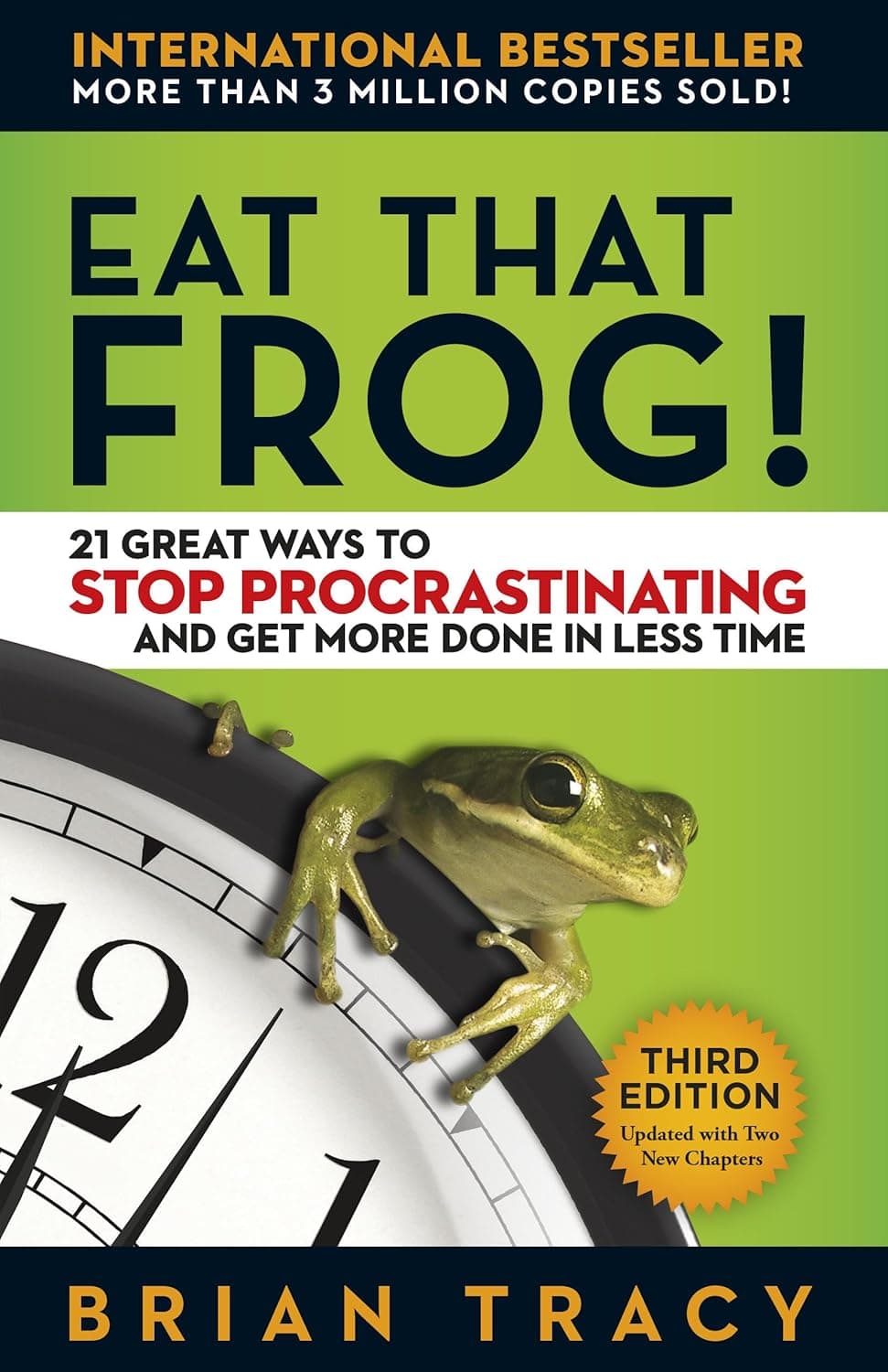
In this self-help classic, the “cast” is made of archetypes and real figures who map a path from procrastination to purposeful action. The central drama pits ingrained habits against the reader’s capacity for focus and discipline, guided by a seasoned mentor and tested daily by a single daunting task. The result is a character-driven journey in which the reader learns to confront resistance, harness proven principles, and steadily become the kind of person who does what matters most.
Main Characters
You (The Reader)
You (The Reader) are the book’s protagonist, addressed directly as the hero of a productivity quest. You begin overwhelmed and scattered, tackling low-value tasks while avoiding the high-impact work that would truly move your life and career forward. Under the mentorship of Brian Tracy and in daily confrontation with the “frog,” you learn to clarify priorities, plan intelligently, and commit to single-minded execution. As you practice the book’s 21 methods, your identity shifts from procrastinator to disciplined producer, with confidence and control replacing confusion. Your key relationships—guided by Tracy, challenged by the frog, and inspired by successful exemplars—shape a transformation that’s both practical and empowering.
Brian Tracy
Brian Tracy is the mentor-guide: a pragmatic coach who distills decades of research and experience into actionable rules. He speaks with calm authority, favoring repeatable tools over theory, and positions himself as a veteran traveler mapping a reliable route for you to follow. His backstory, outlined in the Preface, frames him as a self-made learner who rose by modeling the habits of top performers. Within the narrative, he is a steady, catalytic presence whose role is to illuminate strategies, reinforce discipline, and keep you oriented toward meaningful results. His alliance with you is instructional and motivational, and he validates his method by drawing on the habits of the successful.
The Frog
The Frog is the book’s core antagonist and metaphor: your biggest, most valuable task—the one most likely to trigger delay. It looks “ugly” because it is complex and consequential, yet precisely for that reason it promises outsized benefits when completed. Your relationship to it evolves from avoidance to proactive confrontation as you learn to “eat” it first, every day. While the frog itself does not change, tackling it becomes a positive addiction, turning dread into momentum and anxiety into accomplishment. In this daily face-off, the frog tests—and ultimately proves—your developing discipline.
Supporting Characters
Successful People
Successful People function as a composite role model, illustrating where consistent prioritization and disciplined habit-building lead. They validate Tracy’s advice, showing that focusing on major tasks, thinking long term, and working steadily are learnable behaviors rather than innate gifts. For you, they offer a clear benchmark to emulate, translating aspiration into concrete daily practices.
Minor Characters
Vilfredo Pareto
Vilfredo Pareto introduces the 80/20 principle—explained in the Chapter 1-5 Summary—which helps you identify the few tasks (your “frogs”) that drive the majority of results.
Peter Drucker
Peter Drucker contributes the effectiveness question—“What can I and only I do that, if done well, will make a real difference?”—a focusing tool that anchors your highest-value work.
Napoleon Hill
Napoleon Hill embodies the tradition of success-through-principles, reinforcing the idea that disciplined thought and decisive action compound over time.
Stephen Covey
Stephen Covey amplifies the urgency-versus-importance lens, reminding you to center daily choices on long-term values and Quadrant II priorities.
Alan Lakein
Alan Lakein sharpens day-to-day execution with simple prompts and planning heuristics that turn intention into immediate action.
Character Relationships & Dynamics
At the heart of the book is a productive triangle: you, the mentor, and the obstacle. You and Brian Tracy form a teacher–student partnership in which Tracy supplies field-tested methods and steady encouragement, while you supply willingness and follow-through. The frog stands opposite you as the daily adversary; by choosing to face it first, you transform the conflict into a ritual that strengthens resolve and accelerates results.
Around this core dynamic is an ecosystem of influence. Successful people represent the aspirational end state you are training toward, giving Tracy social proof and you a living blueprint. Thinkers like Pareto and Drucker provide the intellectual scaffolding that informs Tracy’s tools, ensuring your actions target the vital few tasks that matter most. Together, these relationships convert abstract ambition into a disciplined practice: a guided path where clear priorities, focused execution, and cumulative habits turn potential into performance.