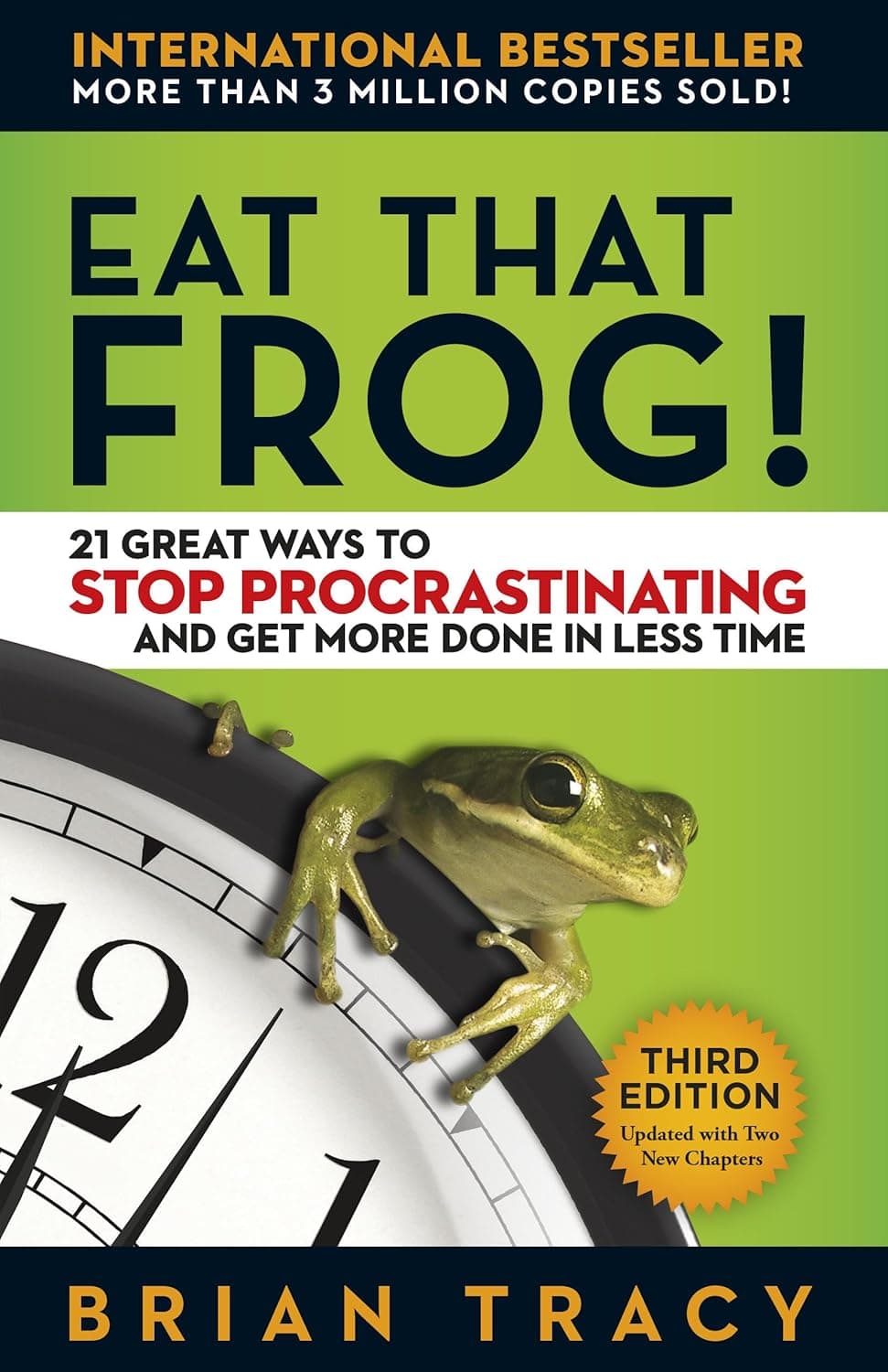
Successful People
Quick Facts
- Role: Collective archetype—the aspirational model for You (The Reader); the “proof of concept” for Tracy’s system
- First appearance: Framed in the Preface and clarified in the Introduction
- Defining feature: A relentless bias for action and focus on the most important task
- Key relationships: You (The Reader); Brian Tracy; the “frog”; the thinkers Vilfredo Pareto and Peter Drucker
- Hallmarks: Clarity of goals, long-term thinking, disciplined execution, and an internally generated sense of urgency
Who They Are
Bolded on first mention, Successful People are not a single person but a composite portrait of peak performers whose habits any reader can copy. They’re the living demonstration that mastery of time, attention, and follow-through—not innate talent—creates outsized results. Tracy uses them as a mirror and a map: a mirror that reflects what the reader could become, and a map that routes every day toward high-value work, finished.
Personality & Traits
Successful People are defined less by temperament and more by practiced, repeatable behaviors. Their identity is behavioral: clarity before effort, action before anxiety, and completion before comfort. Even their posture—“sit up straight…sit forward and away from the back of the chair” (p. 49)—signals readiness to execute.
- Action-Oriented: They “launch directly into their major tasks” (p. 3), treating motion as a decision, not a mood.
- Disciplined: Their edge comes from Self-Discipline and Habit Formation. “Effective, productive people discipline themselves to start on the most important task” (p. 22).
- Future-Oriented: They cultivate a “long-time perspective” (p. 25) and will “delay gratification…to enjoy far greater rewards in the long term” (p. 27).
- Decisive and Clear: “Absolutely clear about their goals and objectives” (p. 7), they reduce friction by removing ambiguity up front.
- Optimistic: They search for lessons and solutions in setbacks (p. 83), protecting momentum and morale.
- Determined: With “invincible determination” (p. 89), they finish what they start—treating completion as a non-negotiable.
Character Journey
As a composite, Successful People don’t “change”—you do. The book charts the reader’s movement from overwhelm and procrastination to control and high achievement by adopting their habits: plan the day in advance, prioritize using the ABCDE method, and tackle the biggest Frog first. The arc culminates in an internally fueled urgency that produces flow (Ch. 20), where effort feels effortless because priorities are ruthlessly clear.
Key Relationships
-
You (The Reader): The relationship is aspirational and instructional. Successful People serve as the target identity you practice into existence—observe their choices, mimic their routines, and measure your day by what gets finished, not started.
-
Brian Tracy: Tracy is the translator and coach. He distills the habits of Successful People into 21 practical methods, arguing from observation and experience that their behaviors are teachable and transferable.
-
The Frog: Their relationship to the largest, ugliest task defines them. Where average performers delay, Successful People confront the highest-impact task first, converting discomfort into momentum and momentum into results.
-
Vilfredo Pareto and Peter Drucker: These thinkers supply the intellectual toolkit behind their behavior. Pareto’s 80/20 lens and Drucker’s results-focused questions anchor their Prioritization and Focus, ensuring time is invested where returns are greatest.
Defining Moments
Successful People “appear” wherever Tracy showcases choices that separate top performers from the average. Each instance is less biography than demonstration—moments that reveal the principles that make them effective.
-
Preface: “Some people are doing better…because they do certain things differently…and use their time far, far better” (p. xi).
- Why it matters: Establishes behavior—not talent—as the engine of success, making the archetype attainable.
-
Introduction: Their “action orientation” is the most consistent, visible behavior (p. 3).
- Why it matters: Converts productivity from a planning problem into an action problem—start first, refine second.
-
Chapter 4: Long-term thinking and delayed gratification (p. 27).
- Why it matters: Reframes sacrifice as strategy; short-term discomfort buys exponential future returns.
-
Chapter 13: They put pressure on themselves (p. 73).
- Why it matters: Internal standards replace external supervision; autonomy becomes a performance advantage.
-
Chapter 20: They cultivate urgency and access flow (p. 102).
- Why it matters: Urgency isn’t panic; it’s presence. Flow is the compounding reward of focused execution.
Symbolism & Themes
Successful People symbolize the realized potential available to anyone willing to practice discipline over mood and priorities over distractions. They embody the book’s core themes: Productivity and Personal Effectiveness as a learned skillset, and Overcoming Procrastination and Taking Action as a daily choice. In Tracy’s framework, greatness is methodical: select the right task, begin immediately, persist until done.
Essential Quotes
Successful, effective people are those who launch directly into their major tasks and then discipline themselves to work steadily and single-mindedly until those tasks are complete. (Introduction, p. 3)
This pairs action with endurance. Starting fast creates early traction; working “single-mindedly” protects that traction from fragmentation, making completion the default outcome.
The number one reason why some people get more work done faster is because they are absolutely clear about their goals and objectives and they don't deviate from them. (Chapter 1, p. 7)
Clarity functions as a time-saver and a willpower-saver. When the target is unmistakable, energy isn’t wasted deciding what to do—only doing it.
Successful people are those who are willing to delay gratification and make sacrifices in the short term so that they can enjoy far greater rewards in the long term. Unsuccessful people, on the other hand, think more about short-term pleasure and immediate gratification while giving little thought to the long-term future. (Chapter 4, p. 27)
This reframes discipline as rational investment. Short-term discomfort becomes a trade for compounded future benefits, shifting success from luck to deliberate choice.
A common quality of successful, happy people is that they are action oriented. When they hear a good idea, they take action on it immediately to see if it can help them. (Chapter 18, p. 96)
Speed to implementation is a diagnostic of success. Testing ideas in practice beats perfect planning, turning knowledge into feedback and momentum.
Really successful people are those who get themselves into this state [of flow] far more often than the average. (Chapter 20, p. 102)
Flow is portrayed as earned, not accidental. By narrowing focus to high-value work and moving quickly, Successful People make peak performance a habit, not a happy accident.