Opening
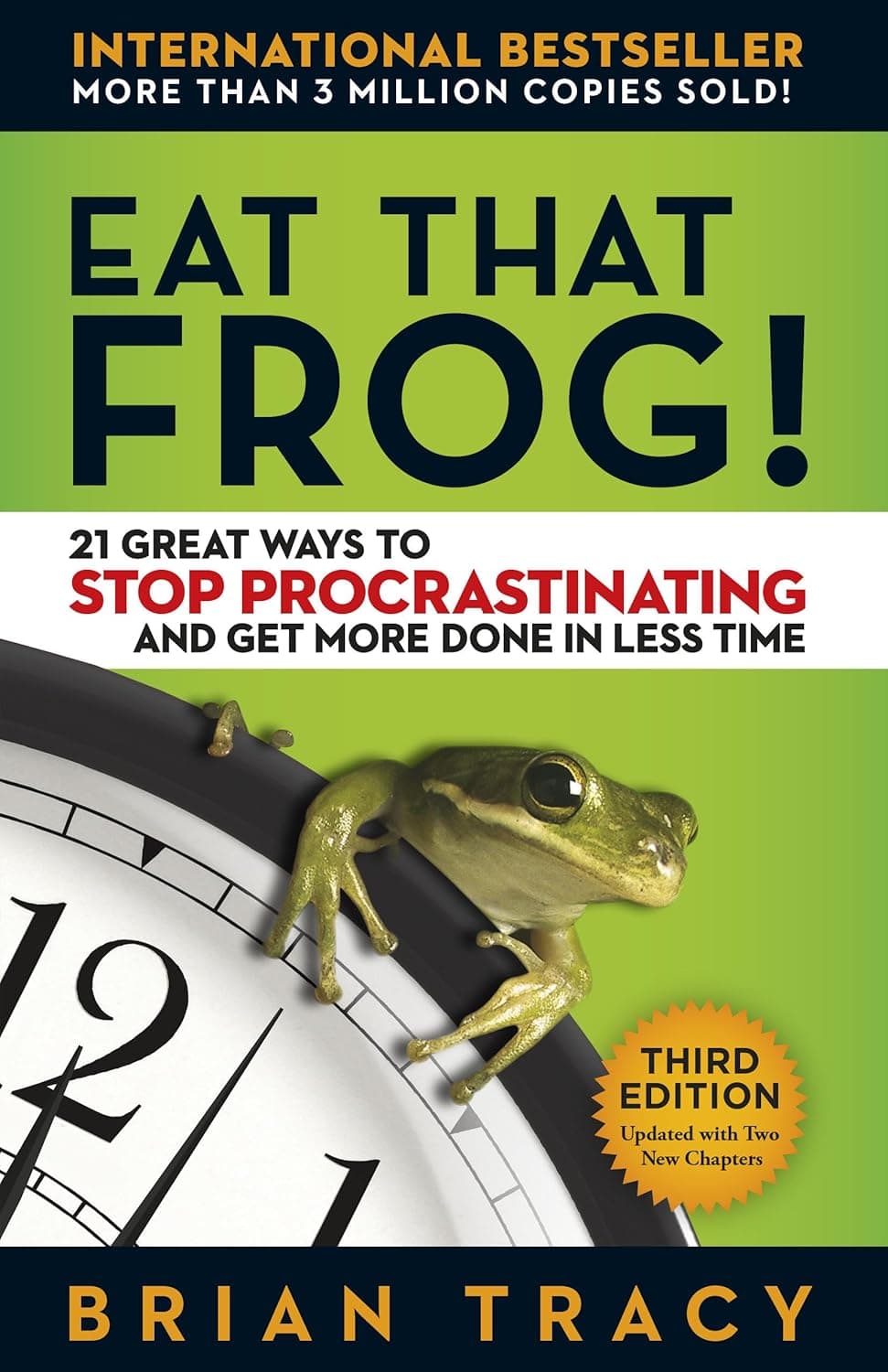
In the final stretch of Eat That Frog!, Brian Tracy turns careful planning into decisive action. He shows how urgency creates momentum, how single-minded focus finishes the job, and how a compact checklist of principles makes the system easy to live by every day.
What Happens
Chapter 21: Develop a Sense of Urgency
Tracy spotlights “action orientation” as the signature trait of Successful People: they plan well, then move fast and keep moving. Sustained effort on high-value work pulls the mind into “flow,” a peak state where tasks feel clear, energizing, and almost effortless. In flow, creativity and competence rise together.
To trigger flow, he prescribes a cultivated “sense of urgency”—an internal impatience to start and finish now. That urgency produces a “bias for action,” shifting attention from talking about plans to doing specific steps immediately. Tracy ties this to the “Momentum Principle”: getting started requires the most energy; once in motion, staying in motion is easy. Speed feeds energy, learning, and confidence. He offers a simple cue to pierce hesitation: “Do it now! Do it now! Do it now!”
Urgency, he emphasizes, isn’t frenzy. It’s calm, focused energy—choosing the most important work and attacking it with steady pace. As a core tool of Overcoming Procrastination and Taking Action, urgency becomes the spark that lights every other technique.
Chapter 22: Single Handle Every Task
Tracy then delivers the ultimate execution rule: choose your most important task, start, and stay with it until it is 100 percent complete. He calls this “single handling.” The opposite—starting and stopping, picking up and putting down—bleeds time and attention. Each restart demands reorientation and overcoming inertia again, which can multiply the total time required severalfold.
When you single handle, you climb the “Efficiency Curve.” With uninterrupted attention, your speed and quality rise together because momentum compounds. This is where real output happens—fewer transitions, more deep work, and visible results that arrive faster.
This discipline requires muscle from Self-Discipline and Habit Formation: doing what you should, when you should, whether you feel like it or not. Persisting until done becomes a character test and a character builder. Each completion lifts self-esteem and makes the next disciplined choice easier. Tracy frames it as identity-level change: by single-handling your top priorities, You (The Reader) embody the core of Prioritization and Focus and start to feel like the master of your day.
Chapter 23: Conclusion: Putting It All Together
The conclusion distills the system into a daily command: eat your biggest, ugliest Frog first. Tracy insists this is a learnable habit—repeat it until it becomes automatic.
He then provides a concise, numbered recap of the 21 rules, spanning the full arc from direction to execution. The list includes foundations such as Clarity, Goal Setting, and Planning (“Set the table”), prioritization methods like the 80/20 Rule and the ABCDE Method, and the final two execution levers: develop urgency and single handle tasks. By collecting everything in one checklist, Tracy gives readers a portable review and an immediate action plan.
He closes with a direct charge that encapsulates the entire method and reinforces its promise of Productivity and Personal Effectiveness: just do it—eat that frog.
Character Development
These chapters complete the reader’s shift from planning to identity-level execution. Urgency provides the spark; single handling provides the staying power; repetition cements the habit.
- You move from “thinking about work” to starting immediately and building momentum.
- You replace task-hopping with deep, sustained focus until completion.
- Each completion boosts self-respect, reinforcing disciplined behavior in a virtuous cycle.
- You begin to experience control, confidence, and a stable sense of personal power.
Themes & Symbols
The book’s core theme—overcoming procrastination—crystallizes into two master principles: urgency to start and single handling to finish. Urgency breaks the inertia barrier and initiates the Momentum Principle, while single handling protects momentum from fragmentation. Together they convert intention into consistent output.
Prioritization and focus reach their clearest form here. Once the most important task—the “frog”—is identified, exclusive attention becomes the nonnegotiable rule. The “Efficiency Curve” functions like a symbolic map of deep work: uninterrupted effort moves you up the curve; every interruption slides you down. Flow, as the peak state, represents the reward for disciplined attention and the engine of compounded performance.
Key Quotes
“Do it now! Do it now! Do it now!”
This mantra is the mental interrupt that slices through hesitation. Repeating it conditions immediate action, a cognitive shortcut that initiates momentum when motivation wavers.
“Back to work!”
A reset phrase that deflects distraction the moment it appears. It re-centers attention on the single handled task, preserving position on the Efficiency Curve.
“Just do it! Eat that frog.”
The concluding directive fuses attitude with action. It compresses the entire system into a daily, memorable commitment: tackle the highest-value, most resistant task first.
“Master of your own destiny.”
Tracy links disciplined execution to identity and agency. The point isn’t efficiency alone—it’s the self-respect and control that come from consistent follow-through.
Why This Matters and Section Significance
- Chapter 21 supplies the emotional ignition—urgency—to start the most important work now.
- Chapter 22 supplies the behavioral engine—single handling—that carries work to completion without leakage.
- Chapter 23 cements the playbook with a compact checklist and a rallying command, ensuring long-term recall and use.
Together, these chapters fuse mindset and method. They show that productivity isn’t just what you choose—it’s how you move: with urgency, focus, and unwavering discipline.