Opening
In the preface, Brian Tracy speaks directly to You (The Reader), naming the shared dilemma: there’s always more to do than time allows. He rejects “getting caught up” as a goal and replaces it with a mindset shift—stop the trivial, concentrate on the vital—and promises 21 practical principles to help you act on what matters most.
What Happens
Tracy opens by validating the overwhelm you feel and dismantling the hope that mere speed or output solves it. True control, he insists, comes from changing how you think and work—deliberately eliminating low-value activity to concentrate on the few tasks that move the needle. He establishes credibility through three decades studying time management, citing voices like Peter Drucker and Stephen Covey, and frames the book as a reminder-and-habit-builder rather than a collection of novel theories—introducing Productivity and Personal Effectiveness and Self-Discipline and Habit Formation.
He then shifts to his origin story: a poor student and manual laborer with few prospects who, as a struggling salesman, starts asking Successful People what they do—and then copies their actions with discipline. The revelation is simple and replicable: success isn’t about being “better,” but about doing different things and doing the right things right. Applying this principle propels him from the sales floor to vice president by twenty-five.
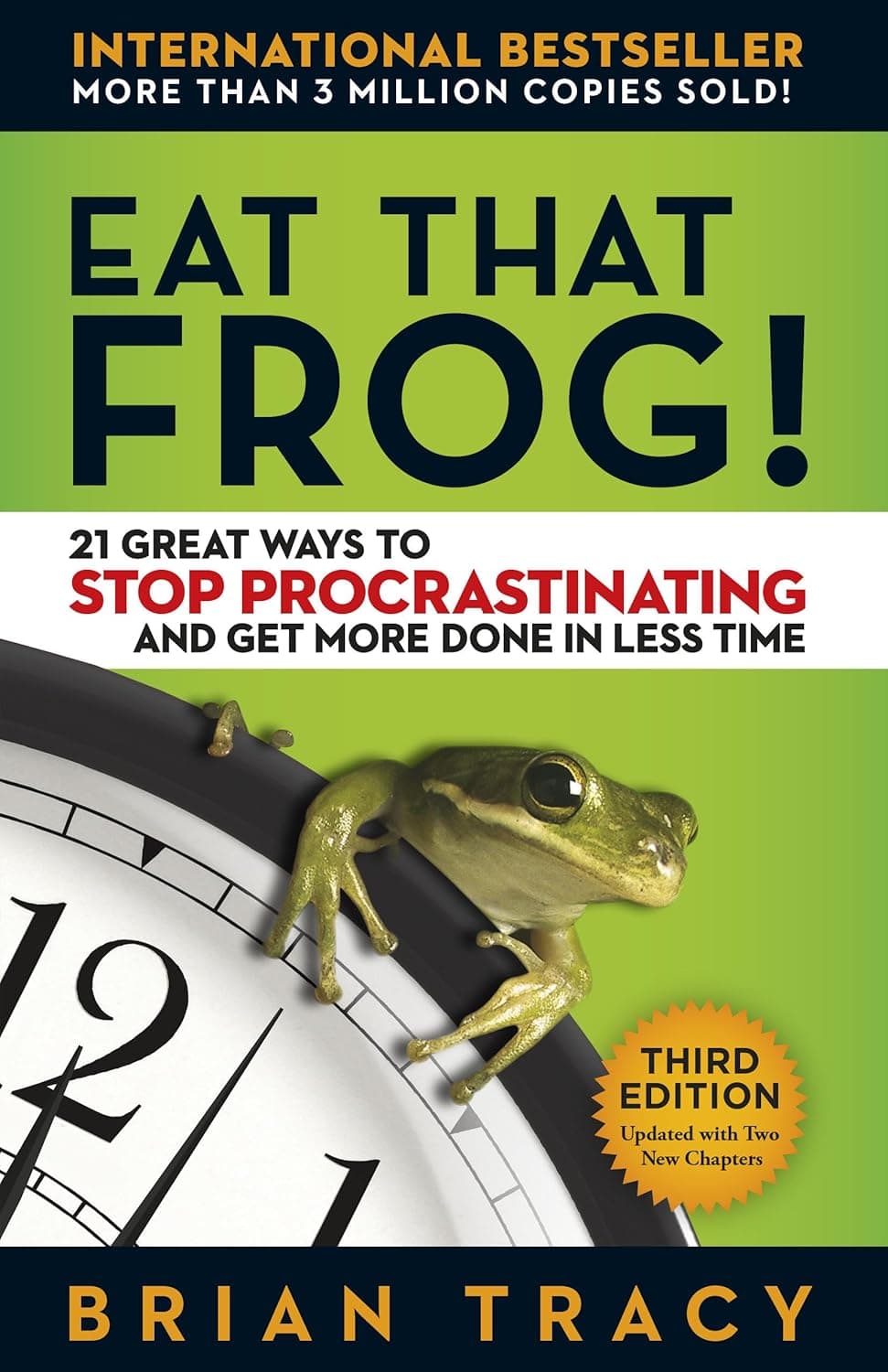
Tracy closes by previewing the book’s structure—21 fast-acting, practical methods, minimal psychology, maximal action. The core insight crystallizes his promise: focus single-mindedly on your most important task and finish it completely. This spotlights Prioritization and Focus and Overcoming Procrastination and Taking Action. He presents the methods as a choose-what-you-need toolkit and guarantees rapid progress if you learn to “Eat That Frog!”—with The Frog standing in for your biggest, most consequential task.
Character Development
Tracy casts himself as mentor and you as the protagonist poised for change. His journey models the transferability of high-performance habits; yours begins by choosing to apply them.
- Brian Tracy: Moves from laborer to executive by identifying, modeling, and practicing high-value behaviors; blends research with lived experience to guide others.
- You (The Reader): Start out overwhelmed yet capable; positioned to gain control by adopting a focused, habit-driven approach.
- Successful People: Function as practical models; their methods are observable, learnable, and repeatable rather than innate gifts.
Themes & Symbols
Tracy centers effectiveness over mere efficiency: do fewer, more important things, better. The preface argues that consistent action on top priorities compounds results, linking personal agency to systems of [Productivity and Personal Effectiveness] and [Self-Discipline and Habit Formation]. Success becomes a process—observe what works, install it as habit, and eliminate what doesn’t.
Procrastination is reframed as a focus problem. By committing to the hardest, most valuable task first, you convert intention into momentum—aligning [Prioritization and Focus] with [Overcoming Procrastination and Taking Action]. The Frog symbolizes that crucial, often-avoided task whose completion tilts the day—and your trajectory—toward success.
Key Quotes
“You are literally swamped with work and personal responsibilities... But the fact is that you are never going to get caught up.”
This line names the emotional reality and shatters the false finish line of “caught up.” It clears space for a new standard: managing priorities, not managing everything.
“You can get control of your time and your life only by changing the way you think, work, and deal with the never-ending river of responsibilities...”
Control comes from mental models and methods, not more hours. The “river” metaphor underscores why strategy—selecting and sequencing—beats raw effort.
“The ability to concentrate single-mindedly on your most important task, to do it well and to finish it completely, is the key to great success.”
This is the book’s thesis in one sentence. It turns success into a repeatable behavior: identify the highest-impact task, protect focus, and finish.
Why This Matters and Section Significance
The preface lays the book’s persuasive foundation. Tracy builds trust (ethos) through research and results, forges emotional resonance (pathos) by naming your overwhelm, and offers a simple, testable method (logos): emulate effective people, install their habits, and tackle your top task first. It sets a practical, motivational tone and frames you as an agent of change equipped with a clear playbook for rapid progress.