What This Theme Explores
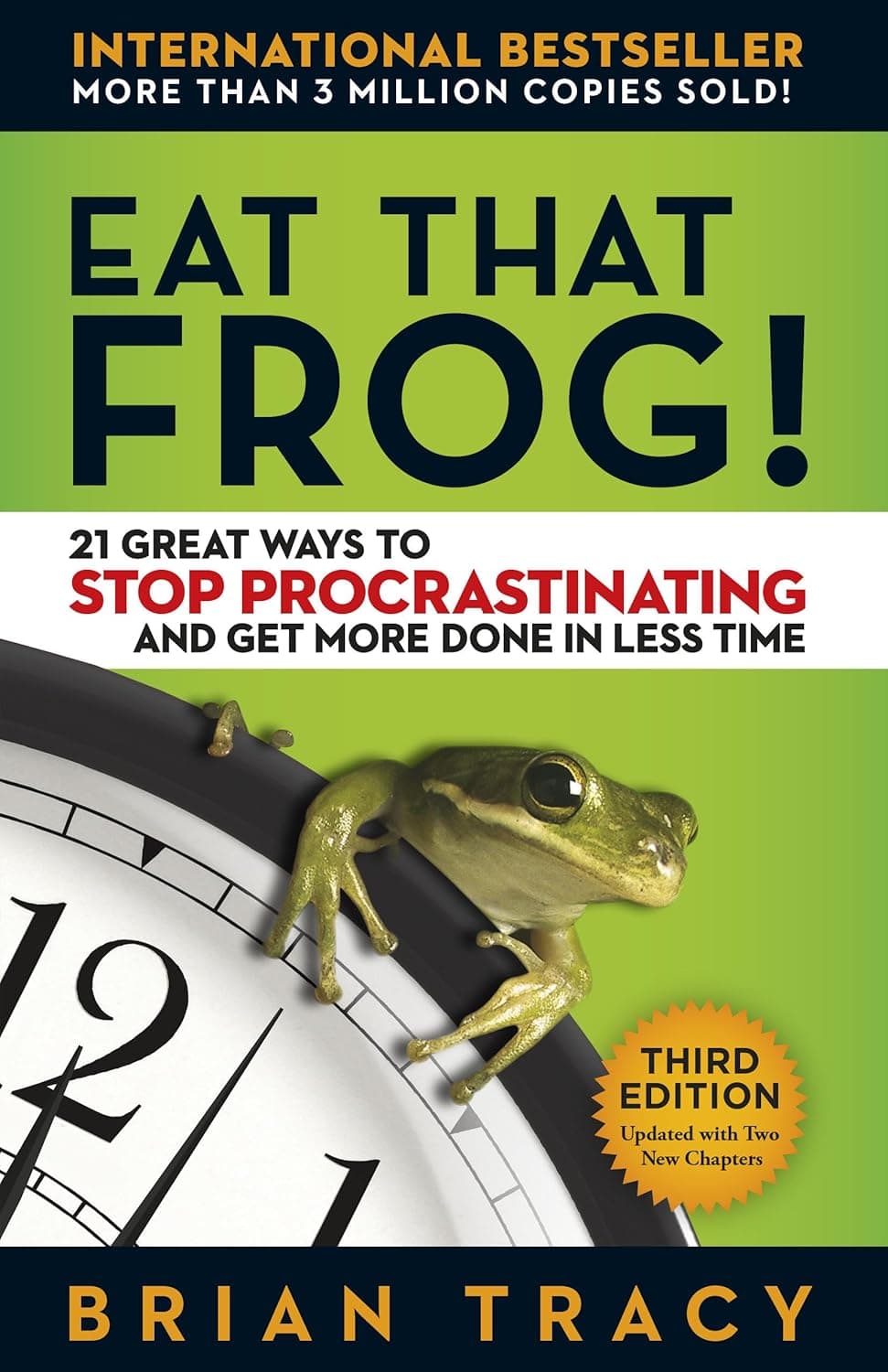
Productivity and Personal Effectiveness in Eat That Frog! asks not how to do more, but how to do what matters most—consistently, deliberately, and well. Brian Tracy reframes effectiveness as the practiced ability to identify and tackle the single most valuable task—the “frog”—that will create the greatest positive leverage in work and life. The theme insists that time, energy, and attention can be directed rather than drifted, turning intention into high-value results. Ultimately, it argues that success is a learnable discipline grounded in clarity, prioritization, and focused execution.
How It Develops
The book builds effectiveness as a skill set, moving from clarity to strategy to mindset to mastery. In the Preface and Chapters 1-5, Tracy lays the groundwork: define precisely what you want, plan each day before it begins, and rank tasks with the 80/20 Rule and the ABCDE Method. Effectiveness starts as selection—choosing the vital few over the trivial many.
In Chapters 6-10, the theme narrows from general planning to targeted leverage. By identifying Key Result Areas and doing “homework” to become excellent at them, the reader learns that output skyrockets when effort concentrates on the small set of activities that actually move the needle. Leveraging natural strengths and specialized talents is framed not as indulgence, but as strategy: the best use of your time is the work only you can do best.
Chapters 11-15 turn inward to the constraints that govern performance. Effectiveness becomes a systems problem: identify bottlenecks, manage physical and mental energy, and master self-motivation so you can return to your priorities with momentum. Here, productivity is less about effort and more about removing friction.
Finally, in Chapters 16-20 and Chapters 21-23, the theme culminates in disciplined action. Techniques like creative procrastination (choosing what not to do), creating large blocks of time, cultivating a sense of urgency, and single-handling a task to completion convert intention into results. The book closes by showing that true effectiveness is not a burst of effort but a repeatable practice of starting fast and finishing fully.
Key Examples
Effectiveness becomes concrete through repeatable tools and mindsets you can apply immediately.
-
The 10/90 Rule: Planning is portrayed as a force multiplier: every minute spent planning saves up to ten in execution. This reframes productivity as front-loaded thinking rather than backloaded scrambling, turning calm clarity into speed and accuracy.
-
The ABCDE Method: By forcing a daily ranking from “A” (must do) to “E” (eliminate), this method makes prioritization non-negotiable. It pushes you to confront tradeoffs, ensuring your best hours go to tasks with outsized impact rather than to the persistent but low-value.
-
The Question for Continuous Improvement: “What one skill, if developed and done in an excellent fashion, would have the greatest positive impact on my career?” This question directs long-term effort toward the highest leverage point, aligning daily practice with compounding professional value.
-
The State of Flow: Tracy presents peak effectiveness as immersion, where work feels effortless and precise. Flow is not luck but the byproduct of clear priorities, uninterrupted time, and readiness—evidence that discipline can create conditions for creative ease.
Character Connections
The book’s “characters” are roles that model the theme in action. You (The Reader) are framed as the protagonist who can transform overwhelm into control. By adopting the tools and making hard choices about what to start, stop, and finish, you enact the central idea: effectiveness is self-authored.
As mentor, Brian Tracy embodies the practices he teaches, using his own trajectory—from laborer to consultant—to model disciplined reinvention. His lived example underscores the theme’s claim that habits, not circumstances, determine outcomes.
The archetype of Successful People functions as proof of concept. Their shared trait is action orientation: they consistently choose high-value tasks and move quickly to completion. This group serves as a mirror and a map, collapsing the gap between principle and practice.
Finally, Peter Drucker supplies the theme’s sharpest lens: “What can I and only I do that, if done well, will make a real difference?” This question elevates productivity from efficiency to significance, insisting that effectiveness is measured by unique contribution.
Symbolic Elements
The Frog: The book’s governing symbol, the frog represents the important, high-impact task you are most likely to avoid. “Eating” it first transforms the day: courage meets clarity, and one decisive act sets the tone for momentum and self-trust.
The Oil Barrels: In the Sahara story, the barrels mark incremental progress across an otherwise impossible distance. They symbolize the strategy of breaking daunting goals into visible, achievable steps—how long-term effectiveness is built one clear next action at a time.
A Clean Desk: The pared-down workspace stands for a pared-down mind. By removing visual noise and surfacing only the top priority, it encodes the theme’s core ethic: eliminate the trivial to make room for deep, valuable work.
Contemporary Relevance
In an age of constant pings, crowded calendars, and performative busyness, this theme reads like an operating system for attention. Tracy’s insistence on single-handling a priority, carving out large blocks for deep work, and filtering tasks through the lens of “frogs” counters the fragmentation that erodes both quality and morale. The methods offer a humane alternative to burnout: choose fewer, better commitments; protect time for meaningful progress; and measure your day by contribution, not by motion. In knowledge work especially, these disciplines convert scattered effort into compounding value.
Essential Quote
In the state of flow, which is the highest human state of performance and productivity, something almost miraculous happens to your mind and emotions. You feel elated and clear. Everything you do seems effortless and accurate.
This passage crystallizes the book’s promise: effectiveness is not drudgery but a state of energized clarity that results from deliberate choices. It ties the outer mechanics (prioritization, time blocks, single-handling) to an inner payoff—confidence, ease, and precision—showing that disciplined structure is the gateway to creative freedom.