What This Theme Explores
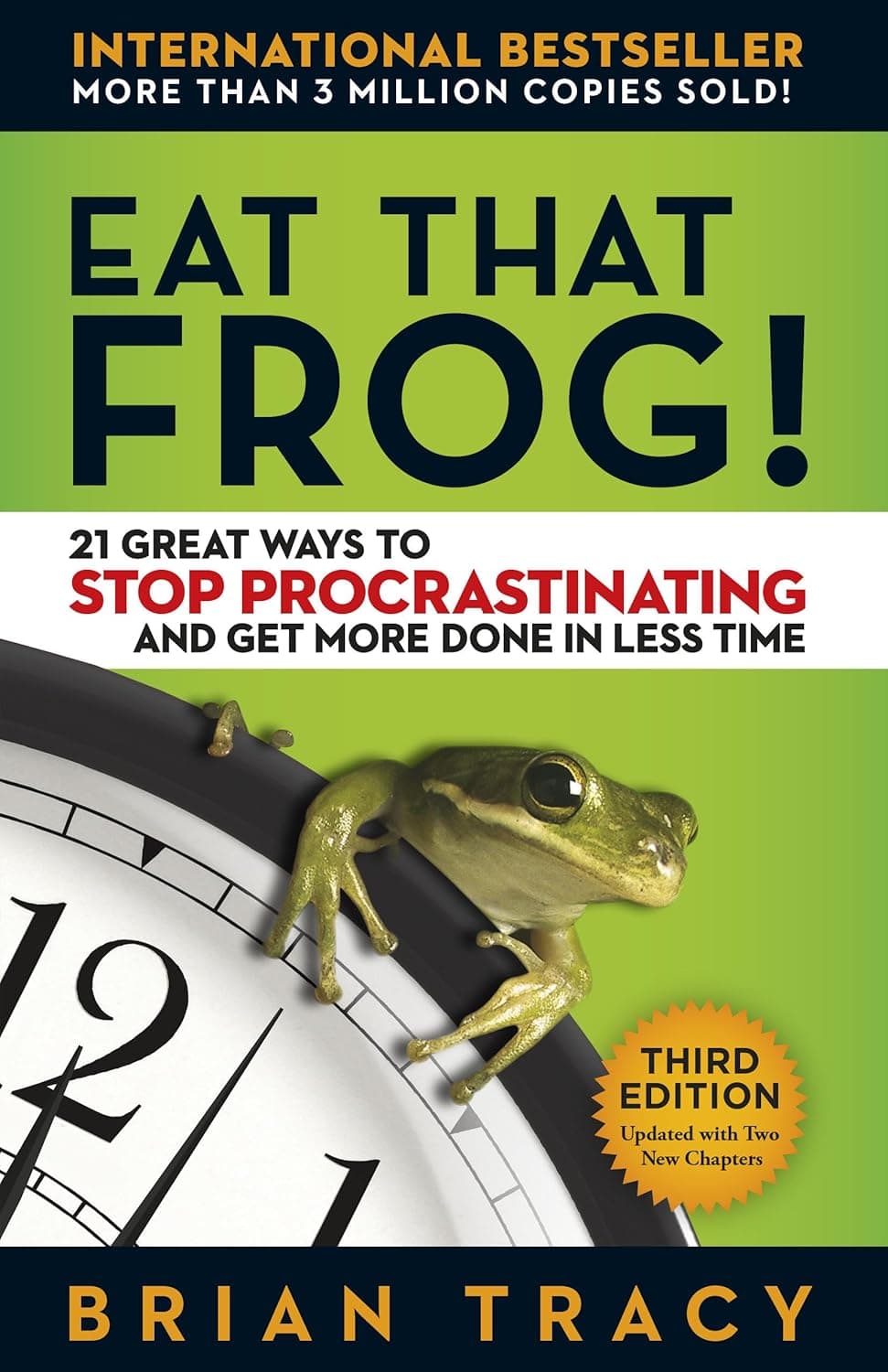
Self-Discipline and Habit Formation asks how sustained excellence is built not by flashes of inspiration but through deliberate routines that outlast moods or distractions. In Eat That Frog!, Brian Tracy treats discipline as a learnable muscle: you train it with small, repeated acts until your best choices become automatic. The theme probes the gap between knowing and doing, arguing that character is shaped by the actions you consistently take, not the intentions you occasionally feel. Ultimately, it frames productivity as identity work—each disciplined repetition rewires what you reach for first and who you become.
How It Develops
The book opens in the Preface and Introduction by insisting that success is a skill set anyone can model from Successful People. Tracy anchors habit formation in three learnable qualities—decision, discipline, and determination—and introduces “positive addiction”: the endorphin reward of completion that makes discipline self-reinforcing. From the start, the book reframes willpower as something you build by repetition, not something you wait to feel.
Across Chapters 1-5, planning and prioritizing are not one-off hacks but daily rituals. “Plan Every Day in Advance” and the ABCDE method are treated as morning and ongoing ceremonies that train attention. The word “continually” signals the thematic shift: prioritization is not a choice you make once—it’s a habit loop that decides your day before the day can decide you.
In the middle movement, Chapters 11-15 turn inward. “Put the Pressure on Yourself” converts deadlines from external enforcement to internal practice, building the habit of self-command. By cultivating self-imposed standards, you stop outsourcing urgency and start generating it, which is the essence of discipline.
The later sections, Chapters 16-20, harden the keystone habit: do the most difficult task first until it becomes reflex. Methods like “salami slice” and “Swiss cheese” make starting friction small, proving that disciplined systems—not heroic moods—carry big goals across the line. The theme culminates in Chapter 21-23 and the Conclusion with “Single Handle Every Task,” elevating sustained focus to the highest form of discipline: once you start, you stay until it’s done. The closing summary recasts all 21 methods as habits to practice daily, making consistency—not intensity—the final word.
Key Examples
The book repeatedly moves from principle to practice, translating lofty ideas into repeatable behaviors that form identity.
-
The Three Pillars of Habit Formation
You need three key qualities to develop the habits of focus and concentration, which are all learnable. They are decision, discipline, and determination.
By naming learnable pillars, Tracy removes the mystique from high performance and places it within reach of deliberate practice. Decision initiates the loop, discipline repeats it, and determination endures through resistance—together, they convert choice into character.
-
The Habit of Prioritization (ABCDE)
The rule is that you should never do a "B" task when there is an "A" task left undone. You should never be distracted by a tadpole when a big frog is sitting there waiting to be eaten.
The method trains moment-to-moment restraint: you repeatedly say no to lower-value work until your default becomes “A-first.” Its power is less in labeling tasks than in conditioning attention to return—automatically—to what matters most.
-
Internalizing Pressure
Your job is to form the habit of putting the pressure on yourself and not waiting for someone else to come along and do it for you. You must choose your own frogs and then make yourself eat them in their order of importance.
This turns urgency into an inside job, replacing reactive compliance with proactive standards. By choosing and sequencing your hardest tasks, you practice agency, which over time becomes your baseline behavior.
-
Defining Self-Discipline
Elbert Hubbard defined self-discipline as "The ability to make yourself do what you should do, when you should do it, whether you feel like it or not."
The definition distills the theme to a test you can apply daily: act aligned with your priorities despite shifting feelings. Repetition of that test is what forges habits that eventually make the right action feel natural.
Character Connections
-
You (The Reader) are cast as the protagonist whose arc is behavioral, not biographical. Each principle functions like a workout that builds the “muscle memory” of attention and follow-through. As you repeat the routines, your identity shifts from someone who intends to someone who executes.
-
Brian Tracy serves as mentor and proof-of-concept. His trajectory—from manual labor to global consultant—embodies the book’s thesis that disciplined habits, not pedigree, determine outcomes. By foregrounding learnability, he invites readers into imitation rather than admiration.
-
Successful People function as a composite foil: they are not superhuman but super-consistent. Their distinguishing feature is the routine of doing “the right things right,” making them models for the reader’s transformation. The theme uses them to show that excellence correlates less with talent spikes than with disciplined baselines.
Symbolic Elements
-
The central symbol, The Frog, personifies the hardest, highest-leverage task. Making a ritual of “eating” it first reorients your day around significance rather than momentum, turning courage into a morning habit.
-
Daily, Weekly, and Master Lists materialize disciplined thinking. Writing plans converts intention into commitment, shrinking ambiguity—the fuel of procrastination—into visible next actions you can execute.
-
The “A-1” Task label symbolizes clarity amid clutter. Choosing it is a micro-act of discipline; starting it is the macro-act that proves priorities govern behavior, not the other way around.
Contemporary Relevance
Today’s environment is engineered for distraction, making discipline less a virtue and more a survival skill. Tracy’s framework anticipates the limits of willpower by building routines that protect attention from algorithmic interruptions and instant gratification. In a world where information is abundant but focus is scarce, the ability to ritualize your best work—plan, prioritize, and single-handle—confers a decisive edge that compounds over time.
Essential Quote
"The ability to make yourself do what you should do, when you should do it, whether you feel like it or not."
This definition crystallizes the theme as action over affect: discipline is measured by behavior in the exact moments feelings would derail you. Practiced daily, it transforms sporadic motivation into dependable momentum, turning isolated wins into a durable way of working and living.