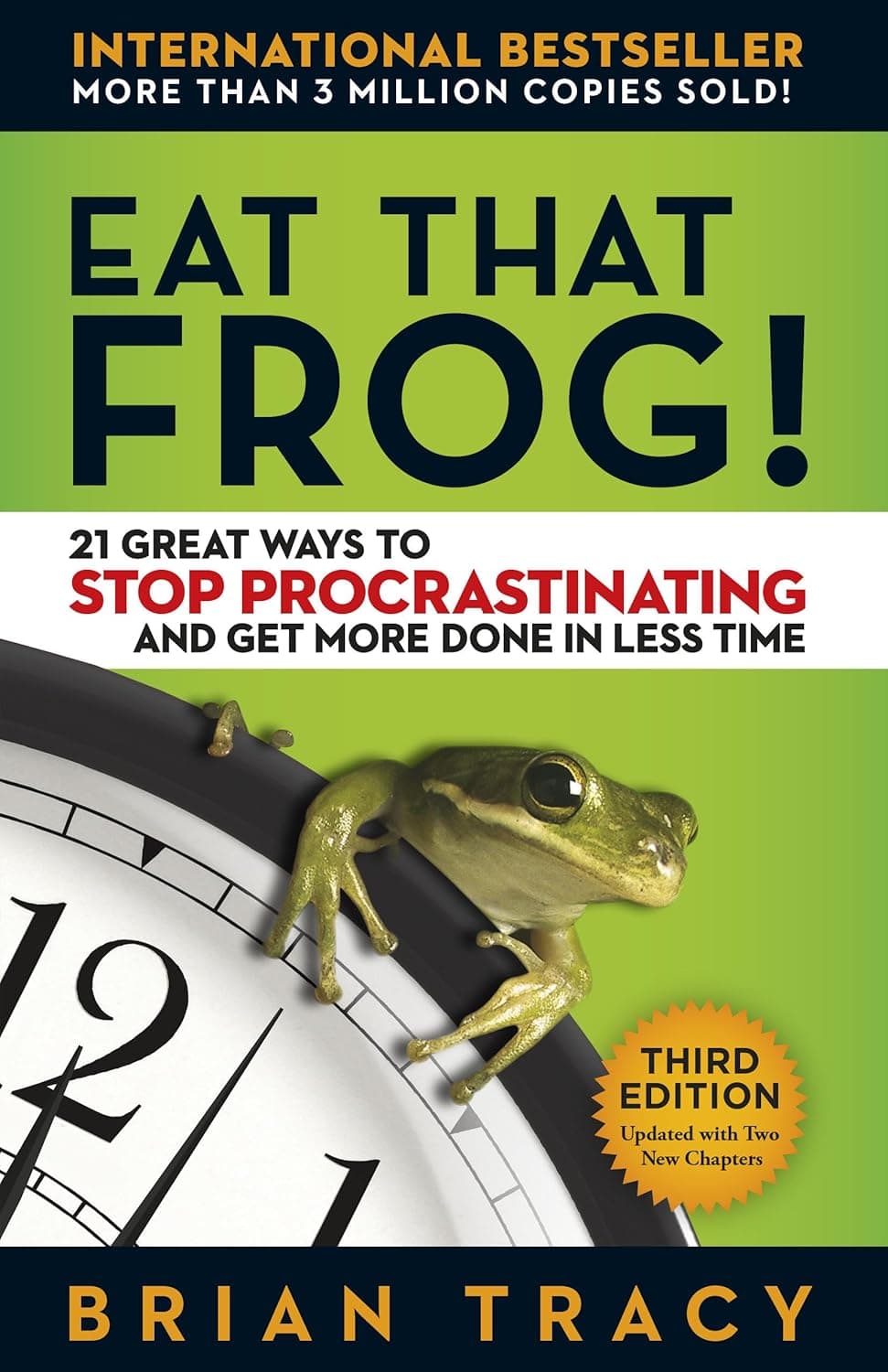
What This Theme Explores
Overcoming Procrastination and Taking Action asks what really keeps people from doing their most important work—and how deliberate behavior can reverse that drag. It probes the psychological comfort of delay, the way ambiguity and fear feed avoidance, and the paradox that planning without execution is itself a form of procrastination. The theme insists that discipline is not innate but learnable: by confronting The Frog—the single, high-impact task we resist—we convert intention into tangible results. At its core, the book reframes success as a daily practice of clear prioritization, focused starts, and persistent follow-through.
How It Develops
The book grounds the theme early. In the Preface and Introduction, readers are confronted with the reality that the work will never “all get done,” which makes choosing the right work urgent. The frog metaphor crystallizes the central command: take on the hardest, most consequential task first to set the tone for the day and compound momentum.
With the problem named, the book turns to clarity as the antidote to hesitation. In Chapters 1-5, goal setting, daily planning, the 80/20 rule, and the ABCDE method map a path through ambiguity. By making importance visible and ranking tasks, the text removes a principal fuel of procrastination—uncertainty about what matters—and replaces it with a prioritized action list.
Midway, the theme dives inward. Across Chapters 6-15 and the Chapter 11-15 Summary, the book tackles overwhelm, self-doubt, and hidden bottlenecks. Readers are taught to locate constraints, narrow focus, and carve large tasks into manageable first steps—techniques that don’t just make action possible; they make it inviting.
Finally, the message culminates in unapologetically action-first tactics. In Chapters 16-21 and the Chapter 21-23 Summary, ideas like creative procrastination, doing the most difficult task first, cultivating urgency, and single-handling tasks translate motivation into movement. The progression is intentional: identify what counts, dismantle internal resistance, then commit to uninterrupted execution until done.
Key Examples
-
The central metaphor. Introduced at the outset, the “frog” reframes dread as direction: the task you resist most is precisely the one that moves the needle. By urging readers to “eat” it first, the book weaponizes discomfort, turning an emotional signal into a reliable compass for action.
-
The danger of inaction. In Chapter 2, Tracy acknowledges that thinking matters, but thinking that never becomes doing is sterile. Alex MacKenzie’s line—“Action without planning is the cause of every failure”—sits alongside its inverse to highlight the theme’s balance: plan wisely, then move decisively.
-
Breaking down overwhelm. Chapter 18’s “salami slice” and “Swiss cheese” methods convert massive undertakings into quick, startable steps. By shrinking the first move, the book lowers the activation threshold, letting momentum, not motivation, carry the work forward.
-
The mantra for action. In Chapter 20, repeating “Do it now!” functions as a cognitive trigger that interrupts hesitation. The point is not cheerleading but conditioning: a short, repeatable cue that links intention to an immediate physical start.
Character Connections
You (The Reader) occupy the role of protagonist in a practical transformation story. The narrative assumes your initial state—overcommitted, unclear, and prone to delay—and then equips you with a sequence of small, controllable behaviors that compound into agency. Each tactic is a choice architecture designed to make the right action the easy action.
Brian Tracy enters as mentor rather than guru: his authority derives from hard-won habits, not innate talent. By foregrounding his own progression from laborer to executive through disciplined action, he models the book’s thesis that success is a skill—practiceable, repeatable, and teachable.
Successful People function as archetypes who normalize “action orientation.” Their distinguishing trait is not brilliance but bias toward execution—starting important tasks quickly and staying with them to completion. They set a standard that reframes excellence as consistency rather than intensity.
The frog itself becomes an antagonist that gives the story stakes. By personifying the most important, most avoided task, the book concentrates the reader’s conflict into a single daily showdown. Each victory reinforces identity—“I’m someone who does hard things first”—which sustains the habit beyond any one task.
Symbolic Elements
The Frog. The book’s master symbol packages priority, discomfort, and payoff into one image. “Eating” it stands for confronting resistance directly and early, ensuring that the day’s finite willpower is spent on what matters most.
The Tadpoles. Introduced in Chapter 5, these easy, low-value tasks mimic productivity while siphoning attention from meaningful work. They symbolize the seductive nature of busyness—and the necessity of saying no to protect time for the frog.
The Oil Barrels. In the Sahara story from Chapter 12, spaced barrels mark progress across a daunting expanse. They embody the strategy of chunking: when the horizon intimidates, look only to the next marker, then the next, until the journey is complete.
Written Lists. Putting goals and tasks on paper translates intention into structure. The list serves as a physical contract with oneself, narrowing focus and providing a track that makes starting—and finishing—more likely.
Contemporary Relevance
In a world engineered for interruption, the theme is a survival skill. Digital alerts and infinite feeds multiply tadpoles, rewarding responsiveness over results and turning attention into a contested resource. Tracy’s emphasis on clarity, first-move bias, and single-handling offers a counterdesign: shut the doors on noise, select one consequential task, and stay with it. For students, founders, and knowledge workers, this isn’t just productivity advice—it’s how meaningful work gets done amid distraction.
Essential Quote
“It has been said for many years that if the first thing you do each morning is to eat a live frog, you can go through the day with the satisfaction of knowing that that is probably the worst thing that is going to happen to you all day long.”
This image fuses urgency with relief: tackle the worst first, and everything else becomes lighter by contrast. It distills the book’s thesis that action on the highest-value, highest-resistance task changes the trajectory of the entire day—emotionally (reduced dread), practically (compounded progress), and psychologically (identity built around decisive execution).