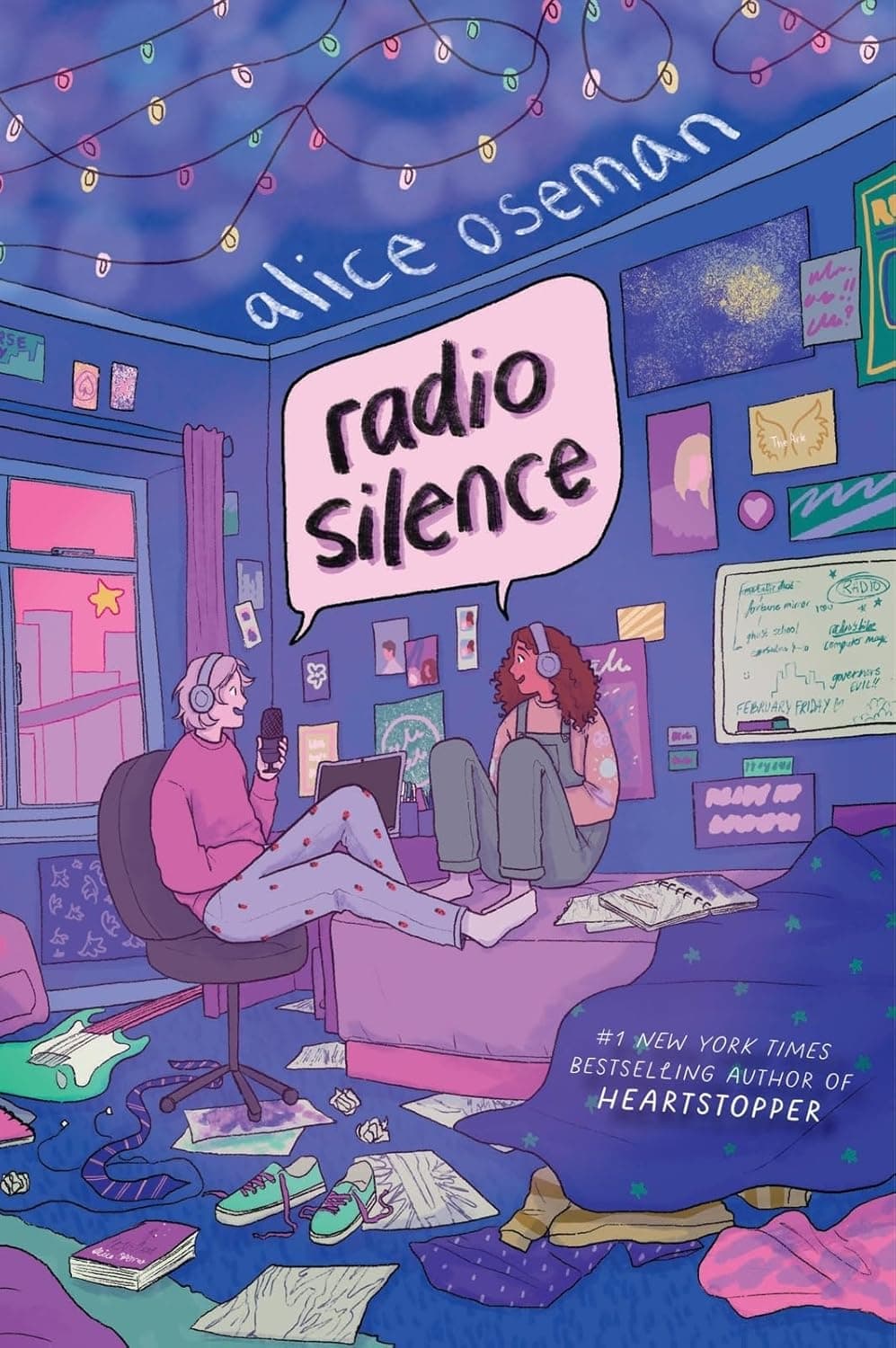
Opening
As study leave begins, Frances Janvier collides with the secret world of her favorite podcast—and with the boy behind it, Aled Last. Their shy, glitchy beginnings ignite a real friendship just as academic pressure spikes, forcing Frances to choose between her high-achieving persona and her honest self. The section ends by rejecting the expected romance arc and centering a quieter, rarer kind of love.
What Happens
Chapter 16: STOP-MOTION
Frances is about to revise when an email from Radio Silence arrives—an official invitation for Toulouse, her anonymous fan-artist persona, to become the artist for Universe City. Aled’s message bursts with ideas (pixel gifs, stop-motion frames, a logo redesign) but insists on commitment: if she says yes, she can’t quit without a serious reason. He doesn’t want to disappoint his listeners.
The pressure of secrecy and responsibility makes Frances feel sick. The words on her phone and the maths on her page blur into one. She’s terrified she’ll ruin a friendship before it begins, as she has before. She decides she has to tell Aled the truth before they go any further—an early step toward real honesty and Identity and Authenticity.
Chapter 17: #SPECIALSNOWFLAKE
By Monday, Frances hatches a flimsy plan: message Aled about his shoes to open a conversation. The chat starts stilted, then warms. When Frances jokes that she’s “12 years old on the inside,” Aled’s surprised—at school she dresses “professionally.” That nudge cracks something open: Frances admits she cultivates a “head girl study machine” image while “Real Frances” likes burger jumpers and Simpsons shirts.
Aled admits he owns an UFO jumper but is scared to wear it outside. They trade webcam photos of their “uncool” jumpers, creating a private, playful pact: they both hide their real selves. Frances says she feels different from her friends; Aled says he gets it. The hours slip by in companionable typing, and Frances feels the ache of Loneliness and Connection briefly lift—until she realizes she forgot to tell him she’s Toulouse.
Chapter 18: AWKWARD
Frances confides in her mum, Frances's Mum, who offers the simple fix: just tell him. Knock on his door. Message him to meet. Frances spirals through every scenario, sure it’ll be misread as romantic or ruinous. Her mum, exasperated, points out that this is devouring revision time.
Pressed on why she cares so much about a boy she barely knows, Frances admits, “I feel like we could be friends… But I don’t want to mess it up.” She also says her current friends only like “School Frances,” not “Real Frances.” The confession exposes her loneliness and marks a pivot in her Coming of Age: she wants a friendship built on who she actually is.
Chapter 19: LOGARITHMS
The night before a maths exam, the The Pressure of Academia and the Education System swamps Frances. She realizes she skipped logarithms entirely; the textbook might as well be gibberish. The fear of a lower grade—and what that means for Cambridge—reduces her to tears, a raw snapshot of her strained Mental Health and Well-being.
At midnight, she messages Aled for help. He replies instantly, then does something astonishing: he climbs out his window in his pyjamas, crosses the street, and arrives with notes. He’s a careful, brilliant teacher, and he stays until logarithms make sense. Moved, Frances tells him the truth: “I’m Toulouse.” Aled flinches—was this friendship a ploy to get close to Radio Silence? The moment brushes against The Power and Dangers of Fandom and Internet Culture. Frances insists her feelings are real. Aled believes her. He still wants her art—and her friendship.
After he leaves, Mum asks whether Frances likes Aled “like that.” Frances realizes she doesn’t, and that the question feels irrelevant, quietly laying the groundwork for Platonic Friendship and Love.
Chapter 20: SOMETHING BEFORE WE CONTINUE
The narrative pauses. Frances addresses the reader and defuses a familiar trope:
You probably think that Aled Last and I are going to fall in love or something. Since he is a boy and I am a girl.
I just wanted to say –
We don’t.
That’s all.
The book draws a line in bold ink: this story prizes platonic closeness over romance.
Character Development
Frances nudges her hidden self into daylight. Sharing her “uncool” tastes, asking for help, and confessing her secret all pull her away from performance and toward honesty. Aled, quietly heroic, reveals gentleness and fear in equal measure, while Mum’s pragmatism spotlights the cultural default to read intimacy as romance.
- Frances
- Drops her “study machine” mask enough to be silly, vulnerable, and truthful
- Confesses she’s Toulouse and reorients her priorities toward connection
- Recognizes her bond with Aled as non-romantic and no less profound
- Aled
- Shows radical care (midnight tutoring, patient teaching)
- Admits insecurity about being mocked and about being used for his online identity
- Chooses trust, keeping both the collaboration and the friendship
- Mum
- Pushes for directness and sanity amid panic
- Assumes the bond must be romantic, a view the narrative challenges
Themes & Symbols
Identity and authenticity move from theory to practice. Frances and Aled bond by revealing their “uncool” clothes and private quirks, then escalate to the biggest secrets: Toulouse and Radio Silence. Each disclosure peels back a layer of performance and asks whether a self built for school and success can make room for a self built for joy.
Platonic friendship stands center stage. Aled’s nocturnal rescue is intimate and care-full, yet the book refuses to interpret it as romance. Chapter 20’s direct address resets audience expectations, granting space for a friendship that is deep, tender, and deliberately non-romantic.
Academic pressure functions as both antagonist and catalyst. The breakdown over logarithms exposes the cost of perfectionism and accelerates trust: crisis becomes the doorway to connection. Clothing becomes a symbol of hidden selves—the burger and UFO jumpers act as passports to a private country where both can be seen without ridicule.
Key Quotes
“I feel like we could be friends… But I don’t want to mess it up.”
This fear names Frances’s core conflict: the desire for real connection colliding with terror of rejection. It justifies her secrecy while also pushing her to choose honesty.
“I’m Toulouse.”
A simple sentence with high stakes. The confession collapses her split identity, risks the friendship, and becomes the price of an authentic collaboration.
“You probably think that Aled Last and I are going to fall in love… We don’t.”
By breaking the fourth wall, the narrative disarms the romance expectation. It reframes every tender moment not as prelude to a confession but as the fulfillment of a different kind of love.
“Head girl study machine… Real Frances.”
This language captures the double life Frances lives. Naming both selves is the first step toward integrating them.
Why This Matters and Section Significance
These chapters chart the real beginning of Frances and Aled’s friendship: two masked teenagers risk exposure and choose trust. The midnight tutoring fuses their online and offline worlds, making creative partnership possible and proving that care can be grand without being romantic. The narrative’s meta-declaration redirects the novel’s trajectory, elevating platonic intimacy and challenging assumptions about what a “central relationship” must be. At the same time, the exam panic threads the cost of perfectionism through the story, setting up future clashes between institutional success and personal well-being.