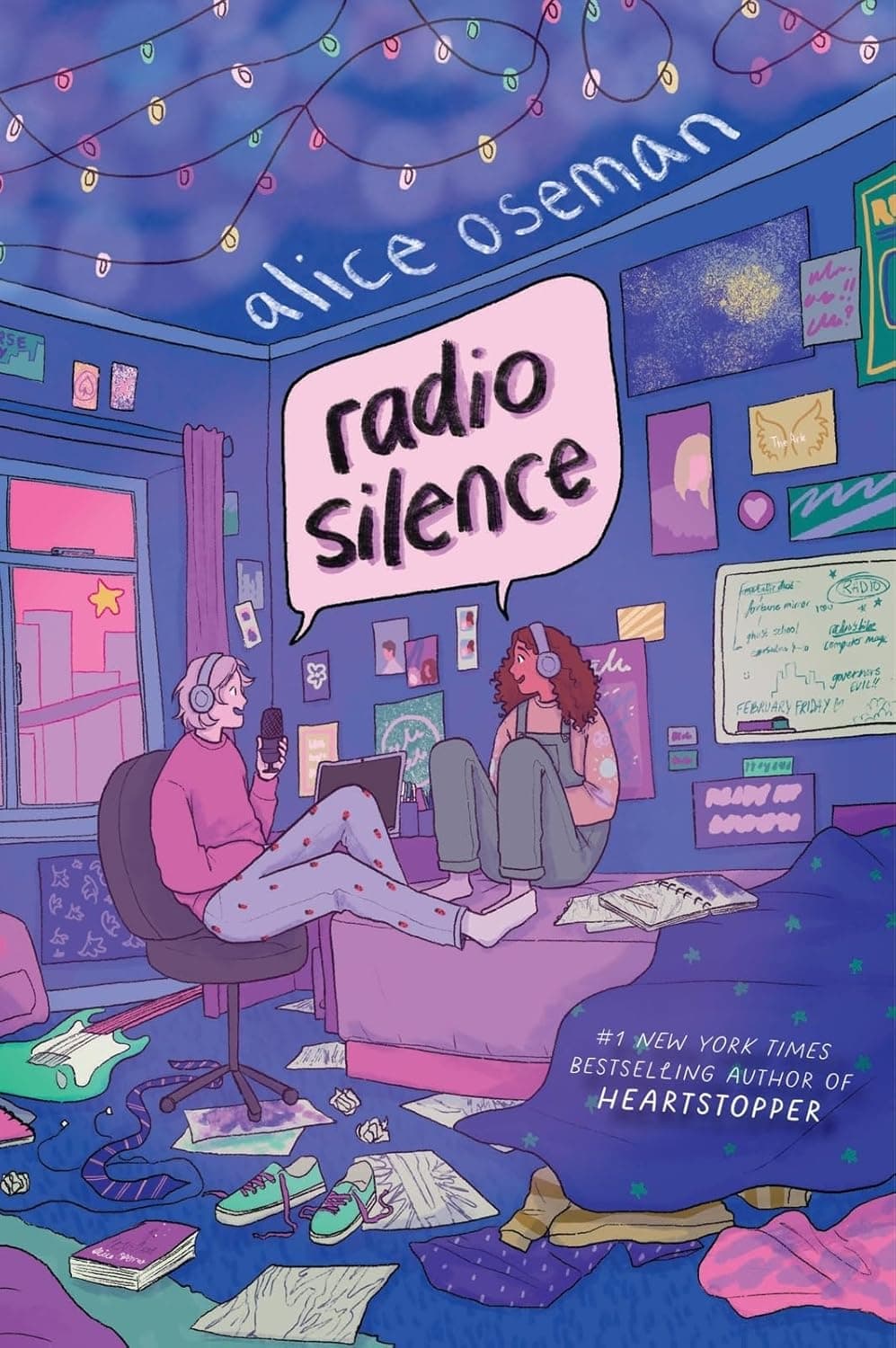
Opening
On the last night before study leave, Frances Janvier forces herself to act like a “normal teenage girl,” but a drunken phone call detonates her carefully split life when quiet neighbor Aled Last reveals himself as the voice behind her beloved podcast, Universe City. Across these chapters, the mask of “School Frances” clashes with her true creative self, tying the story’s pulse to Identity and Authenticity, Loneliness and Connection, and The Power and Dangers of Fandom and Internet Culture.
What Happens
Chapter 6: A NORMAL TEENAGE GIRL
Frances’s mum drops her at a pub to meet school friends on the final night before study leave. Frances performs “School Frances,” the head-girl version her friends expect, while internally she feels terrified, bored, and fake. As her friends—especially Raine Sengupta—gossip about boys, Frances scrolls her phone, hoping for a message from Radio, the creator of Universe City, the only world that feels like hers.
Across the room, she spots Aled and Daniel Jun. Aled hunches into himself while Daniel looks confident, even cocky. Raine identifies Aled as the twin of Carys Last, who ran away years ago. The name jolts Frances. She remembers being Carys’s only real friend and feels the sting of isolation all over again—proof that her “normal” social life leaves her lonelier than ever. Teasing from friends about her innocence makes the act harder to sustain. Frances wants to be bold like Raine, but her persona traps her. Her thoughts circle Carys.
Chapter 7: DIFFERENT CARRIAGES
Flashback: two years earlier, fifteen-year-old Frances sits in a different train carriage and accidentally takes Carys’s usual seat. Carys—platinum hair, posh drawl, no fake smiles—introduces herself with blunt clarity that feels like honesty, not cruelty. She points out they live across from each other yet have never spoken.
Frances notices small burn scars on Carys’s hands, an unsettling hint of Abusive Family Dynamics. When Carys compliments Frances’s jumper—a sad computer she’d never risk wearing around her school friends—Frances experiences an immediate rush of acceptance. She also clocked that Carys and Aled always sat in different train carriages: twins traveling apart, a quiet symbol of a divided home. The conversation seeds a friendship that lets Frances step out of “School Frances” and into something real.
Chapter 8: SOMEBODY IS LISTENING
Back in the present, the group heads to the club Johnny R’s. Frances resents the night; she’d rather be home drawing or listening to Universe City, tugged by Finding Your Voice and Pursuing Passion. Her phone rings—Daniel, garbled. It rings again: a very drunk Aled. He confesses he doesn’t like it there and that Daniel tried to prank-call her.
Then Aled says, with a familiar cadence, “Hello. I hope somebody is listening.” Frances freezes. It’s the exact opening line from every episode of Universe City. In one sentence, her secret fandom collides with her real life.
Chapter 9: MADE IT
Frances ditches her friends to find Aled upstairs, unconscious. She wakes him; he startles and headbutts her, and the absurdity makes them both laugh, releasing the tension. Daniel arrives with water, defensive but clearly protective. He asks Frances to take Aled home.
On the way to the station, Frances asks about the Universe City quote. Aled dodges, then breaks: “I am Universe City… I’m Radio. I’m Radio Silence. I make Universe City.” Frances goes silent, stunned—the anonymous creator she has idolized for two years is the boy across the street. Aled, misreading her silence, offers: “I’d listen to you for hours.” The promise feels like a door swinging open.
Chapter 10: ALED LAST IN MY BED
Off the train, Aled admits Daniel has his jacket—and his house keys. He’s terrified of waking his mother, Carol Last, saying she would “literally chop his head off.” The fear is real and chilling, another red flag in the Last household. Frances, who hates people in her room, lets him stay over anyway, their trust already forming under the weight of shared secrets and Platonic Friendship and Love.
Aled falls asleep in her bed. Frances watches the back of his head and remembers the last person who slept there: Carys, the night before she ran away. For a moment, she pretends it’s Carys—but the fact that it’s Aled steadies her. The quiet, intimate scene marks the true beginning of their bond and the end of Frances’s separate worlds.
Character Development
Frances’s inner life finally leaks into her outer world, and the people around her complicate in surprising ways. Private passions, old friendships, and guarded vulnerabilities begin to align.
- Frances Janvier: Splits between “School Frances” and the artist/fan she really is; Aled’s reveal forces those halves to meet. She risks her social script to protect and connect.
- Aled Last: Shifts from background figure to central force. Drunk honesty exposes both his creative identity and fear of home, revealing sensitivity and courage.
- Daniel Jun: Moves beyond “lad” stereotype; he’s watchful, defensive, and protective of Aled, hinting at loyalty and tenderness.
- Carys Last: In flashback, radiates confidence and integrity; her scars suggest a darker home life and position her as the first person to accept Frances’s real self.
- Raine Sengupta: Reads the room and has Frances’s back, a potential true friend within a shallow social scene.
- Carol Last: A looming threat whose control inspires real fear in her son.
Themes & Symbols
These chapters braid identity with intimacy. Frances’s performance of “School Frances” clashes with her longing to create and connect; Aled’s secret authorship proves that authenticity often lives underground, surfacing only when safety appears. Their shared creative world becomes a bridge from isolation to belonging, a living map of Loneliness and Connection.
Fandom offers salvation and risk. Universe City gives Frances a language for herself, yet the reveal collapses boundaries between creator, fan, and friend. The thrill of recognition comes with responsibility—of holding someone else’s secret, and of being seen in return. Shadows lengthen around the Last family: scars on Carys’s hands and Aled’s dread of his mother sketch a pattern of control and harm that the twins navigate in silence.
- Symbol: Different Carriages — Aled and Carys’s habit of riding in separate carriages mirrors the emotional distance in their home: two halves of a whole, traveling alone.
Key Quotes
“I don’t really like it here.”
Aled’s plain admission strips the party scene of glamour and signals his vulnerability. It also mirrors Frances’s own discomfort, aligning them before the reveal and underscoring the draw of real connection over performance.
“Hello. I hope somebody is listening.”
The show’s iconic opener detonates in real life, collapsing Frances’s two worlds in an instant. The familiar intonation becomes proof of authorship and a summons to intimacy—she is, unmistakably, the “somebody.”
“I am Universe City… I’m Radio. I’m Radio Silence. I make Universe City.”
Aled’s confession reframes everything we’ve seen of him: the quiet boy is also a creator with a powerful, secret voice. The repetition and self-naming feel like claiming an identity he rarely gets to own aloud.
“I’d listen to you for hours.”
Spoken in the wake of his reveal, this promise reverses the fan/creator dynamic. Aled offers the attentive presence Frances has long given his work, laying the foundation of a mutual, platonic intimacy.
Why This Matters and Section Significance
These chapters trigger the novel’s central plot: Frances’s private passions meet her public life through Aled’s reveal, pushing her toward an integrated self. The relationships that will define the story—Frances/Aled, Frances/Carys, Aled/Daniel—snap into focus, while the Last family’s darkness begins to surface.
By the end, Frances and Aled share a room, a secret, and a new language for who they are. The inciting incident doesn’t just launch a collaboration; it inaugurates a friendship that challenges conformity, reframes fandom as connection, and sets the stage for the novel’s deeper conflicts.