What This Theme Explores
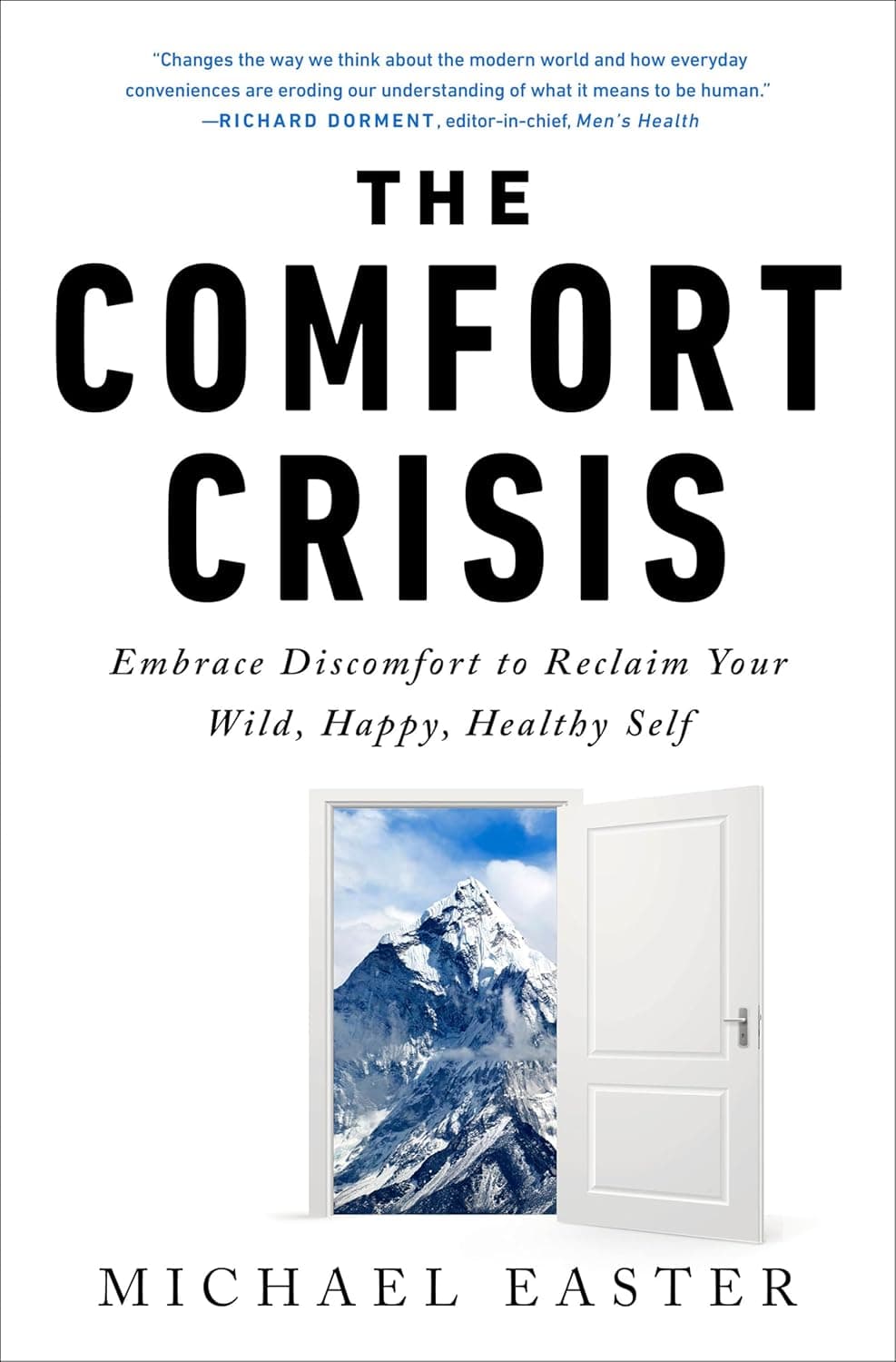
The Need for Rites of Passage asks what humans lose when comfort becomes the default setting, and what we regain when we voluntarily enter hardship. It argues that authentic initiations—tests that are difficult, uncertain, and undertaken by choice—forge capability and identity in ways that easy, performative milestones cannot. The book contends that growth requires a liminal space: a deliberate departure from routine that confronts us with fear, effort, and responsibility, then returns us changed. As an antidote to the modern drift toward safety and convenience, the theme urges a return to meaningful trials that break the spell of the Crisis of Comfort.
How It Develops
The theme takes shape first through lived experience. In early chapters, Michael Easter recounts getting sober—a raw, unplanned ordeal that exposes how comfort had narrowed his life. This early transformation primes the book’s core argument: that humans thrive when we choose challenges big enough to reset our sense of self. In Chapter 6, Dr. Marcus Elliott introduces misogi as a modern rite of passage with two blunt rules—make it really hard, and don’t die—anchoring Easter’s narrative in a framework that echoes anthropologist Arnold van Gennep’s three-part arc of separation, transition, and incorporation.
The book’s central expedition, a 33-day caribou hunt in the Arctic, enacts the theory. The physical and psychological rigors—cold, hunger, fatigue, risk—strip away the props of ordinary life and force Easter to test his limits in real time. This prolonged exposure to discomfort is the “transition” phase where identity is reshaped through action, not intention.
In the Epilogue, Easter returns to ordinary life and integrates the experience. The proof of passage is not a summit photo but a wider comfort zone, a calmer baseline, and a recalibrated sense of what counts as a problem. The rite ends not with applause but with capability—quiet, durable, and portable.
Key Examples
Ritual and narrative moments make the theme concrete by showing how deliberate hardship transforms perspective and behavior.
-
Personal Rite of Passage: Sobriety
I raised the white flag. This is when the discomfort started. The acute physical hell of drying out lasted for days... But day by day I embraced the raw discomfort of hard change, and soon the world opened up.
This early ordeal demonstrates that voluntary confrontation with pain can reorient a life. It functions as Easter’s accidental initiation, revealing how discomfort can cleanse and clarify, and setting the bar for challenges he will choose later.
-
The Misogi Framework Misogi, articulated by Dr. Marcus Elliott, formalizes initiation for a modern world that lacks communal rites. By insisting on difficulty and mortal awareness (but not recklessness), it recreates the ancestral conditions that once tested fitness, courage, and judgment—translating timeless demands into contemporary, personal challenges.
-
Historical Rites of Passage Examples like the Aboriginal walkabout, the Maasai lion hunt, and the Nez Perce vision quest show that societies have long engineered ordeals to forge adults. These rites follow separation–transition–incorporation, binding personal growth to communal purpose and establishing a template Easter adopts in his own ordeal.
-
The Arctic Hunt as Misogi The brutal pack-out in Chapter 19 distills the expedition’s stakes: a task that is exhausting, necessary, and impossible to outsource. In carrying weight beyond his perceived limits, Easter confronts identity-level questions—who am I under load, and what can I endure?—which is the essence of initiation.
Character Connections
Easter’s role is both subject and test case. His trajectory—from a desk-bound life to a person who seeks and completes a rite—illustrates the theme’s promise: that hard, chosen discomfort expands agency. His reflection after the hunt emphasizes internal metrics over external validation, aligning the rite with character rather than achievement.
Dr. Marcus Elliott acts as a modern shaman: he names the ritual, defines its guardrails, and frames it as deliberate purification rather than spectacle. By bridging sports science and ancient pattern, he makes initiation legible and replicable, ensuring the ordeal develops capacity instead of courting needless risk.
Donnie Vincent embodies the outcome of repeated initiation. His competence and calm in extremis model what accumulated rites produce: judgment under pressure, attunement to nature, and a default toward responsibility. His life of Embracing Voluntary Discomfort shows that rites are not one-time stunts but a practice that keeps skills, humility, and resilience alive.
Arnold van Gennep supplies the theoretical backbone. His separation–transition–incorporation sequence maps neatly onto Easter’s arc, giving the personal story anthropological weight and clarifying why the experience must end with reintegration into ordinary life to count as a rite.
Symbolic Elements
The Arctic Wilderness The remote, indifferent landscape functions as a liminal zone—a place outside society’s scripts where the old self loosens and a tougher, truer self can emerge. Its hostility is not cruelty but a mirror that reflects what comfort normally conceals.
The Caribou Hunt Hunting collapses abstraction into consequence: stalk, kill, butcher, carry. It symbolizes initiation as an encounter with life and death, where responsibility is literal weight and respect is expressed through labor.
Misogi As a symbol, misogi is ritualized cleansing through ordeal. By designing a task that is daunting yet survivable, it strips away the sediment of ease and returns the participant “clean”—not morally, but in attention, courage, and capacity.
Contemporary Relevance
In an era of snowplow parenting and on-demand distraction, many people reach adulthood untested, a state psychologist Mark Seery links to higher anxiety when stress finally arrives. The boom in backcountry trips, ultra-endurance races, and structured challenges like Jason McCarthy’s GORUCK reflects a collective intuition that we need initiations—even if we have to build them ourselves. The book argues for designing rites that fit modern life: voluntary, hard, and purposeful, with real stakes and thoughtful reentry. Such practices temper fragility, create meaning, and anchor identity in earned capability rather than comfort.
Essential Quote
“In our model of misogi, there are only two rules,” said Elliott. “Rule number one is that it has to be really fucking hard. Rule number two is that you can’t die.”
This blunt formula captures the essence of modern initiation: calibrate challenge to be consequential but survivable, so it compels genuine transformation without nihilism. It distills the book’s ethical stance—seek hardship not for spectacle, but to become someone who can carry heavier loads in ordinary life.