What This Theme Explores
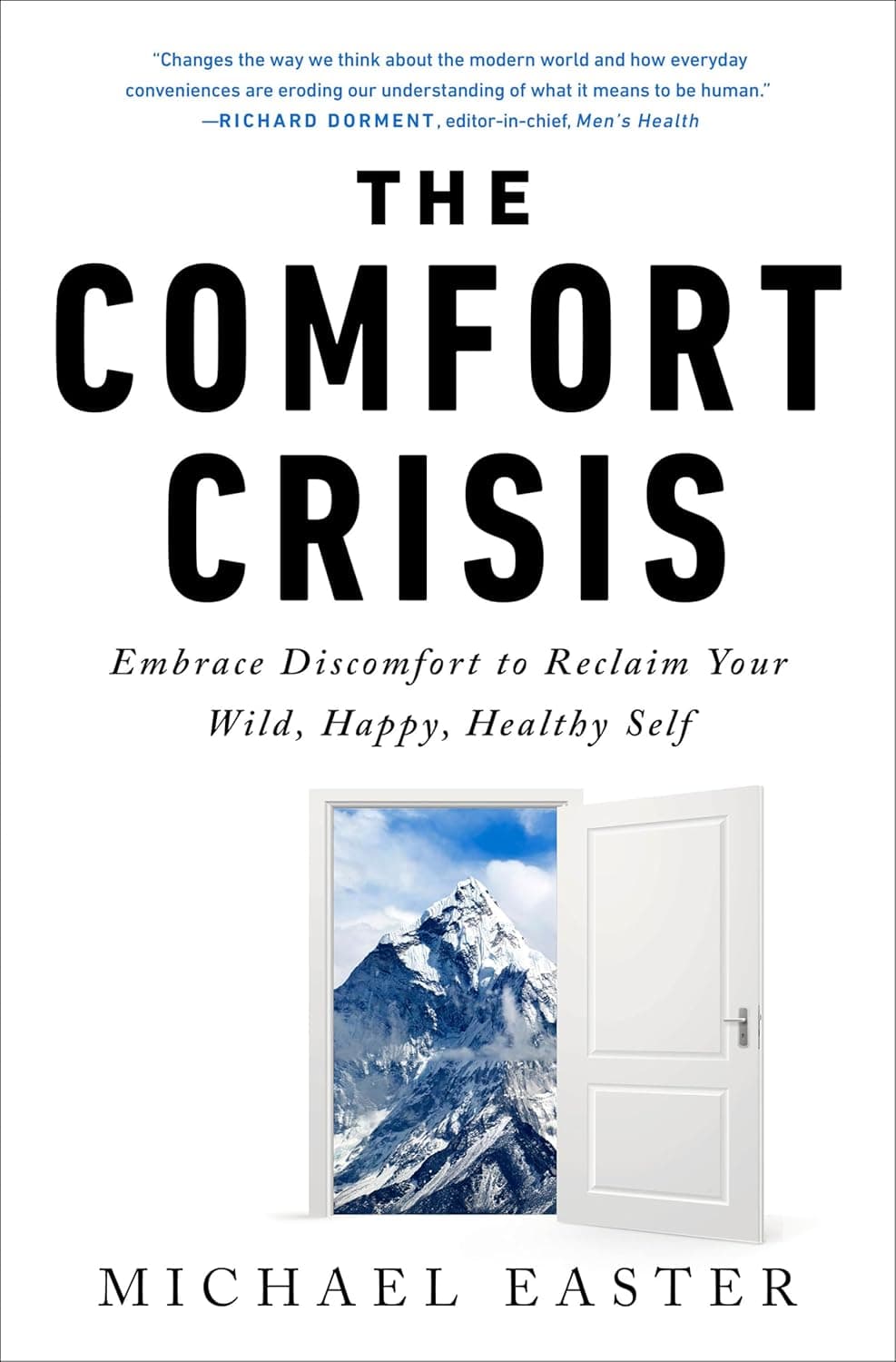
Reconnection with Nature and Wildness asks how modern life’s insulation—from climate control to effortless convenience—has dulled capacities that once kept humans sane, strong, and purposeful. The book argues that thriving isn’t about scenic appreciation but about bodily, risky participation in places that resist us, because those settings trigger ancient systems that calibrate attention, stress, and meaning. It also contends that our discontent is a by-product of the Crisis of Comfort: by reducing friction, we’ve severed ties to landscapes that shaped our minds and bodies. The remedy is cyclical, not escapist—periodically returning to the wild to refresh the faculties that modernity atrophies.
How It Develops
The theme takes shape as Michael Easter trades a predictable Las Vegas routine for an Arctic hunt, deliberately entering an environment where weather, hunger, and exertion strip away conveniences. In the field, he learns from Donnie Vincent, whose ethic—go to hard places to have meaningful experiences—frames the trip as a rewilding experiment. Early discomforts aren’t narrative ornament; they are the method, confronting Easter with the mismatch between the life his nervous system expects and the life he actually leads.
As the journey unfolds, Easter interlaces hardship with explanation. He threads in the Savanna Theory of Happiness and biophilia to argue that human well-being improves in low-density, natural environments, then adds the practical scaffolding of Rachel Hopman’s “nature pyramid,” introduced in the book’s scientific interludes (Chapter 8-10 Summary). The science shows why the hunt feels like medicine: nature’s patterns restore attention, recalibrate stress, and reawaken agency.
Extended glassing sessions force him into “soft fascination,” the gentle attentional state that long stretches outdoors induce. The idea becomes visceral when observation turns to participation in the caribou kill, the narrative hinge where Easter stops touring wildness and starts inhabiting it (Chapter 16-20 Summary). Packing meat for miles makes evolution legible through the body: labor becomes meaning, and discomfort becomes coherence.
The closing movement is integration. Hauling heavy loads imprints the lesson that connection is earned physically, not merely believed intellectually; back home, the “three-day effect” lingers, loosening anxiety, sharpening focus, and tempering reactivity. In the Epilogue, Easter insists the goal isn’t to abandon society but to season modern life with periodic immersion in the wild, so comfort enhances rather than erodes our fitness for living.
Key Examples
-
The Call to the Wild: Choosing 33 days in the Arctic is framed as a deliberate antidote to a modern ailment—too much ease, too little encounter. By prescribing extreme exposure, Easter tests whether deliberate discomfort reactivates dormant capacities for attention, courage, and meaning.
-
Donnie Vincent’s Ethos: Vincent recounts moving from a trophy mindset to feeling woven into the ecosystem he hunts. His shift models the book’s pivot from domination to participation, showing that reverence and responsibility arise when you accept your role as one animal among others.
-
The Savanna Theory of Happiness: Drawing on Satoshi Kanazawa, Easter argues that humans function better in open, low-density landscapes that echo ancestral settings. This explains why urban abundance coincides with anxiety and depression: our brains struggle in stimuli-saturated environments they weren’t built to navigate.
-
The Nature Pyramid: Hopman’s framework translates big ideas into dosage—minutes in urban green, monthly hours in wilder country, and multi-day backcountry trips for a full reset. It bridges expedition-scale insights to everyday life, proving reconnection is scalable and evidence-based.
-
The Caribou Hunt: Killing and butchering the animal dissolves the spectator’s distance, binding Easter to the costs of eating and the reality of mortality. The act rehumanizes consumption by restoring the chain of effort, gratitude, and consequence that supermarkets erase.
-
The Hygiene Hypothesis: Anthropologist Stephanie Schnorr’s work links sanitized living to weaker immune systems and poorer gut diversity. Dirt, microbes, and varied outdoor exposures become not nuisances but nutrients, tying physical resilience directly to ecological contact.
Character Connections
Easter’s arc is the book’s proving ground for the theme. He begins as the “soft American” he self-describes—comfortable, efficient, and vaguely unmoored—then submits to weather, work, and uncertainty until attention widens and fear narrows to what actually matters. His transformation is less about heroics than humility: he learns to take his place, not center stage, in a larger living order.
[Donnie Vincent] embodies a practiced version of that humility. His competence in hard landscapes is matched by a philosophy that resists extraction; he seeks experiences that demand reciprocity. As mentor and foil, he shows that intimacy with wild places grows not from conquering them, but from being answerable to their terms.
William Altman, the young cinematographer, suggests a generational alternative to the “rat race”: craft a life where skill, cold, patience, and purpose cohere. His fluency with discomfort and hunting knowledge signals a reorientation of ambition—from status toward stewardship and mastery of place.
[Rachel Hopman] supplies the empirical bridge between Easter’s extremes and readers’ realities. By quantifying nature exposure and identifying the “three-day effect,” she reframes wildness as a public health resource rather than a luxury. Her work grounds awe in adherence: dosage, frequency, and setting matter.
Symbolic Elements
The Alaskan Arctic functions as radical contrast and cure. Empty to the horizon and uninsulated by infrastructure, it strips away abstractions until priorities sort themselves: warmth, water, food, partnership, awareness. Its severity clarifies that connection is forged where stakes are real.
The Caribou embodies the living cost of sustenance and the dignity of mortality. Pursuit, kill, and pack-out compress a million years of human behavior into days, reuniting appetite with effort and gratitude with grief. The old, limping bull underscores nature’s unsentimental beauty—harsh, cyclical, and deeply meaningful.
The Teepee is a negotiated truce between exposure and comfort. It shelters without sealing, letting wind, sound, and temperature pass through so the body remains in dialogue with its setting. As symbol, it argues for calibrated, not total, insulation.
Contemporary Relevance
In an urbanizing, screen-saturated century, the book’s argument lands as both critique and invitation: when everything is optimized for ease, we forfeit the very friction that secures mental health, immune robustness, and purpose. Spikes in anxiety, depression, and metabolic illness map onto lives divorced from real places and real effort, a pattern the pandemic briefly exposed as people fled outdoors and felt better. By offering a graduated practice—the nature pyramid, periodic backcountry immersion, everyday frictions like load-carrying—the book replaces vague “get outside” advice with a prescription for attention, stress, and meaning hygiene. The lesson is not nostalgia but maintenance: reconnect regularly so modern comforts serve, rather than supplant, the human animal.
Essential Quote
“It was like, ‘Oh, OK, I’ve inserted myself into this ecosystem. I’m just another part of this natural process.’”
Spoken by Donnie Vincent, this line reframes the human role from manager to participant, dissolving the illusion of separateness that modern convenience encourages. The quote captures the theme’s ethical pivot: reconnection is not about dominance or escape, but about belonging—and with belonging comes responsibility to the systems that sustain us.