Opening
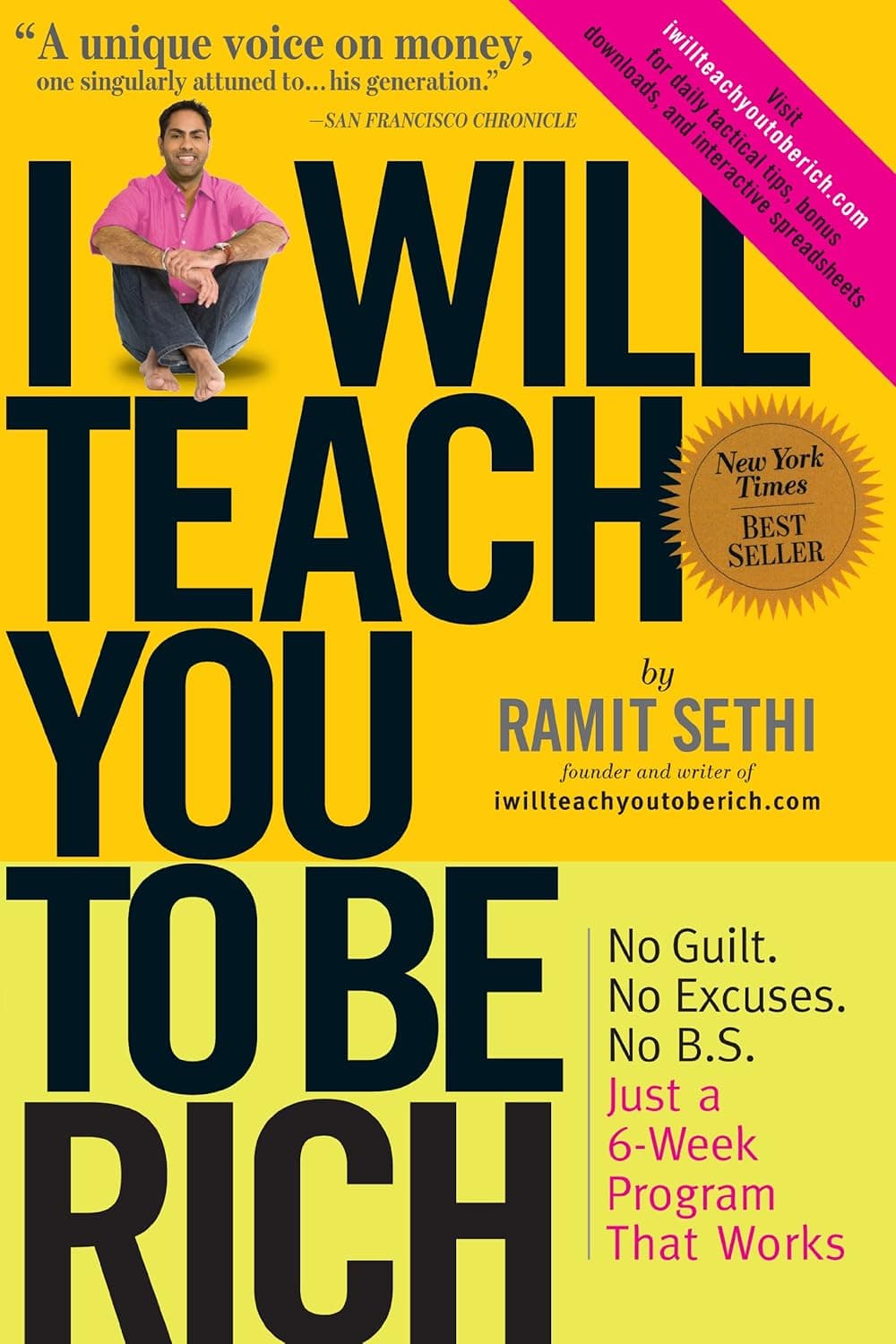
In Week 2 and 3, Ramit Sethi builds the backbone of a simple, automated money system—first by beating predatory bank fees, then by channeling savings into long-term investments that grow on autopilot. He strips away jargon, shows where banks and bad habits quietly drain cash, and replaces them with high-yield accounts, negotiation scripts, and a step-by-step investing order that compounds for decades.
What Happens
Chapter 2: Beat the Banks
Sethi opens by attacking “Big Banks” for profiting off customers’ inattention through lousy interest and gotcha fees. He explains the spread: banks pay you fractions of a percent (e.g., 0.5%) and lend at many times more (e.g., 7%), but the real profit comes from fees—especially overdrafts. Elizabeth, a friend who racked up $400+ in overdraft charges in college, becomes the cautionary tale: costs beat tiny rate differences, and most fees are negotiable if you simply call and ask.
He pushes online banks for savings because they offer higher rates, fewer fees, and better service, thanks to lower overhead. Older generations—including his parents, Prab and Neelam Sethi—may distrust online banking, but he urges younger readers to use their digital fluency. He draws a hard line between roles: a checking account handles cash flow, while a savings account walls off money for short- and mid-term goals. Separation isn’t just logistical—it protects you from yourself.
His recommended setup is “basic option + small optimization”: keep a no-fee checking account at a local bank or credit union for ATM access and quick cash needs, then link it to a high-yield online savings account for growth. Use three criteria to choose accounts—Trust, Convenience, and Features—and ignore teaser rates that expire. He cites Schwab for checking and ING Direct for savings as examples, then hands you a script to reverse overdrafts and monthly fees. Because banks spend so much to acquire customers, they’ll often waive a charge rather than lose you. Action steps: open a no-fee checking account, open a high-yield online savings account, and transfer everything above 1.5 months of living expenses into savings to establish your cash-flow base.
Chapter 3: Get Ready to Invest
Sethi pivots from defense to offense: saving alone won’t make you rich; investing does. He contrasts a ~3% high-yield savings return with the stock market’s historical ~8% annual return after inflation and reframes volatility as a gift to young investors—you’re buying decades of growth “on sale.” He dismantles the excuses: you don’t need a lot of money to start, you don’t pick individual stocks, and you win by sticking with Long-Term, Passive Investing.
He introduces the Ladder of Personal Finance—the sequence for where each dollar goes:
- 401(k) Match: Contribute enough to get the full employer match.
- Pay Off Debt: Knock out high-interest balances, especially credit cards.
- Roth IRA: Open and contribute up to the annual maximum.
- Max Out 401(k): Return and push contributions up to the legal limit.
- Further Investing: Use taxable accounts or other ventures.
He breaks down retirement accounts with two big advantages. A 401(k) lets you contribute pre-tax income—a “25 Percent Accelerator” that lets more money compound for longer—and the employer match is an instant 100% return up to the matched amount. For young investors, the Roth IRA is “the best deal”: you fund it with after-tax dollars, then everything grows and can be withdrawn tax-free in retirement. Open it now—even with a small amount—to start the five-year clock for certain penalty-free withdrawals. The action plan: enroll in your employer 401(k), build a debt payoff strategy, open a Roth IRA at a discount brokerage like Vanguard or T. Rowe Price, and set up automatic monthly contributions—leaning into Action Over Perfection (The 85% Solution).
Character Development
Sethi’s voice sharpens as a blunt, funny mentor who pairs tough love with specific scripts. He acts as an insider, decoding bank tactics and investment jargon so readers can move fast.
- He uses personal stories (his own fee negotiations, Elizabeth’s overdrafts) to prove tactics work in real life.
- He plays cultural foil with his parents’ skepticism about online banking, then shows how to adopt new tools without risk.
- He reframes mindset—stop “rate chasing,” start acting—so readers build momentum with small, automated steps.
Themes & Symbols
Automation and Financial Systems: The system runs without constant attention. Automatic transfers feed savings; automatic contributions fill the 401(k) and Roth IRA. This protects you from forgetting, removes decision fatigue, and quietly compounds results over time.
Long-Term, Passive Investing: The book rejects stock picking and market timing in favor of broad, low-cost funds and consistency. Volatility becomes an ally when you’re young; contributions during downturns buy more shares for future gains.
Action Over Perfection (The 85% Solution): Open the right accounts now—even with $50/month—instead of hunting for perfect rates or timing. Imperfect action beats theoretical optimization.
Defining a Rich Life: Chapter 2’s defense (cutting fees, optimizing accounts) sets the stage; Chapter 3’s offense (investing) funds the experiences and security that define a Rich Life. Money shifts from something to manage to something that works for you.
Key Quotes
“Free money.”
- Sethi’s label for the 401(k) employer match reframes it as non-negotiable. Treat it like part of your salary—skip it and you’re leaving compensation on the table.
“25 Percent Accelerator.”
- His shorthand for pre-tax 401(k) contributions makes the tax advantage tangible: more principal goes in, compounds longer, and magnifies results without extra effort.
“The best deal.”
- He reserves this phrase for the Roth IRA’s after-tax structure: once you pay taxes upfront, your growth and qualified withdrawals are tax-free, which is especially powerful for young investors with decades of compounding ahead.
“Buy low.”
- Market dips aren’t scary; they’re a chance to acquire more shares at a discount. This mindset primes readers to stay invested during volatility instead of panic-selling.
“Set it and forget it.”
- Automation is the core symbol of the system—once configured, it removes willpower from the equation and ensures consistent progress.
“I pretty much hate everyone.” / “You’re going to dominate everyone else.”
- The whiplash between scolding and hype builds urgency and confidence. Sethi uses humor and bravado to break complacency, then channels that energy into simple, immediate steps.
Why This Matters and Section Significance
These chapters design the operating system for your money. Chapter 2 locks down cash flow—no-fee checking for spending, high-yield online savings for short- and mid-term goals, and scripts to eliminate costly fees—so your money stops leaking. Chapter 3 turns on the growth engine—401(k), debt payoff, Roth IRA, and automated contributions—so compounding begins now.
The shift from defense to offense reframes personal finance as a system you control. With a clear investing order and automation, a novice becomes an investor, laying the foundation for decades of compounding and the freedom to fund a Rich Life.