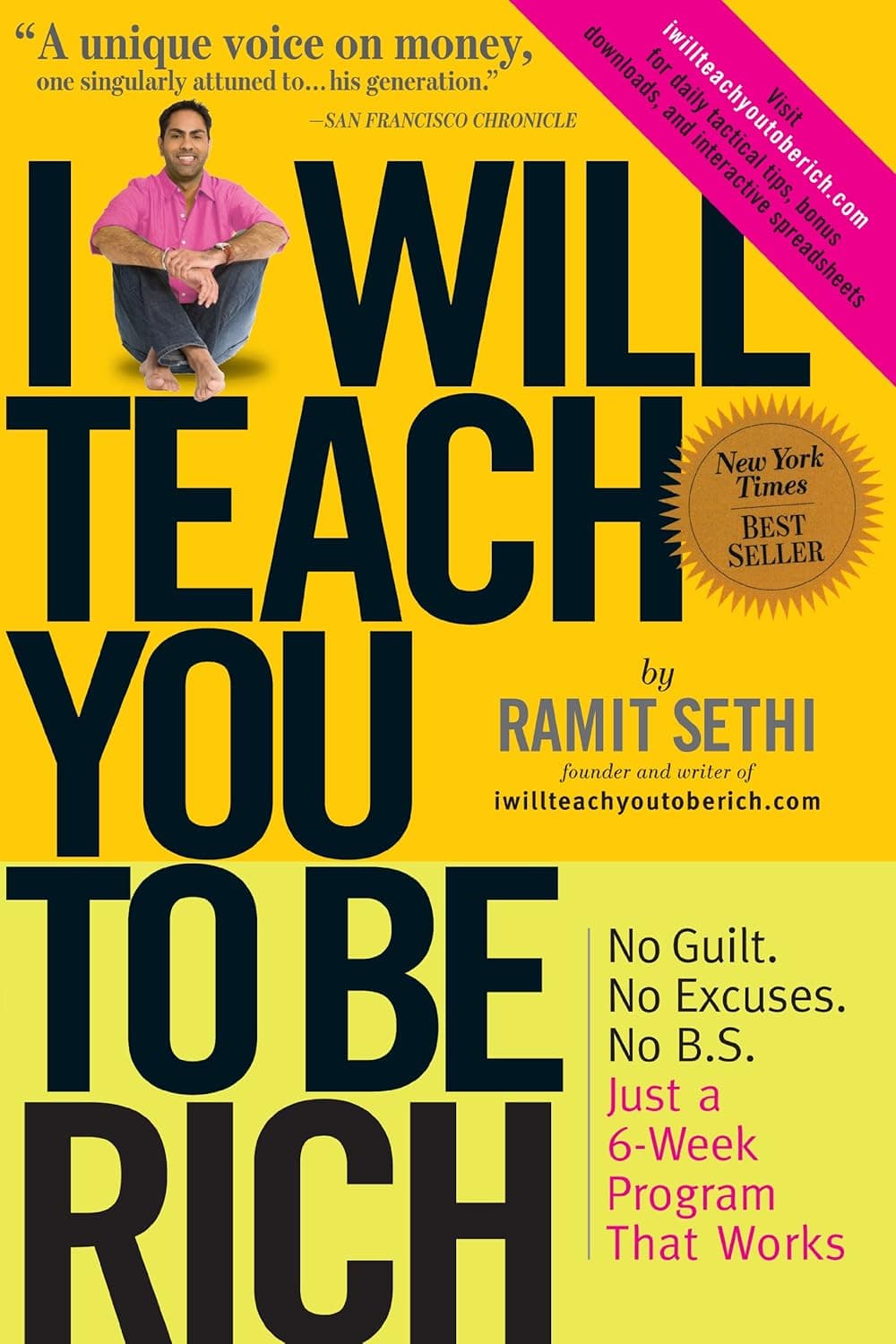
Most Important Quotes
The Essence of Conscious Spending
"Spend extravagantly on the things you love, and cut costs mercilessly on the things you don’t."
Speaker: Ramit Sethi (as Narrator) | Context: Introduction; Sethi lays out his core philosophy, positioning his approach against restrictive, joyless budgeting.
Analysis: This line crystallizes the book’s philosophy of Conscious Spending, reframing money management as prioritization rather than deprivation. It spotlights a values-based budget that funds delight and eliminates mindless leakage, pushing back on the “latte factor” austerity mindset. Rhetorically, the contrast between “extravagantly” and “mercilessly” creates a sharp, memorable dichotomy that captures the book’s tone. The quote is foundational because it defines what a “rich life” looks like in practice: intentional, joyful, and tailored to the individual.
The Power of Starting Early
"The single most important thing you can do to be rich is to start early."
Speaker: Ramit Sethi (as Narrator) | Context: Introduction; Sethi introduces a comparative chart featuring “Smart Sally” and “Dumb Dan” to demonstrate the force of compounding over time.
Analysis: This directive anchors the book’s argument for Long-Term, Passive Investing, elevating time as the decisive variable in wealth creation. By invoking Smart Sally, Sethi uses a simple parable to prove that early, modest contributions can surpass larger, later investments. The stark phrasing functions as a call to action for beginners, replacing paralysis with urgency. Its power lies in demystifying investing: you don’t need expertise—just time and consistency.
The 85% Solution
"The 85 Percent Solution: Getting started is more important than becoming an expert."
Speaker: Ramit Sethi (as Narrator) | Context: Introduction; Sethi addresses “analysis paralysis,” giving readers permission to act without perfect knowledge.
Analysis: This principle embodies Action Over Perfection (/books/i-will-teach-you-to-be-rich/action-over-perfection), the book’s pragmatic engine for change. It dismantles the perfectionist barrier that keeps people stuck, insisting that good-enough choices compounded over time beat endless research. Sethi hardwires this idea into the program’s steps—from opening a “good enough” bank account in Chapter 2 to selecting a simple target-date fund in Chapter 7. The aphoristic phrasing makes it sticky, and its behavioral insight makes it transformative: momentum is the real edge.
Thematic Quotes
Automation and Financial Systems
The Power of Defaults
"Your money management must happen by default. We’ve already talked about it in reference to 401(k)s, but now we’re going to apply that to every dollar you make."
Speaker: Ramit Sethi (as Narrator) | Context: Chapter 5, “The Power of Defaults”; Sethi explains why relying on willpower fails and how to let systems do the work.
Analysis: This quote distills the theme of automation into a behavioral mandate: make the right choice the default choice. By turning saving and investing into set-and-forget actions, Sethi leverages inertia in the reader’s favor. The line connects directly to the system-building walkthrough in Chapter 5 (/books/i-will-teach-you-to-be-rich/chapter-9-10-summary), where linking accounts and scheduling transfers replaces daily discipline. It’s significant because it shifts the locus of success from willpower to design, making long-term consistency achievable.
The Ghost in the Machine
"Once it’s set up, this system is so hands-off that if you got eaten alive by a Komodo dragon, your money system would continue transferring money from account to account by default, a ghostlike reminder of your financial prescience."
Speaker: Ramit Sethi (as Narrator) | Context: Chapter 5, “The Power of Defaults”; Sethi uses absurd, dark humor to dramatize the durability of automation.
Analysis: With hyperbole and vivid imagery, this line makes an abstract concept unforgettable: a well-built system keeps compounding even in your absence. The comedic extremity (Komodo dragons!) punctures the dryness of finance while underscoring resilience—the money machine hums along without daily input. It also repositions automation as a form of financial immortality, outlasting moods, busyness, and even catastrophe. The memorability of the metaphor sells the upfront effort required to set the system in motion.
Long-Term, Passive Investing
Sexy vs. Rich
"There’s a difference between being sexy and being rich... my investment style sounds pretty boring: 'Well, I bought a few good funds five years ago and haven’t done anything since, except buy more on an automatic schedule.' But investment isn’t about being sexy—it’s about making money."
Speaker: Ramit Sethi (as Narrator) | Context: Introduction; Sethi contrasts media-fueled trading excitement with his boring-but-effective strategy.
Analysis: This line reframes “boring” as a virtue and a signal of evidence-based investing. By rejecting the adrenaline of stock-picking, Sethi inoculates readers against FOMO and guru-chasing, a theme he expands in Chapter 6. The structure—sexy versus rich—creates a clean binary that clarifies priorities and disciplines behavior. It’s memorable because it demystifies success: automation, patience, and low-cost funds quietly win.
The True Test of an Investor
"The test of a real Automatic Investor is not when things are going up, but when they are going down. It takes strength to know that you’re basically getting shares on sale—and, if you’re investing for the long term, the best time to make money is when everyone else is getting out of the market."
Speaker: Ramit Sethi (as Narrator) | Context: Chapter 7, “Automatic Investing”; Sethi prepares readers for the psychological challenge of downturns.
Analysis: This quote moves from mechanics to mindset, coaching readers through fear when markets fall. By reframing declines as a “sale,” Sethi uses a consumer metaphor to counter panic with opportunity. The line also encodes contrarian wisdom—buying when others sell—as a test of discipline for long-term investors. Its value lies in pre-committing behavior: automation is only as strong as the resolve to let it run through volatility.
Character-Defining Moments
Ramit Sethi
The No-B.S. Coach
"Listen up, crybabies: This isn’t your grandma’s house and I’m not going to bake you cookies and coddle you. A lot of your financial problems are caused by one person: you."
Speaker: Ramit Sethi (as Narrator) | Context: Introduction, “Put the Excuses Aside”; after cataloging common excuses, Sethi pivots to tough love and accountability.
Analysis: Blunt and irreverent, this line captures Sethi’s persona as a demanding coach who cuts through self-deception. The casual insult and domestic metaphor (“grandma’s house”) jolt readers out of passivity, establishing a voice that is both comic and corrective. It primes the book’s action-first program by insisting that change starts with ownership, not information. The tone aligns with the 85% Solution: results come from doing, not perfecting.
Smart Sally
The Power of an Early Start
"Look carefully at that chart. Smart Sally actually invests less, but ends up with about $80,000 more... The single most important thing you can do to be rich is to start early."
Speaker: Narrator | Context: Introduction, “Info Glut”; the Smart Sally vs. Dumb Dan illustration makes compounding visceral.
Analysis: Though she isn’t a character with dialogue, Smart Sally functions as an archetype of disciplined simplicity—early, steady, and automated. The comparative framing turns abstract math into an accessible story, proving that timing trumps total contributions. By pairing narration with visual data, Sethi leverages dual coding to make the lesson stick. It’s a durable takeaway: start now, and let time do the heavy lifting.
John Bogle
The Index Fund Revolution
"In a radical move he originally crafted in his senior thesis at Princeton, Bogle argued that index funds would offer better performance to individual investors. Active mutual fund managers could not typically beat the market, yet they charged investors maintenance fees and incurred tremendous amounts of taxes on their frequent trading."
Speaker: Ramit Sethi (as Narrator) | Context: Chapter 6, “Index Funds: The Attractive Cousin”; Sethi credits Bogle as the visionary behind low-cost indexing.
Analysis: This passage places Bogle in the role of reformer, recasting index funds as a democratizing tool against high-fee underperformance. The historical framing adds authority to Sethi’s recommendations, grounding personal finance advice in a larger intellectual movement. The contrast between “radical” insight and industry inertia underscores the book’s skepticism of active management. It’s significant because it aligns the reader’s simple plan with a proven, principled tradition.
Memorable Lines
The Minutiae Analogy
"When it comes to weight loss, 99.99 percent of us need to know only two things: Eat less and exercise more. Only elite athletes need to do more. But instead of accepting these simple truths and acting on them, we discuss trans fats, diet pills, and Atkins versus South Beach. ... The point is that we love to debate minutiae."
Speaker: Ramit Sethi (as Narrator) | Context: Introduction; Sethi opens with a fitness analogy to spotlight behavioral distractions.
Analysis: By comparing fitness fads to financial noise, Sethi makes his case for simplicity and execution instantly relatable. The hyperbolic “99.99 percent” and list of diet debates mimic the very overwhelm he’s critiquing, turning form into function. The analogy primes readers to ignore trivialities and focus on a few levers that matter—earn more, spend consciously, automate, invest. Its clarity and humor set the book’s no-nonsense, results-first tone.
Opening and Closing Lines
Opening Line
"I’ve always wondered why so many people get fat after college."
Speaker: Ramit Sethi (as Narrator) | Context: Introduction; the book’s first sentence.
Analysis: Unexpected for a finance book, this opener disrupts expectations and signals a conversational, analogy-rich style. It establishes Sethi’s habit of translating money lessons through everyday experiences, lowering the intimidation barrier. The line also foreshadows the book’s thesis: ignore minutiae, focus on a few behaviors, and let systems do the work. As a hook, it’s disarming, memorable, and thematically on-brand.
Closing Line
"A rich life is about more than money. It starts by managing your own. And it continues by helping others become rich."
Speaker: Ramit Sethi (as Narrator) | Context: Chapter 9, “A Rich Life for You—and Others”; the book’s final sentence.
Analysis: The close widens the lens from personal finance to purpose, elevating wealth as a means to autonomy, generosity, and impact. Its cadence—start, then continue—frames money mastery as a lifelong, outward-facing journey. The line completes the arc of Defining a “Rich Life” (/books/i-will-teach-you-to-be-rich/defining-a-rich-life), recasting “rich” as multidimensional. It leaves readers with mission and momentum: build your system, then help others build theirs.