Opening
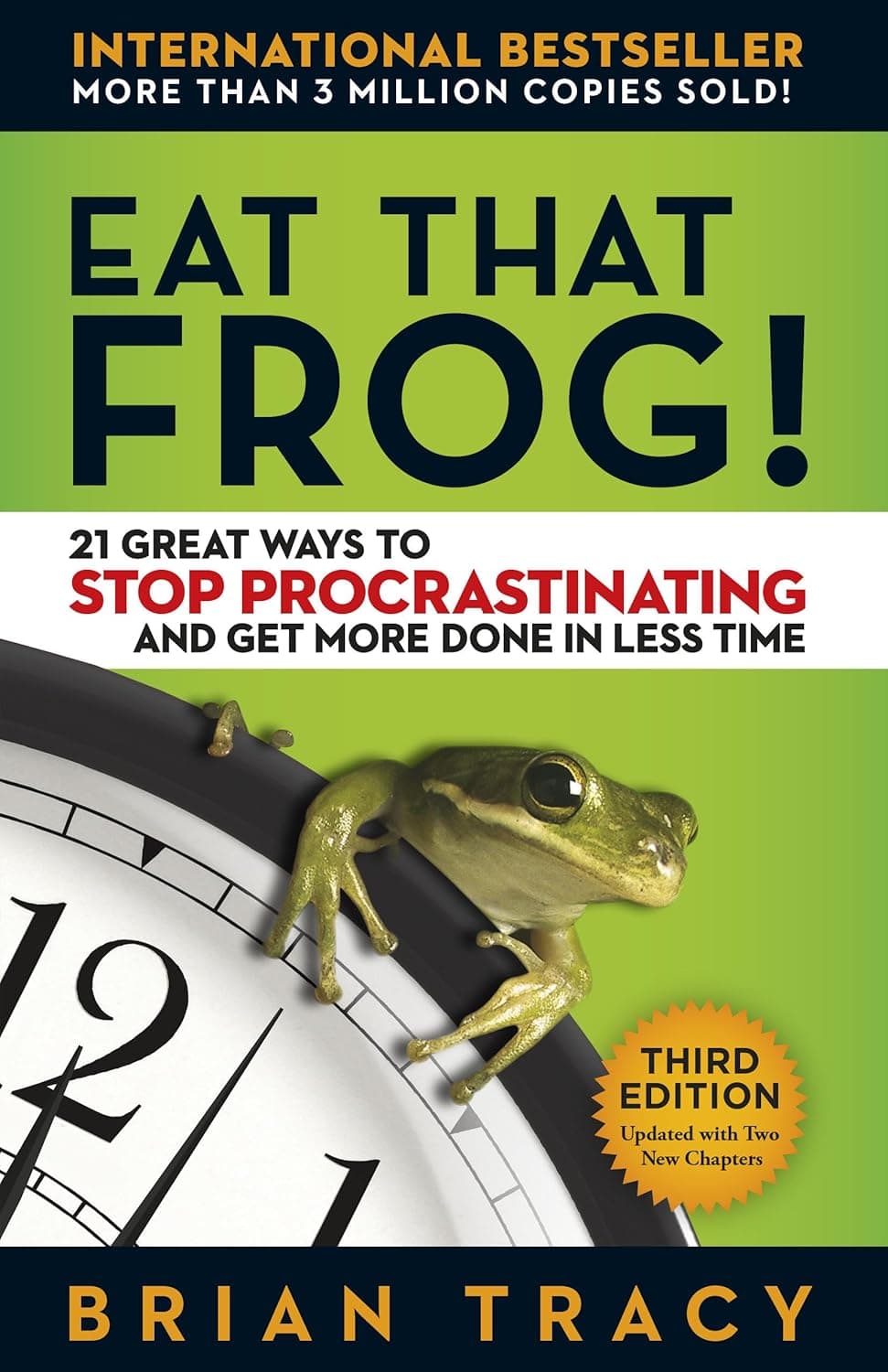
Chapters 16–20 shift from planning to execution, fusing mindset with method. Brian Tracy trains the reader to think like an optimist, choose what not to do, tackle the hardest work first, break big projects into bite-sized actions, and protect long, focused blocks of time. Together, these moves turn intention into consistent results.
What Happens
Chapter 16: Motivate Yourself into Action
Tracy turns inward, arguing that self-talk drives emotion and action. He claims 95 percent of emotions flow from inner dialogue and urges a shift to complete optimism to maximize Productivity and Personal Effectiveness. He invites You (The Reader) to take charge of interpretations, refuse to let setbacks determine mood, and repeat affirmations—“I like myself!” and “I can do it!”—to lift self-esteem.
He defines three learnable behaviors of optimists. First, they look for the good in every situation. Second, they search for the valuable lesson in every setback. Third, they think in solutions, asking “What’s the solution?” rather than “Who’s to blame?” By keeping attention on goals and the future, Tracy says you generate energy, confidence, and control—the fuel for Overcoming Procrastination and Taking Action. The chapter closes with a challenge: accept 100% responsibility for your life to keep thoughts positive and progress-focused.
Chapter 17: Practice Creative Procrastination
Tracy reframes procrastination as a strategic tool. Because you cannot do everything, high performers win by choosing what not to do. He urges deliberate delay—or elimination—of low-value “tadpoles” so you can reserve time and energy for The Frog, reinforcing the book’s core message and the theme of Prioritization and Focus.
He introduces “posteriorities”: tasks to do less of and later, if at all. The word “No” becomes a time-protection device. To take on something new, you must finish or discontinue something old. Since most people unconsciously procrastinate on their highest-value work, he prescribes zero-based thinking: “If I were not already doing this, knowing what I now know, would I start it again today?” A “no” marks the task for elimination or creative delay.
Chapter 18: Do the Most Difficult Task First
Tracy operationalizes the book’s central metaphor by building a morning ritual that hardwires courage and momentum. He offers a six-step routine, grounded in Self-Discipline and Habit Formation: 1) list tomorrow’s tasks, 2) apply the ABCDE Method, 3) select the A-1 task, 4) gather all materials, 5) clear the workspace so only that task is visible, and 6) start it first thing, without interruption.
Do this for 21 days, he says, and the habit locks in—often doubling productivity. Beginning the day by conquering the hardest job creates a lasting surge of energy, power, and control. Tracy casts this as a defining behavior of Successful People: by eating the biggest frog first, you break procrastination and take ownership of outcomes.
Chapter 19: Slice and Dice the Task
Big tasks feel intimidating, so Tracy shrinks them. He offers two techniques. The “salami slice” method breaks the project into thin, specific slices; you commit to completing just one. The “Swiss cheese” method punches a hole in the task by working on it for a short, fixed burst—five or ten minutes.
Both approaches trigger the “urge to completion,” a compulsion to close loops. Finishing even a tiny piece releases endorphins—feelings of happiness and strength—that create momentum for the next slice or time block. Many bestselling authors, he notes, lean on this principle, producing a page or a paragraph at a time until the manuscript is done.
Chapter 20: Create Large Chunks of Time
Tracy closes by defending deep work. Important contributions demand long, uninterrupted blocks, deliberately scheduled as “work appointments” of 30, 60, or 90 minutes—and honored with iron discipline. This time-blocking strategy aligns with Clarity, Goal Setting, and Planning.
During these blocks, you remove all distractions—phones, notifications, drop-ins—and attack one key task at a time. He offers practical moves: rise early to work before the day begins, turn flights into an “office in the air,” and capture small transition windows between meetings to move a big task forward. The rule is simple: make every minute count by organizing concentrated periods to finish essential work on schedule.
Character Development
These chapters recast the reader from a reactive executor to a strategic producer, blending mindset with method. Optimism fuels action; strategy determines what gets done; disciplined routines ensure follow-through.
- You (The Reader): Shifts from mood-driven to responsibility-driven; uses affirmations to manage state; commits to the A-1 task each morning; engineers environment to support focus.
- The Frog: Evolves from an intimidating metaphor into a practical target—tackle it first, slice it thin, or reserve deep blocks to consume it whole.
- Successful People: Stand out not by volume of work but by clarity, selective neglect, and habit strength; they protect time, say “No,” and convert early wins into sustained momentum.
Themes & Symbols
Overcoming procrastination becomes a systems problem: align mindset, priority, and process so action is easier than delay. Optimism powers initiation; “creative procrastination” removes low-value friction; morning A-1 execution and sliced tasks reduce cognitive resistance; time blocks create conditions for mastery. Together they form a loop: clear what matters, start boldly, sustain with structure, and finish.
Prioritization and focus sit at the center. By naming posteriorities and guarding long stretches of uninterrupted time, Tracy shifts productivity from “do more” to “do what matters most, better.” The Frog operates as a symbol of high-consequence work—daunting at first glance, manageable when met with courage, chunking, and deep work.
Key Quotes
“I like myself!” / “I can do it!”
- Mantras that rewire self-talk to generate the emotional energy required for hard starts. They shift identity toward capability, making the first move less psychologically expensive.
“What’s the solution?”
- A pivot from blame to agency. This question keeps attention future-facing and practical, converting setbacks into design prompts for progress.
“No.”
- The smallest, strongest boundary. Saying no creates posteriorities, protects focus, and makes room for the highest-value work to happen at all.
“If I were not already doing this, knowing what I now know, would I start it again today?”
- Zero-based thinking in a sentence. It exposes sunk-cost traps and licenses immediate exit from low-yield commitments.
“A-1 task.”
- A label that prioritizes with precision. Naming the single most consequential task clarifies where courage and time must go first each day.
Why This Matters and Section Significance
Chapters 16–20 supply the book’s execution engine. They connect inner narrative to outer behavior, reframe productivity as selective action, and give repeatable structures for starting, sustaining, and finishing meaningful work. “Creative procrastination” is a turning point: instead of doing more, you deliberately neglect the trivial to deliver the essential. With optimism, strategic noes, morning A-1 wins, sliced progress, and protected time blocks, the abstract notion of “eating the frog” becomes a concrete, daily practice that compounds into outsized results.