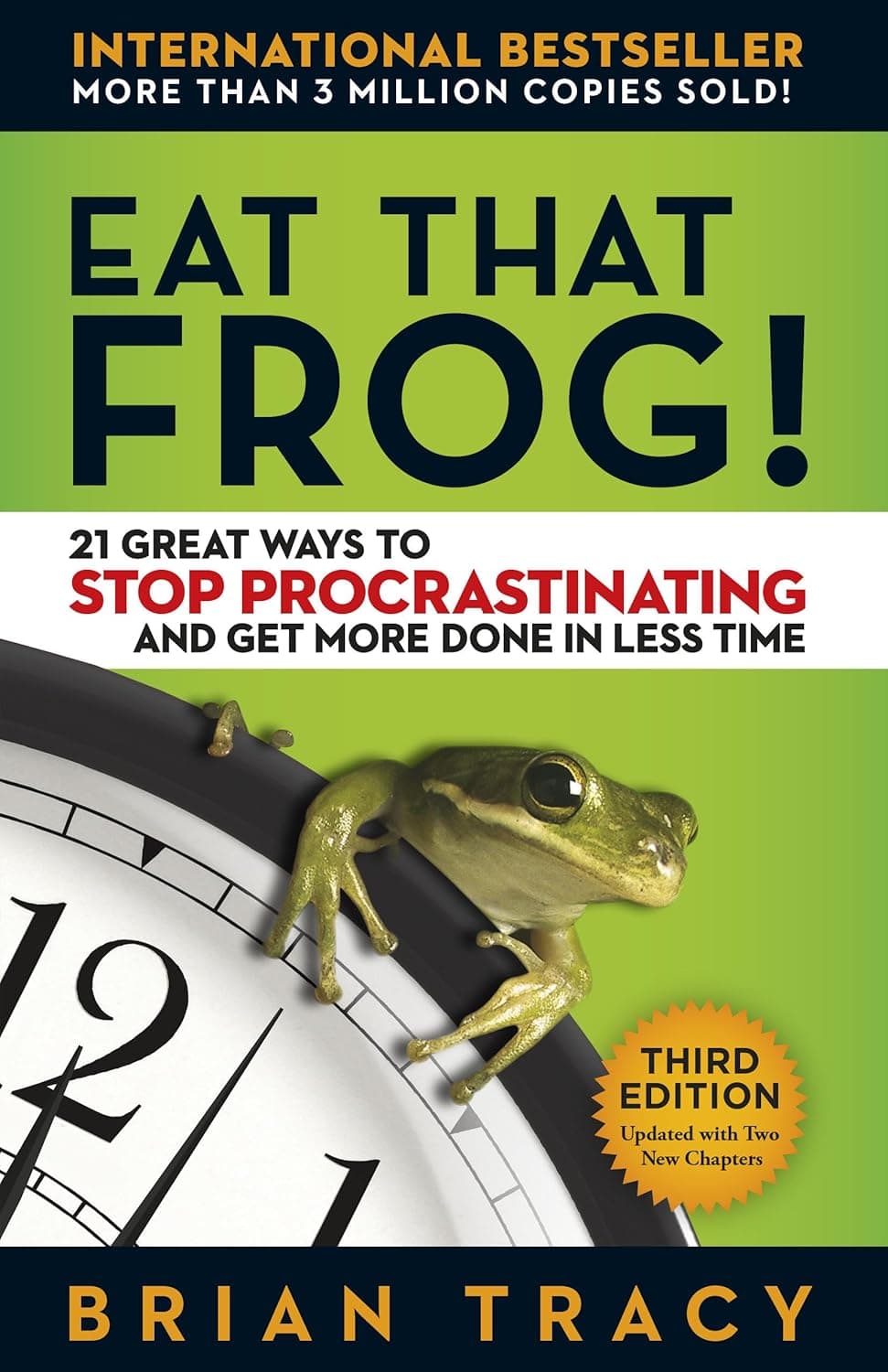
Opening
Chapters 11–15 pivot from inspiration to execution as Brian Tracy builds a practical system for real Productivity and Personal Effectiveness: discover your unique edge, diagnose the constraint, move forward one visible step at a time, manufacture urgency, and protect the energy that powers it all. The result is a playbook for doing less, better—and finishing the hard things first.
What Happens
Chapter 11: Leverage Your Special Talents
Tracy argues that everyone has distinct abilities, and the fastest route to extraordinary results is to identify those strengths and commit to excellence in them. He calls your “earning ability” your most valuable asset—the portable combination of knowledge and skill that lets you rebuild even if you lose everything. To surface these advantages, he pushes You (The Reader) to conduct regular self-audits: What do you do especially well? What has driven your success so far?
Talents and enjoyment tend to overlap, so passion becomes a compass. Successful People narrow their focus to the few activities that create outsized impact and eliminate the rest. The chapter reinforces Prioritization and Focus: don’t try to do everything—master the vital few.
Chapter 12: Identify Your Key Constraints
Tracy introduces the “limiting factor”—the single bottleneck that sets the pace of your progress. The most leveraged move is to find that constraint and fix it. Using the 80/20 lens, he argues that most constraints (about 80%) are internal—habits, skills, mindset—while only a minority are external. This places responsibility on you and ties directly to Self-Discipline and Habit Formation.
He pairs this with rigorous inquiry from Clarity, Goal Setting, and Planning: What is it in me that is holding me back? A cautionary corporate story shows a company blaming poor sales performance when the real constraint is bad pricing—proof that misdiagnosis wastes effort. Remove one bottleneck and another emerges; the work is continuous. Often, the key constraint is the most important Frog you must eat right now.
Chapter 13: Take It One Oil Barrel at a Time
To tackle overwhelming work, Tracy prescribes breaking big tasks into visible, doable steps—tools for Overcoming Procrastination and Taking Action. He recalls crossing 500 miles of the Sahara guided by black oil drums spaced five kilometers apart, each just on the horizon. By aiming only for the next drum, he and his companions traverse the entire desert.
The lesson is a precision habit: you only need to see the next step to start and keep moving. Completing small increments builds momentum and confidence, which compounds. Tracy applies this to long-horizon goals—financial independence (save a bit every month) and fitness (eat slightly better, move daily)—showing how tiny wins accumulate into life-changing outcomes.
Chapter 14: Put the Pressure on Yourself
Most people wait for external motivation, Tracy says, but only about 2%—the “leaders”—perform at a high level without supervision. The goal is to join that minority by setting your own standards higher than anyone else’s. Start earlier, work harder, stay later. Self-imposed pressure strengthens self-esteem—what Nathaniel Branden calls your reputation with yourself.
Tracy uses “forcing systems” to create urgency on demand. Imagine you must leave town for a month tomorrow, or you just won a trip that departs in the morning. What absolutely must get finished today? Acting as if time is scarce forces ruthless prioritization and rapid execution. Practiced daily, this builds the identity and habits of a reliable finisher.
Chapter 15: Maximize Your Personal Powers
Performance rides on energy—physical, mental, emotional. Fatigue fuels procrastination; after eight or nine hours, output plunges. Tracy urges you to schedule your hardest, highest-value tasks during your peak energy window—often the morning—and defend that time.
He then outlines high-yield recovery and fuel habits: get enough sleep (target a 10 p.m. weekday bedtime), take one full day off each week to reset cognitively, and protect real vacations. Eat like a professional—high-protein, lower-carb breakfasts; avoid sugar and processed foods—and exercise consistently. Treat your body like a world-class athlete’s engine so you can sustain focus and finish demanding work.
Character Development
The chapters recast the reader as a capable operator who actively rewires habits, choices, and energy management to perform at a higher level.
- You (The Reader): You move from scattered effort to targeted mastery (Ch. 11), confront internal bottlenecks with candor (Ch. 12), build momentum with small steps (Ch. 13), create urgency without external prompts (Ch. 14), and protect the energy that makes execution possible (Ch. 15).
- Successful People: Defined not just by work ethic but by strategic focus (Ch. 11), accurate diagnosis (Ch. 12), consistent action (Ch. 13), self-regulation (Ch. 14), and athlete-level energy stewardship (Ch. 15).
Specific changes:
- Clarifies signature strengths and doubles down on them
- Shifts blame from externals to controllable skills and habits
- Converts overwhelm into a sequence of near-term targets
- Sets and meets self-imposed deadlines
- Designs sleep, nutrition, breaks, and exercise around peak work
Themes & Symbols
- Prioritization and focus drive results. Chapters 11–12 argue for concentrating on talent-aligned, high-impact work and removing the single constraint that throttles progress.
- Overcoming procrastination requires structural tools and psychological levers. The “oil barrel” method (Ch. 13) converts massive tasks into doable steps; self-created urgency (Ch. 14) accelerates starts and finishes.
- Self-discipline and habit formation sit at the core. Daily choices—from the questions you ask yourself to the standards you enforce—compound into identity.
- Productivity and personal effectiveness depend on physiology. Chapter 15 reframes sleep, nutrition, and recovery as performance infrastructure, not nice-to-haves.
Symbols
- The Oil Barrel: A tangible next waypoint—proof that seeing only the immediate step is enough to cross a vast “desert” of work.
- The World-Class Athlete: A model for treating rest, diet, and training as professional obligations that protect consistent top-tier output.
Key Quotes
“By the yard it’s hard; but inch by inch, anything’s a cinch!” This maxim encapsulates Chapter 13’s execution strategy: shrink the task until starting becomes inevitable, then let progress create motivation. It reframes success as a chain of small, finishable units.
“What is it in me that is holding me back?” Chapter 12’s central diagnostic question forces internal attribution. Asking it routinely redirects attention from excuses to skills, systems, and habits you can change.
“Your earning ability is your most valuable financial asset.” Chapter 11 elevates skill acquisition and application above external resources. It’s a call to invest in rare, marketable strengths that travel with you through setbacks.
“Self-esteem is your reputation with yourself.” Used in Chapter 14, Branden’s definition ties confidence to evidence. Every kept promise (start early, finish the important) strengthens identity and makes the next hard behavior easier.
Why This Matters and Section Significance
These chapters supply the engine for Tracy’s method. Earlier guidance helps you choose the right “frog”; here you learn how to do it consistently: isolate constraints, reduce scope to the next step, generate urgency internally, and safeguard the energy that powers deep work. Together they transform you from a planner into a finisher—someone who targets strengths, diagnoses accurately, acts immediately, and sustains performance over the long haul.